Why People Align With Others They Don’t Even Like — The Neuroscience Behind It

At first glance, it can seem confusing — even contradictory — when someone aligns themselves with people they clearly don’t like, simply because there is something to gain. But neuroscience helps explain this behaviour. 1. Reward Overrides Authenticity The brain is wired to seek reward. When there is a perceived benefit — money, status, access,… Read More Why People Align With Others They Don’t Even Like — The Neuroscience Behind It

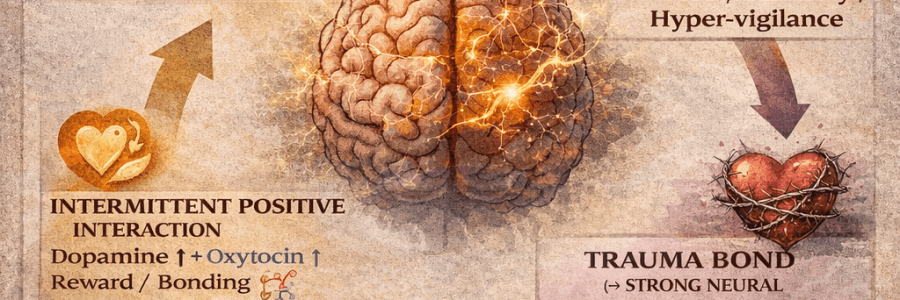
Why Abuse Doesn’t Stop After Separation: What Neuroscience and Psychology Really Tell Us

A common belief is that separation from an abusive partner should naturally lead to a reduction in abusive behaviour. In reality, many people experience the opposite: control, intimidation, manipulation, or emotional aggression continues — and sometimes intensifies. Neuroscience and psychology help explain why this happens. 1. The Brain Does Not Automatically “Improve” With Age There… Read More Why Abuse Doesn’t Stop After Separation: What Neuroscience and Psychology Really Tell Us

When Friends Give Opposite Advice: Understanding Mixed Signals Through Neuroscience and Psychology

In emotionally complex situations, it is common to receive completely opposing advice from people who care about you. One friend may encourage you to stay and preserve what has been built over time. Another may urge you to leave and prioritise your wellbeing immediately. Both can sound confident. Both can feel convincing. Yet they point… Read More When Friends Give Opposite Advice: Understanding Mixed Signals Through Neuroscience and Psychology

Stop Trying to Understand the Abuser: The Science of Letting Go

There is a point in every abusive dynamic where the focus quietly shifts. At the beginning, you try to understand: You analyse, adjust, tolerate, and try again. But this is where many people get trapped. Because the focus stays on them. Why You Try to Understand Them From a Psychology perspective, this is not weakness—it’s patterning. Humans are… Read More Stop Trying to Understand the Abuser: The Science of Letting Go

On Staying the Course: When Delay Stops Being a Distraction

There comes a point in any long, high-friction process where something quietly shifts. Not in the situation itself — but in perspective. What once felt urgent, reactive, and emotionally charged begins to look more structured. Less personal. More mechanical. A sequence rather than a story. The Cost of Constant Delay In extended negotiation or legal… Read More On Staying the Course: When Delay Stops Being a Distraction

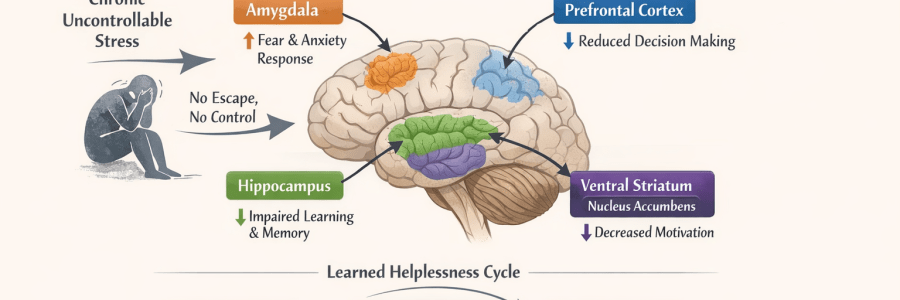
When Cruelty Feels Rewarding

The Neuroscience and Psychology of Sadistic Behaviour Most people feel distress when they see someone else in pain. But not everyone. For some individuals, another person’s discomfort, fear, or humiliation does not trigger empathy—it triggers something very different. It creates reward. When Empathy Is Reversed In healthy emotional functioning, the brain responds to others’ pain with… Read More When Cruelty Feels Rewarding

Control, Distance, and Indirect Power Dynamics

A Neuroscience and Psychology Perspective on Behaviour Beyond Separation Abusive or controlling dynamics do not always end when physical distance increases or legal boundaries are introduced. In many cases, the pattern of behaviour simply adapts. When direct control is no longer possible, it often shifts into indirect forms. The Need to Maintain Control From a… Read More Control, Distance, and Indirect Power Dynamics

Control, Resistance, and Behavioural Patterns in Conflict

Neuroscience and Psychology of Power, Persistence, and Perceived Control Abusive or controlling dynamics are not only expressed directly between individuals. They can also extend through systems, communication, and indirect pressure—long after physical separation or legal boundaries exist. When control cannot be maintained in one way, it often shifts into another. The Need to Maintain Control… Read More Control, Resistance, and Behavioural Patterns in Conflict

What Happens When People Finally See the Truth

A Neuroscience and Psychological Response to Reality When the truth finally comes out—when denial can no longer be maintained—people do not all react the same way. But there are clear psychological and neurological patterns in how the brain responds. 1. Shock and Cognitive Overload The first reaction is often shock. When reality suddenly contradicts long-held… Read More What Happens When People Finally See the Truth