When Men Never Get Over a Relationship: The Psychology and Neuroscience of Bitterness

Breakups are hard for everyone. But while many eventually grieve, process, and grow, some men never truly recover from a lost relationship. Instead, they spend decades carrying resentment, turning their disappointment with one woman into a broader hostility toward all women. This bitterness doesn’t just hurt their partners; it corrodes their own lives, trapping them in cycles… Read More When Men Never Get Over a Relationship: The Psychology and Neuroscience of Bitterness

Men Who Play Games, Start Arguments, and Seek Love in All the Wrong Places

Some men seem caught in a destructive loop: they pick fights, storm out, disappear, and often end up in the arms of other women. On the surface, it looks like selfishness or immaturity. Underneath, there are powerful psychological and neurological forces at play — forces that drive them to sabotage intimacy while endlessly searching for… Read More Men Who Play Games, Start Arguments, and Seek Love in All the Wrong Places

The Joy of a Real Man: Psychological Benefits of Respect, Laughter, and Pride

For many survivors of toxic or abusive relationships, the idea of being with a partner who brings safety, joy, and dignity can feel almost unreal. When you finally step into the presence of someone with impeccable manners, a sense of humor, and respect for themselves and others, the difference is life-changing. It’s not about perfection… Read More The Joy of a Real Man: Psychological Benefits of Respect, Laughter, and Pride

Characteristics of Hidden Cruelty

“Hidden cruelty,” —likely referencing Alice Miller’s work on poisonous pedagogy—refers to subtle, socially accepted forms of harm inflicted on children that are not overtly recognized as abuse. Unlike obvious physical violence or screaming, hidden cruelty is covert, psychologically manipulative, or morally justified, making it hard for both children and society to label it as abusive. Let’s break it… Read More Characteristics of Hidden Cruelty

Early Childhood Trauma and Abuse

A person who is angry and abusive throughout their life usually has deep-rooted patterns that begin early and are reinforced over time. It’s rarely a single cause—more often, it’s a complex mix of childhood experiences, temperament, neurobiology, and social learning. Here’s a detailed breakdown: 1. Early Childhood Trauma and Abuse Exposure to violence or harsh discipline: Growing up… Read More Early Childhood Trauma and Abuse

The Importance of Early Mother-Infant Bonding

1. The Importance of Early Mother-Infant Bonding The first weeks of life are critical for attachment formation, a concept studied extensively by John Bowlby and Mary Ainsworth. Infants develop a sense of safety and trust primarily through consistent, sensitive caregiving, usually from the mother or primary caregiver. Separation from the mother in this window, especially if prolonged,… Read More The Importance of Early Mother-Infant Bonding

 Smacking, punishment, and manipulation.

Alice Miller was one of the most outspoken voices on it. Let me expand on her ideas about poisonous pedagogy, then bring in the perspectives of other psychologists and child development experts on smacking, punishment, and manipulation. Alice Miller: Poisonous Pedagogy Miller coined the term “poisonous pedagogy” to describe child-rearing practices that manipulate, dominate, or break a child’s… Read More  Smacking, punishment, and manipulation.

Trauma Bonding or Stockholm Syndrome?

the two concepts are often confused or used interchangeably, but they actually come from slightly different origins and describe different (though overlapping) dynamics. Let me walk you through the difference step by step: 1. Origins First coined in the 1970s after a hostage situation in Stockholm, Sweden. Observers noticed that some hostages developed emotional attachment… Read More Trauma Bonding or Stockholm Syndrome?

The Repetition of Harm: When Manipulation Masquerades as “Guidance”

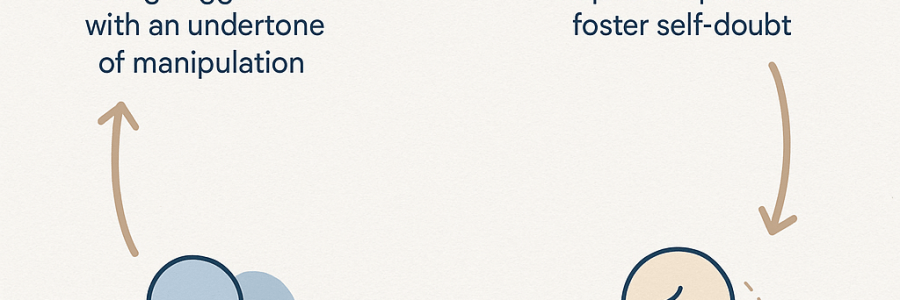
One of the most powerful tools of manipulation is repetition. Over and over, you hear the same phrases, criticisms, or warnings, until your brain begins to absorb them as truth. At first, they might sound like advice, even concern. But in reality, they are acts of control designed to erode confidence, isolate you from support, and… Read More The Repetition of Harm: When Manipulation Masquerades as “Guidance”

The Repetition of Control: How Manipulation Masquerades as “Care”

One of the most insidious features of long-term manipulation is its disguise. It rarely announces itself as cruelty or domination. Instead, it cloaks itself in the language of concern: “I’m only reminding you because you got it wrong before.” “I’m telling you this for your own good.” To an outside ear, these phrases may sound protective. But when… Read More The Repetition of Control: How Manipulation Masquerades as “Care”