How Secure People Thrive with Secure Partners

Secure attachment is one of the strongest predictors of healthy, lasting relationships. When a securely attached person pairs with another secure partner, the result is synergy, growth, and fulfillment. 1. Mutual Trust and Safety Result: Confidence in the relationship and comfort in vulnerability. 2. Effective Communication Result: Less stress, more understanding, and deep emotional attunement. 3. Emotional Co-Regulation… Read More How Secure People Thrive with Secure Partners

How Secure People Get Trapped with Insecure or Abusive Partners

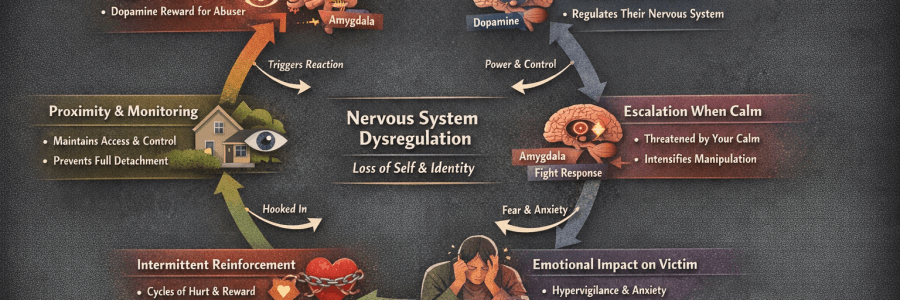
Most people assume that secure attachment protects someone from ending up in an unhealthy relationship. And in many cases, it does. But the truth is more complex: Secure people are sometimes MORE vulnerable to getting trapped —precisely because of their strengths. A securely attached person expects honesty, repair, and emotional reciprocity.When they meet someone who is… Read More How Secure People Get Trapped with Insecure or Abusive Partners

Secure Attachment: Benefits vs. Vulnerabilities

💚 The Benefits (These Are Very Strong) Secure attachment creates one of the most resilient emotional foundations a person can have. 1. Higher trust and healthy bonding Securely attached people: This makes relationships smoother, warmer, and more stable. 2. Better emotional regulation Their nervous system is less reactive.They can soothe themselves, communicate calmly, and repair… Read More Secure Attachment: Benefits vs. Vulnerabilities

Sexual Compatibility vs. Emotional Compatibility Matrix

Axes 📊 The 4 Quadrants 🟥 Quadrant 1 — LOW Emotional / LOW Sexual Compatibility “The Draining Relationship” Characteristics Psychology Long-term outcome:❌ Not sustainable. This is where people feel trapped, invisible, or chronically unhappy. 🟧 Quadrant 2 — LOW Emotional / HIGH Sexual Compatibility “The Chemistry Trap” Characteristics Psychology Long-term outcome:⚠️ High drama, low stability.Great… Read More Sexual Compatibility vs. Emotional Compatibility Matrix

The Hidden Nature of Perpetrators

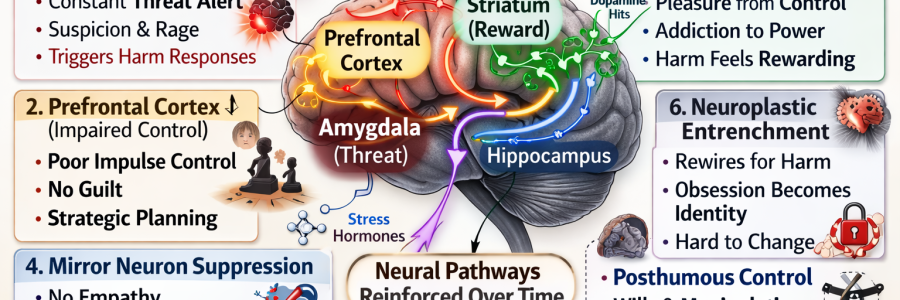
1. The “Mask of Normalcy” This is sometimes called “the façade of normalcy”, which conceals abusive behaviours behind closed doors. 2. Why People Don’t Believe It 3. Psychological Tactics That Hide Abuse 4. Neuroscience and Behavioural Explanation 5. Implications Summary Many perpetrators appear normal, competent, and likable externally while engaging in severe abuse in private. Cognitive… Read More The Hidden Nature of Perpetrators

Psychological Profile of This Behaviour (Property Damage After Disputes)

This pattern of behaviour — demanding entitlement to an asset and then the asset being vandalised soon after — aligns with psychological traits commonly observed in coercive control, retaliatory aggression, and entitlement-based conflict. Individuals who engage in this pattern typically show high sensitivity to perceived loss, rejection, or humiliation, which triggers a disproportionate emotional reaction. When they… Read More Psychological Profile of This Behaviour (Property Damage After Disputes)

Why Someone Demands “Half the Car” and Then the Car Gets Vandalised Twice

When an ex-partner insists they are entitled to “half the car,” and soon after the car is keyed, damaged, repaired, and then keyed again within days, that pattern is not a coincidence.In coercive or abusive dynamics, this behaviour is often a form of retaliation, property intimidation, and psychological punishment. Below is the breakdown. 1. Retaliation for Losing Control… Read More Why Someone Demands “Half the Car” and Then the Car Gets Vandalised Twice

Psychological and Emotional Perspective in the Context of Coercive Control and Domestic Abuse

When an abusive or controlling ex-partner files for divorce again — particularly long after you initiated proceedings — the behaviour often reflects patterns of coercive control, not genuine legal necessity. 1. Reasserting Dominance After Losing Control In coercive-control dynamics, the abuser’s identity relies heavily on their ability to dictate the emotional and practical landscape of the relationship.Your original… Read More Psychological and Emotional Perspective in the Context of Coercive Control and Domestic Abuse