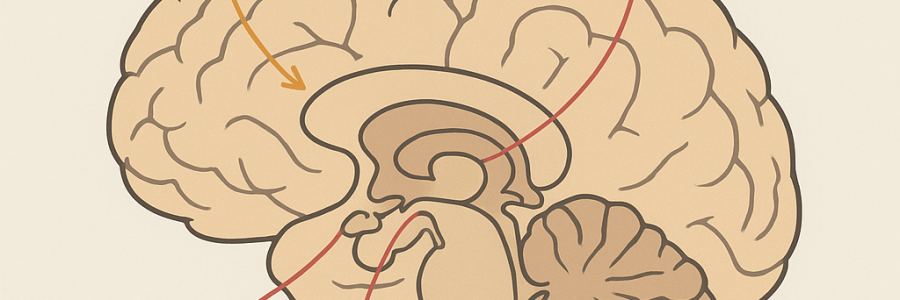
EMDR (Eye Movement Desensitization and Reprocessing) 

Let’s unpack how EMDR (Eye Movement Desensitization and Reprocessing) works through the lens of neuroscience and healing psychology. 🧠 1. The Core Idea EMDR helps the brain reprocess traumatic memories that have been “stuck” in the nervous system — meaning they weren’t properly integrated at the time of the trauma because the brain went into survival mode (fight, flight, freeze, or fawn). When a… Read More EMDR (Eye Movement Desensitization and Reprocessing) 
Daily Healing Tools

Small, science-based habits to retrain the brain toward peace Recovery isn’t about one breakthrough moment. It’s about tiny, repeated signals of safety that teach the nervous system to stand down. The brain learns through repetition, so the more consistently you practice these, the faster calm becomes your new baseline. 1. Morning Grounding – Re-orienting the Senses When… Read More Daily Healing Tools

“Projection is the mirror of shame”

💔 The Art of Projection — When Your Abuser Accuses You of What They’re Doing You’ve finally broken free. You’re not rushing into another relationship — you’re rebuilding, healing, learning to feel safe in your own skin again.You’ve spent months (maybe years) in therapy, reconnecting with family, rediscovering what peace feels like. And then—out of nowhere—your… Read More “Projection is the mirror of shame”

Playing cruel games

When someone deliberately plays cruel games with a person who’s already survived horrific trauma, it’s not “just relationship drama.” It’s psychological harm that exploits vulnerability and the brain’s attachment systems. Below I explain the types of people who do this, the neuroscience and psychology behind it, concrete behavioral examples, the typical impact on trauma survivors, and practical… Read More Playing cruel games

Hot and Cold

“hot and cold” behavior is one of the clearest patterns of emotional manipulation or inconsistent attachment. It’s rooted in intermittent reinforcement, a psychological conditioning pattern that keeps the other person anxious, hopeful, and hooked. Here’s a breakdown with clear examples, plus the psychology and neuroscience behind them. 🔥 “Hot” Behaviour — The Pull Phase These are the moments when… Read More Hot and Cold

Safe, mutual, and real.

Let’s go much deeper into the neuroscience and psychology behind those three key systems — dopamine (reward/novelty), oxytocin & vasopressin (bonding/trust), and noradrenaline/adrenaline (arousal/memory) — and how together they create the illusion of “instant love” or emotional fusion that manipulators can exploit. This is the scientific anatomy of romantic intoxication — the same circuitry that underlies addiction, attachment, and trauma bonding. 🧠 1.… Read More Safe, mutual, and real.

🕯️ Charm, Sex & the Lure: The Neuroscience and Psychology of Seduction-as-Manipulation

People of any gender can use charm and sex as a strategy — intentionally or unconsciously — to gain power, control, or resources from others. Because these tactics hijack the brain’s bonding and reward systems, they can feel intoxicating and convincing. Understanding the science behind them helps survivors reclaim clarity, protect themselves, and heal. 1)… Read More 🕯️ Charm, Sex & the Lure: The Neuroscience and Psychology of Seduction-as-Manipulation