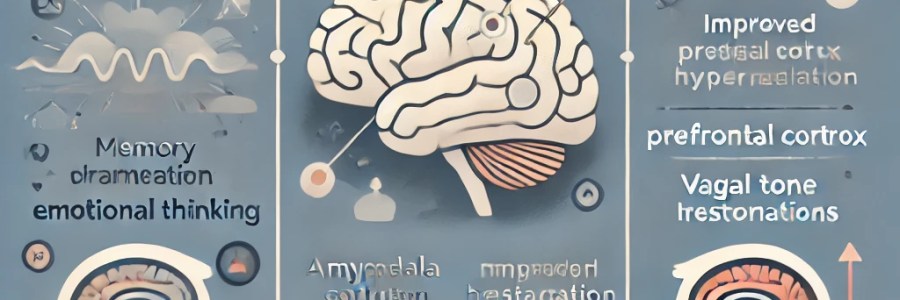
How Trauma Disrupts the Ability to Identify What Is Healthy

IntroductionIndividuals with a history of abuse frequently report difficulty determining what is “right” or “healthy” in relationships. This is not a matter of poor judgment or weakness; it is the predictable neurobiological and psychological result of prolonged trauma exposure. Abuse alters threat-processing systems, attachment circuits, and self-referential networks in the brain, which collectively distort the… Read More How Trauma Disrupts the Ability to Identify What Is Healthy

Children Inheriting Anxiety and Social Difficulties

Neuroscience & Psychology Confirm This Is Real** For decades people believed anxiety was “personality” or a child being “sensitive.”But neuroscience and epigenetics show something deeper: 👉 Children can inherit anxiety and social difficulties — not just emotionally, but biologically.👉 Trauma, fear, and stress experienced by parents and grandparents can change how a child’s brain develops. This… Read More Children Inheriting Anxiety and Social Difficulties

How Abusive Fathers Impact Their Children and Grandchildren:

A Neuroscience & Epigenetics Explanation When a father is abusive — emotionally, physically, verbally, or psychologically — the damage does not stop with him. Modern neuroscience and epigenetics now confirm that trauma is inherited, not only through behaviour but also through biology. Children do not simply “grow out of it.”Generations absorb it. 1. The Child’s Brain… Read More How Abusive Fathers Impact Their Children and Grandchildren:

What Fathers Teach Their Sons When They Abuse Their Wives:

A Neuroscience Explanation of Intergenerational Harm** When a boy grows up watching his father mistreat, belittle, or abuse his mother, the lesson is not just emotional — it is neurological. His brain wires itself around what he witnesses every day. Neuroscience shows that children’s brains are shaped more by their environment than their genetics. So a father’s… Read More What Fathers Teach Their Sons When They Abuse Their Wives:

Reclaim Your Space — A Neuroscience & Psychological Perspective

When you remove the remnants of an abusive relationship and take control of your living space, you are doing much more than tidying up. You are engaging in a profound act of neurobiological and psychological self-reclamation. The space you inhabit directly interacts with your brain, body, and nervous system — influencing how safe, calm, and empowered… Read More Reclaim Your Space — A Neuroscience & Psychological Perspective

A Year of Freedom: What It Really Looks Like When You Finally Get Your Life Back

People say I’ve changed this past year.They say I look lighter… happier… me again.I didn’t understand what they meant at first — because when you’ve lived inside control for decades, freedom doesn’t feel like freedom.It feels like confusion.It feels like guilt.It feels like you’re doing something wrong. But this year, everything shifted. I shop now without panic… Read More A Year of Freedom: What It Really Looks Like When You Finally Get Your Life Back

Why Someone Would Choose to Love or Stay With a Known, Diagnosed Sociopath

1. Sociopathy is not always abusive A diagnosis is not a destiny.Many sociopathic individuals can be: People stay because the relationship is not always bad — sometimes it’s genuinely functional. 2. Sociopaths can be incredibly charming and compelling Their strengths often include: Especially at the beginning, they can feel intoxicatingly different from emotionally chaotic partners of the… Read More Why Someone Would Choose to Love or Stay With a Known, Diagnosed Sociopath

Early Warning Signs:

“How to Spot Sociopathy Turning Towards Anger or Abuse”** These signs don’t mean someone is sociopathic — and sociopathy alone doesn’t guarantee abuse.These are behavioural red flags, not diagnostic markers. They indicate when someone’s emotional wiring + unregulated anger is creating a dangerous pattern. **⚠️ EARLY WARNING SIGN 1 Anger with no build-up**Sudden, explosive, disproportionate reactions to: You… Read More Early Warning Signs: