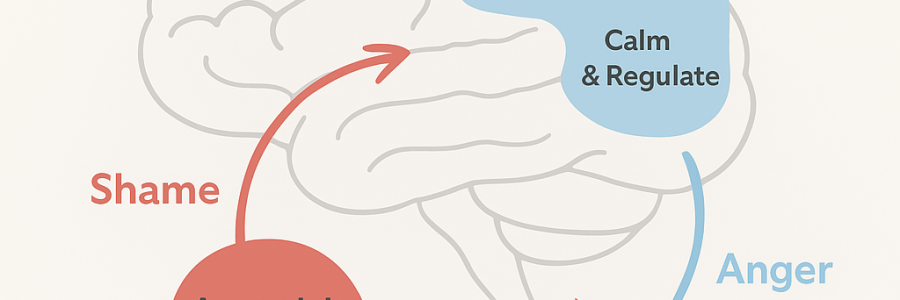
Why Some Men Seek Vulnerable Women to Exploit

Certain men intentionally target women who: Motivation 🧠 Neurological reinforcement: Their brain associates your compliance + trust → reward (control, pleasure, gain), strengthening the pattern over time. 2️⃣ The Trust Cycle That Leads to Nervous System Reset Here’s how the danger unfolds: The nervous system is saying: “This is unsafe; reset and protect.” 3️⃣ How to Slow It Down… Read More Why Some Men Seek Vulnerable Women to Exploit

Trusting or Being Intimate Too Soon

When you allow trust or intimacy to build faster than the other person proves reliability, your nervous system is essentially “rewiring” based on incomplete data. Consequences: The system has learned: “Connection + danger = chaos.” Rushing rewards can trigger old survival responses. 2️⃣ When They Don’t Answer Your Questions or Are Evasive Evasion signals that they may be protecting themselves… Read More Trusting or Being Intimate Too Soon

1️⃣ Visual “Road to Safety in New Relationships”

Think of this as a stepwise journey, showing how trust, boundaries, and emotional reward rebuild over time: 2️⃣ Specific Exercises to Test Trust Safely Exercise Purpose How to Apply Safely Low-Stakes Requests Test reliability Ask for small favors or follow-throughs; observe consistency Boundary Enforcement Drill Test respect for limits Say “I need space” or “I’m not… Read More 1️⃣ Visual “Road to Safety in New Relationships”

Healing Through Relationships

Entering a new relationship after decades of cruelty and abuse is a profound and delicate process. It’s not just about finding the right partner — it’s about rewiring your nervous system, reclaiming trust, and protecting your boundaries. Here’s a clear, structured overview: 1️⃣ Understand the Impact of Long-Term Abuse After long-term abuse, survivors often experience: Your nervous system… Read More Healing Through Relationships

Why Silence Protects Survivors During Escalation

Escalation is the most dangerous phase in abusive dynamics because regulation is failing. Silence works because it removes the very signals escalation feeds on. 1️⃣ Escalation Requires Feedback — Silence Removes It During escalation, the abuser’s nervous system is: They are scanning for: 🧠 Silence provides none. ➡️ Without feedback, the brain cannot calibrate intensity.➡️ This creates hesitation instead… Read More Why Silence Protects Survivors During Escalation

Road to Safety: Step-by-Step Framework

Layer 1: External Safety Goal: Remove immediate threatActions: Nervous System: Amygdala downregulation starts once the environment is reliably safe. Layer 2: Nervous System Recalibration Goal: Teach the body that danger is not constantActions: Nervous System: Parasympathetic activation increases; fight/flight/freeze decreases. Layer 3: Boundary Enforcement Goal: Reclaim autonomyActions: Nervous System: Prefrontal cortex strengthens; amygdala learns that limits = safety.Outcome: Confidence and self-trust begin… Read More Road to Safety: Step-by-Step Framework

Establish External Safety First

Recovering safety after decades of abuse is absolutely possible, but it’s a gradual, nervous-system-centered process, not something that happens overnight. Safety is both internal (how your body and mind respond) and external (your environment, relationships, and boundaries). Here’s a comprehensive framework: 1. Establish External Safety First Before the nervous system can relax, you need to remove ongoing threat. Steps include: Why it… Read More Establish External Safety First

Neuroscience & Therapeutic Map: Boundaries, Safety, and Recovery

1. Enforcing One Boundary Rewires Safety Faster Than Insight Key idea:Action speaks louder than thought. The brain needs proof, not reasoning. Mechanism: Clinical/Legal translation: Example: 2. Silence as the Final Neurological Boundary Key idea:Silence is not passive. It is active nervous-system regulation. Mechanism: Clinical/Legal translation: Example: 3. How the Brain Knows It’s Safe to Feel Again Key… Read More Neuroscience & Therapeutic Map: Boundaries, Safety, and Recovery

What a Boundary Breach Actually Is

A boundary breach is any behavior that overrides your autonomy, consent, or internal signals — especially after you’ve communicated a limit (or when it should be obvious). It’s not about intent.It’s about impact. Your nervous system reacts with stress because it detects loss of control. 1. Communication Boundary Breaches Message: “You don’t get to decide when or how I access you.”… Read More What a Boundary Breach Actually Is