Tough Times

Asking yourself whether the pleasure will outweigh the pain can be a helpful way to assess a situation or decision, especially during difficult times. It’s a form of cost-benefit analysis that can help you weigh the potential outcomes and make a more informed choice. Here are some points to consider when using this approach: Identify… Read More Tough Times

Amygdala

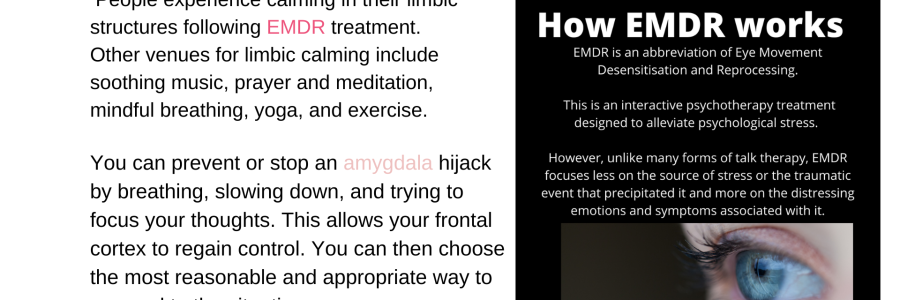
The amygdala is a small almond-shaped structure located deep within the brain’s temporal lobe, specifically in the medial temporal lobe. It is considered a key component of the limbic system, which is involved in regulating emotions, memory, and certain aspects of behavior. The amygdala plays a central role in the processing and regulation of emotions,… Read More Amygdala

Q & A – Can you rewire your brain?

Yes, it is possible to “rewire” your brain through a process called neuroplasticity. Neuroplasticity refers to the brain’s ability to change and adapt throughout life in response to experiences, learning, and environmental stimuli. Here are a few ways in which you can promote brain rewiring: Learning and Education: Engaging in new learning experiences and acquiring… Read More Q & A – Can you rewire your brain?

Progress in Therapy

Therapeutic progress refers to advancements and improvements in the field of therapy and mental health treatment. Over the years, there have been several notable therapeutic progressions that have enhanced our understanding of mental health, expanded treatment options, and improved outcomes for individuals seeking help. Here are some key areas of therapeutic progress: Evidence-based practices: There… Read More Progress in Therapy

Therapies suitable for addictions

There are several therapies that have been shown to be effective in treating addictions. Here are a few: Cognitive Behavioral Therapy (CBT): This therapy helps individuals change their negative thought patterns and behaviors by teaching them coping skills, problem-solving strategies, and ways to manage triggers. Motivational Interviewing (MI): This therapy focuses on increasing an individual’s… Read More Therapies suitable for addictions

Q & A – What type of therapy does a GWC need?

The type of therapy that is most appropriate will depend on the individual needs and circumstances of the person. Here are some types of therapy that may be beneficial for a grown wounded child Cognitive-behavioral therapy (CBT): CBT is a type of therapy that focuses on changing negative thought patterns and behaviors. It can help… Read More Q & A – What type of therapy does a GWC need?

What is the Abandonment Depression?

The Abandonment Depression is the complex painful childhood experience that is reconstituted in an emotional flashback. It is a return to the sense of overwhelm, hopelessness and helplessness that afflicts the abused and /or emotionally abandoned child. At the core of the abandonment depression is the abandonment melange – the terrible emotional mix of fear… Read More What is the Abandonment Depression?