Red Flags

Purpose: Spot damaging patterns in relationships quickly. Emotional manipulation cues Consistency vs. unpredictability Hidden agendas or lack of transparency Growth vs. Damage Checklist Purpose: Decide if a relationship is nourishing or harmful. Brain chemicals involved: dopamine, oxytocin, cortisol Emotional signals (trust, safety, excitement, anxiety) Behavioral patterns (support, sabotage, generosity, selfishness) Aligned Lifestyle vs. Compromised Lifestyle Shows lifestyle… Read More Red Flags
✅ “Am I in Growth or in Damage?” Checklist

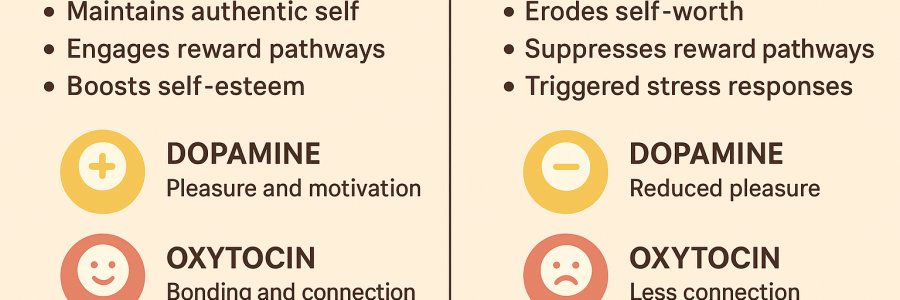
1. Trust & Honesty Growth: I feel I can rely on their words; transparency builds calm.🧠 Prefrontal cortex relaxes, lowering stress hormones. Damage: I catch lies, omissions, or half-truths; I feel misled.🧠 Cortisol spikes, amygdala hyper-activates → constant vigilance. 2. Consistency of Behavior Growth: Apologies are followed by lasting behavior change.🧠 Neuroplasticity → repeated positive actions form new pathways. Damage: Same red flags repeat… Read More ✅ “Am I in Growth or in Damage?” Checklist

🧠 Why deciding is so difficult

Investment trap (sunk cost fallacy): Your brain resists walking away after years or decades because it feels like all the time, love, and effort will be “wasted.” Bonding chemicals: Oxytocin and dopamine keep you emotionally tied, even when trust is broken. The brain clings to memories of “the good times” rather than the current reality. Cognitive dissonance: Part… Read More 🧠 Why deciding is so difficult

🧭 Red Flag Decision Framework (Step-by-Step)

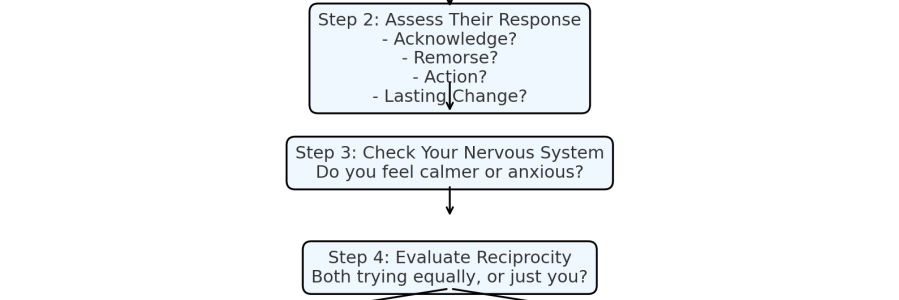
Step 1. Identify the Red Flag Is it about trust (lying, secrecy)? Respect (belittling, dismissing boundaries)? Consistency (broken promises, unreliability)? Values (money, fidelity, lifestyle mismatches)? Step 2. Assess Their Response Do they acknowledge it without excuses? Do they show remorse? Do they take concrete action (not just words)? Do changes last for weeks/months, or only until the next argument? Step 3. Check Your Nervous System Do… Read More 🧭 Red Flag Decision Framework (Step-by-Step)

🔎 Why “chances” feel tempting

When we’ve invested 6 months in someone, the brain often resists letting go because of reward pathways and bonding hormones: Dopamine makes us chase the “potential” of the relationship. Even if things are inconsistent, our brain clings to the highs. Oxytocin (bonding hormone) deepens attachment after intimacy, making us more forgiving than we should be. Cortisol rises when there’s conflict, creating a… Read More 🔎 Why “chances” feel tempting

Genuine Friendships: The Neuroscience and Psychology of Trust Without Agendas

Life is often described as a journey, and the people we meet along the way shape that journey more than the destinations themselves. Among all relationships, genuine friendships—those rooted in authenticity, trust, and no hidden agenda—are the ones that leave the deepest imprint on our brains and hearts. The Psychology of Genuine Connection At the… Read More Genuine Friendships: The Neuroscience and Psychology of Trust Without Agendas

🔹 Psychology of Genuine People

Consistency of Words and Actions → Genuine people behave congruently. This consistency reduces uncertainty and creates predictability, which is the foundation of trust. Active Listening & Empathy → They validate your feelings instead of dismissing them. This nurtures a sense of safety, which the brain interprets as “I am not alone.” Transparency → They do not hide motives, so… Read More 🔹 Psychology of Genuine People

🔹 Self-Respect & Refusing to Be Misled

1. Psychological Side This strengthens self-concept (how you see yourself). People who allow repeated lies often slip into cognitive dissonance (their actions don’t match their values), which erodes confidence over time. Gaslighting DefenseLiars often rely on you doubting yourself. By standing firm, you break the cycle of manipulation → doubt → compliance. Empowerment LoopEvery time you call out dishonesty or refuse… Read More 🔹 Self-Respect & Refusing to Be Misled

🧠 Flow Diagram: Pretender’s Brain vs. Your Brain

Pretender’s Brain (Internal Process) Insecurity / Goal → “I need to impress / control / belong.”↓ Prefrontal Cortex → Builds and manages the fake persona (planning, suppressing truth).↓ High in anxious pretenders (fear of being caught). Low in manipulative types (reduced guilt).↓ Reward System (Dopamine) → Every time the lie “works” (admiration, attention, gain), dopamine reinforces the behavior.↓… Read More 🧠 Flow Diagram: Pretender’s Brain vs. Your Brain

When You Meet Someone Pretending to Be Something They’re Not

🔹 1. Psychology Behind the Mask Insecurity & Low Self-EsteemPretending often hides deep feelings of inadequacy. They create a “false self” to gain acceptance. Impression ManagementEveryone manages impressions a little, but chronic pretenders do it excessively — tailoring their identity to fit what they think you want. Social & Survival StrategyIn evolutionary psychology, deception sometimes… Read More When You Meet Someone Pretending to Be Something They’re Not