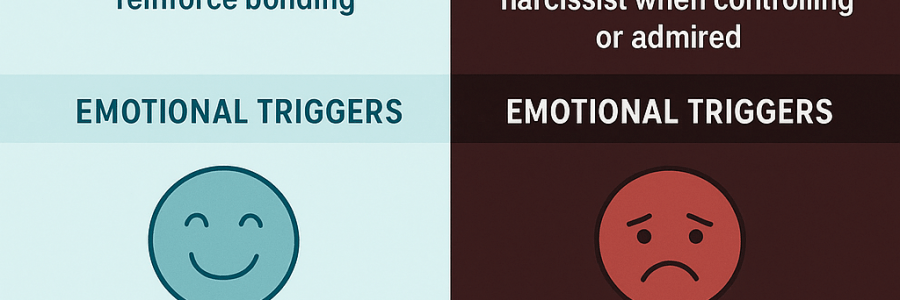
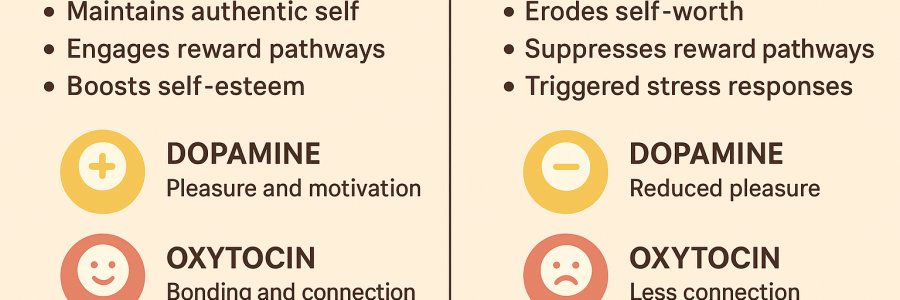
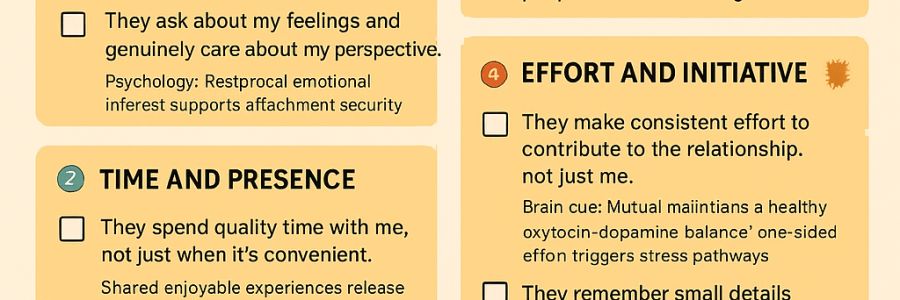
Why Care, Fun, and Affection Should Come Naturally in Love

(Neuroscience & Psychology Perspective) The Core Idea In a healthy relationship, kindness, fun, and affection flow naturally. A man who truly values you will want to spend time with you, take you out, surprise you, make you laugh, and affirm your worth. If you find yourself teaching him how to care, that’s already a sign of imbalance.… Read More Why Care, Fun, and Affection Should Come Naturally in Love
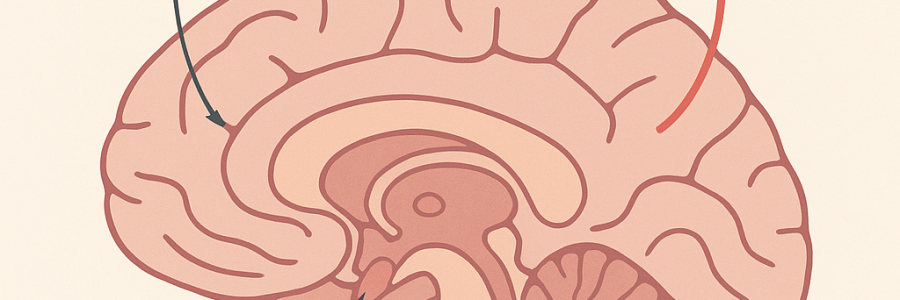
🧠 Neuroscience of Affection/Attraction vs. Deep Emotional Investment

1. Attraction & Affection Dopamine: thrill, excitement, pleasure. Norepinephrine: butterflies, racing heart. Testosterone/estrogen: physical desire. Strong but often short-term. Can fade when novelty wears off. More about how you make them feel in the moment. 2. Deep Emotional Investment (Commitment Love) Oxytocin & vasopressin: bonding, trust, long-term pair bonding. Prefrontal cortex: planning, long-term decision-making (choosing to prioritize you). Reduced… Read More 🧠 Neuroscience of Affection/Attraction vs. Deep Emotional Investment

How do you know it’s love if the person doesn’t say it?

From neuroscience and psychology, love shows itself not only in words but also in patterns of behavior, body language, and brain-driven bonding signals. Here’s how you can tell: 🔬 Neuroscience of Love (Without Words) When we’re attracted or in love, the brain releases dopamine → pupils dilate and we hold eye contact longer. Oxytocin (the “bonding hormone”)… Read More How do you know it’s love if the person doesn’t say it?

🧠 Neuroscience of Recovery After Abuse & Separation

1. Brain Stress Systems (Damage Phase) Cortisol Flooding: Abuse or betrayal keeps the brain in “threat mode,” with the amygdala hyperactive and cortisol/adrenaline spiking. Prefrontal Shutdown: Logical thinking, planning, and self-control weaken — the brain prioritizes survival. Reward System Hijack: Dopamine drops, making it harder to feel motivated, and oxytocin bonds (even unhealthy ones) create withdrawal-like symptoms when the… Read More 🧠 Neuroscience of Recovery After Abuse & Separation

🧠 Neuroscience of the Con Artist & Catfisher

1. Trust Wiring Exploited Oxytocin: Normally helps you feel bonded and safe.→ Con artists/catfishers trigger this by mirroring your emotions, showing “care,” or creating intimacy fast. Once oxytocin is flowing, the brain suppresses suspicion circuits (in the amygdala), making you overlook red flags. 2. Reward & Anticipation Dopamine surges when they dangle promises — love, money, opportunity, or belonging. The… Read More 🧠 Neuroscience of the Con Artist & Catfisher

Bottom Line

Humans don’t just like connection — our brains and bodies are wired to need it. When a partner is consistently unavailable (mentally or physically), it activates stress systems instead of bonding systems. 🧠 Neuroscience Attachment & Safety (Oxytocin & Dopamine):Being with a responsive partner normally boosts oxytocin and dopamine, giving feelings of safety, reward, and calm. If your partner… Read More Bottom Line

Psychological Perspective

At six months, many people are in a developing attachment phase (often forming a secure or anxious bond). A sudden departure without explanation can trigger abandonment fears, especially if you tend toward anxious attachment. Thoughts like “Did I do something wrong?” or “Do they not care?” are common. Your brain craves closure. When someone leaves without explanation, it… Read More Psychological Perspective

Genuine Partner vs. Fortune Hunter

Category Genuine Partner Fortune Hunter Examples Primary Motivation Emotional connection, shared values, love, support Financial gain, status, luxury lifestyle Genuine: invests time in meaningful conversation; Fortune Hunter: only engages when lavish gifts, trips, or status benefits are involved Behavior Toward You Respects boundaries, listens, supports growth Pushes for access to assets, pressures lifestyle upgrades Genuine:… Read More Genuine Partner vs. Fortune Hunter

Aligned Lifestyle vs. Compromised Lifestyle

Aspect Aligned Lifestyle Compromised Lifestyle Values & Self-Respect Honors personal standards, self-worth intact Settling for less than your standards, self-respect compromised Luxury & Comfort Enjoys fine dining, luxury travel, high-quality clothing, elegant surroundings Sacrifices comfort, downgraded experiences, everyday compromises Relationships Chooses partners/friends who respect and elevate you Tolerates manipulation, dishonesty, or low effort in relationships… Read More Aligned Lifestyle vs. Compromised Lifestyle