Why Emotional Neglect Is Often More Damaging Than Overt Abuse
Overt abuse is visible.Emotional neglect is invisible — and that is what makes it so damaging. When abuse happens, the nervous system knows something is wrong. Pain is acknowledged. Boundaries become necessary. Survival instincts activate. But emotional neglect is different. It teaches a person that their feelings do not matter, their needs are inconvenient, and their existence requires… Read More Why Emotional Neglect Is Often More Damaging Than Overt Abuse

Emotional Neglect

Emotional neglect occurs when: Your feelings are consistently ignored Your emotional needs are dismissed Your attempts to connect are met with indifference Your emotional expression is not responded to Writing letters pouring your heart out — and having them ignored or thrown away — is a classic example of emotional neglect. Psychological meaning: “My inner world does not matter.” Over time,… Read More Emotional Neglect

How Survivors Rebuild Identity After Psychological Erosion

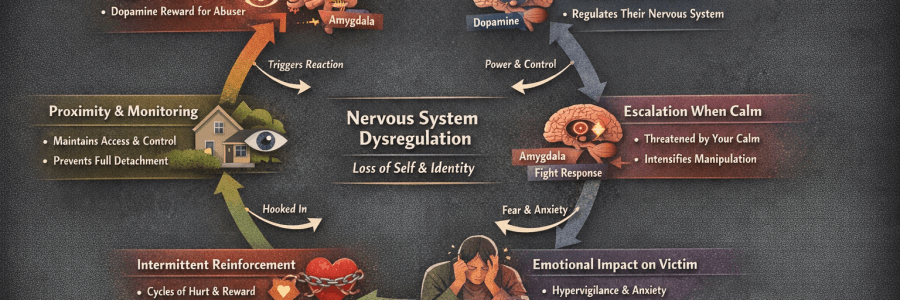
Psychological erosion happens slowly. It is not one event — it is thousands of small moments of: criticism dismissal emotional neglect control invalidation fear walking on eggshells Over time, the nervous system adapts to survival, and identity becomes secondary. 🧩 Phase 1: Survival Identity (Before Healing) When someone lives in chronic emotional stress, the brain prioritises safety over authenticity. This… Read More How Survivors Rebuild Identity After Psychological Erosion

The Four Horsemen of Relationship Breakdown (Gottman Method)

John Gottman identified four communication patterns that predict relationship failure with over 90% accuracy.They are called The Four Horsemen because once they dominate a relationship, emotional safety collapses. These four patterns are: Criticism Contempt Defensiveness Stonewalling 1️⃣ Criticism – Attacking the person, not the behaviour What it sounds like: “You always…” “You never…” “What’s wrong with you?” “You’re so selfish / lazy… Read More The Four Horsemen of Relationship Breakdown (Gottman Method)

Neuroscience & Psychology Perspective – living in a parallel universe

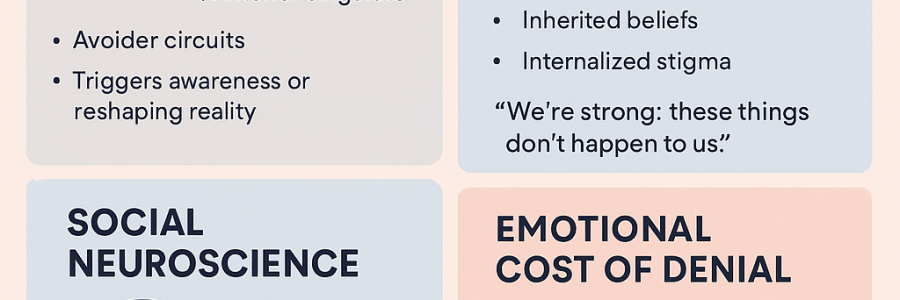
1. Cognitive Dissonance & Denial Systems (on their side) If his relatives are still sending cards addressed to Mr & Mrs, 17 months after separation, this strongly suggests: Denial – an unconscious refusal to update reality because the truth is uncomfortable. Cognitive dissonance avoidance – maintaining the old narrative is easier than emotionally processing change, conflict, or loss. Emotional… Read More Neuroscience & Psychology Perspective – living in a parallel universe

Trauma recovery often feels like time travel.

When you live for years in survival mode — emotional suppression, hyper-vigilance, constant adaptation — your nervous system is focused only on one thing: getting through. You don’t live.You endure. Psychologically, this creates a version of you built for survival, not for authenticity.You silence your needs.You shrink your emotions.You disconnect from parts of yourself just to… Read More Trauma recovery often feels like time travel.

For a long time, life felt like Groundhog Day.

I knew exactly what was coming:misery, tension, negativity, judgment, emotional exhaustion. Every day was about treading water — suppressing my emotions, shrinking myself, putting on a brave face, surviving instead of living. That kind of survival changes you.It teaches you to endure.To adapt.To silence yourself. But now…I can finally relax. I can finally be me. No judgment.No abuse.No fear.… Read More For a long time, life felt like Groundhog Day.

I am choosing high vibration, healing, and alignment.

I release what no longer serves my growth.I welcome peace, clarity, abundance, and joy. Every day, I intentionally raise my energy through:✨ gratitude✨ positive thinking✨ self-respect✨ emotional awareness✨ conscious intention What I focus on, expands.What I believe in, strengthens.What I nurture, flourishes. I am grateful for how far I’ve come.I trust where I am going.I… Read More I am choosing high vibration, healing, and alignment.

Positive thinking is not denial.

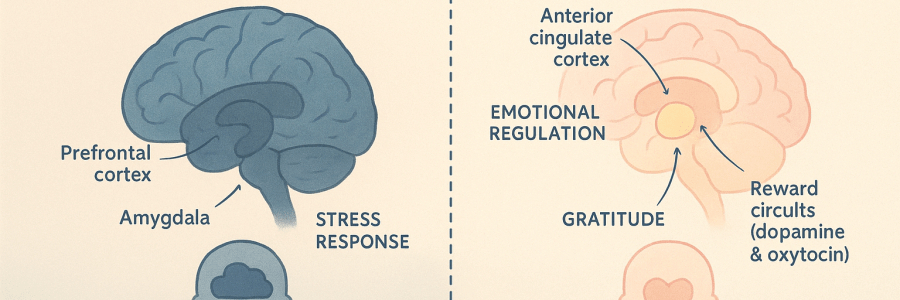
Healing and staying positive isn’t about pretending everything is fine.It’s about choosing a mindset that supports growth, peace, and emotional freedom. Positive thinking is not denial.It is direction. Affirmations help retrain the nervous system and subconscious mind — especially after long periods of stress, trauma, or emotional depletion.What we repeatedly tell ourselves becomes the foundation of how… Read More Positive thinking is not denial.