Truth and Honesty

At the heart of all healthy relationships lies truth and honesty.These qualities build trust, emotional safety, and deep connection. 🌱Without them, relationships may exist in form — but not in emotional reality. 🤍 Healing begins where truth is honoured and honesty is safe. ✨

Dating Safely After Emotional Abuse

1. Heal Before You Attach Not because you’re broken — but because trauma distorts perception, attachment, and intuition. Healing helps you: recognise red flags early trust calm instead of chaos avoid trauma bonding feel emotionally safe in stillness You don’t attract healthier partners — you recognise them. 2. Go Slow (This Is Non-Negotiable) Healthy connection develops gradually. 🚩… Read More Dating Safely After Emotional Abuse

Healthy vs Unhealthy Attachment Styles

✅ Secure Attachment (Healthy) Core belief: “I am worthy of love, and others can be trusted.” How it looks: Comfortable with closeness and independence Communicates needs calmly Handles conflict without drama Feels safe in emotional intimacy Respects boundaries Doesn’t fear abandonment or engulfment Feels like: Calm Safe Stable Supportive Peaceful This is the goal after healing. ⚠️ Unhealthy… Read More Healthy vs Unhealthy Attachment Styles

How to Build Healthy Future Relationships (After Abuse)

1. Heal First — Don’t Skip This Step Not because you’re broken — but because trauma changes how we attach, trust, and choose. Healing helps you: trust your intuition again recognise red flags early avoid trauma bonds feel safe in calm (not bored) choose emotionally available people You don’t attract better — you recognise better. 2. Learn the… Read More How to Build Healthy Future Relationships (After Abuse)

The Deep Benefits of Living Alone After Abuse

🕊️ 1. Your Nervous System Finally Feels Safe When abuse ends, your body often stays in survival mode. Living alone gives: peace predictability emotional safety nervous system regulation You no longer have to anticipate moods, manage tension, or walk on eggshells. Your body learns: I am safe now. 🌿 2. Silence Becomes Healing (Not Lonely) At… Read More The Deep Benefits of Living Alone After Abuse

Being in the here and now + trusting divine timing = emotional freedom.

When you shift into presence, your nervous system settles. The brain steps out of threat-mode, and your body finally feels safe. Neuroscience shows that mindful presence activates the prefrontal cortex and calms the amygdala, allowing clarity, peace, and emotional balance to return. And faith — whether spiritual, intuitive, or simply deep trust in life — gives meaning to… Read More Being in the here and now + trusting divine timing = emotional freedom.

Briefcase of Secrets

Neuroscience and psychology show that when someone spends decades “carrying a locked briefcase of secrets” — grudges, manipulations, resentments — their brain literally becomes wired to maintain it. It’s a heavy cognitive and emotional load: Cognitive cost: The constant rumination takes up attention and memory space, leaving less room for creativity, learning, or meaningful connection. Emotional cost: Chronic… Read More Briefcase of Secrets

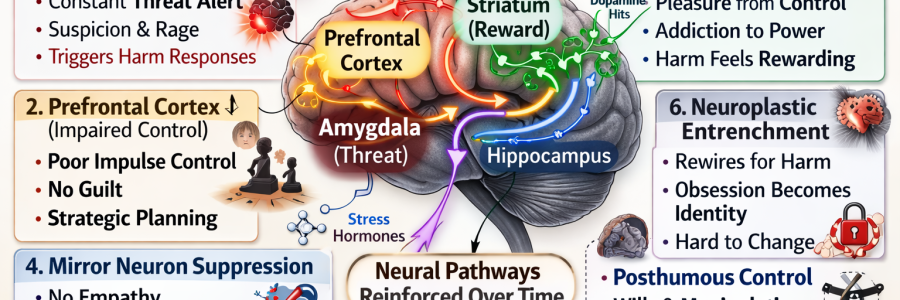
Neuroscience of a Lifelong Obsession with Harm

1. Hyperactive Threat Circuits Amygdala: The brain’s alarm system becomes constantly on high alert, interpreting others’ actions as threats or targets for manipulation. Result: Every interaction is filtered through a lens of suspicion, fear, or opportunity to control. Even minor slights trigger intense emotional responses. 2. Prefrontal Cortex Dysfunction Normally, the prefrontal cortex regulates impulses, considers consequences, and enables empathy.… Read More Neuroscience of a Lifelong Obsession with Harm