The Hidden Childhood Patterns That Shape Predatory Behaviour

By Linda C. J. Turner | Trauma Therapist & Neuroscience Practitioner© LindaCJTurner.com Some people arrive in adulthood with a particular kind of charm — captivating, attentive, and seemingly “authentic.”Yet behind that charm can lie a history of unmet needs, emotional deprivation, and neurological adaptation that shapes predatory relational behaviour. Understanding these hidden childhood patterns can help you… Read More The Hidden Childhood Patterns That Shape Predatory Behaviour
All Take, No Give 😅

You know them: 💸 Wants payment for everything🤷‍♂️ Does the bare minimum… even in a marriage🛑 Never lifts a finger unless it benefits them💔 Emotional support? Nope, not in stock🤑 Everything is a transaction Your brain says: “This is not normal.”Neuroscience agrees: your mirror neurons are trying to help, but theirs are on permanent vacation. 🏖️ Why? Their brains… Read More All Take, No Give 😅

All Take, No Give: The Science of Humans Who Live in Transaction Mode

You know them.The ones who: Won’t lift a finger unless there’s payment involved. See every interaction as a transaction. Do the bare minimum — even in a marriage. Never offer emotional support, even to their own families. Are basically walking, talking “IOU” machines… except they never pay back. 🧠 The Neuroscience of Selfishness Your brain loves reciprocity. It’s hardwired for… Read More All Take, No Give: The Science of Humans Who Live in Transaction Mode

The Kindness Trap: When “Helpful” Becomes “Used-Up”

It starts innocently enough.You help. You lend. You sew. You bake. You listen. You fix. Before long, you’ve become the neighbourhood “Oh, she can do it!” “She’s got a sewing machine!”“She’s so kind — she’ll help you.”“Ask her, she’s the best!” And yes — you are the best.Until the day comes when you need help, and suddenly… tumbleweeds.The… Read More The Kindness Trap: When “Helpful” Becomes “Used-Up”

The People-Pleaser’s Brain: Why Users and Abusers Love You So Much

Do you ever find yourself saying, “It’s fine, I don’t mind,” when you absolutely do mind?Do you keep helping, fixing, and rescuing — then end up frustrated, exhausted, and muttering, “Why do I attract these people?” Welcome to the world of the People Pleaser — kind-hearted, over-giving, and apparently wearing an invisible sign that says: “Free emotional labour and snacks inside.” 🧠 The… Read More The People-Pleaser’s Brain: Why Users and Abusers Love You So Much

Freeloaders: Psychological Guide to the Human Parasite

Let’s be honest — we’ve all met one.That friend who arrives “just as dinner’s ready.”The one who forgets their wallet more often than their birthday.The one who’s always “between jobs,” “waiting for a transfer,” or “just about to pay you back.” Welcome to the world of freeloaders — a curious species of human who can spot generosity faster than a… Read More Freeloaders: Psychological Guide to the Human Parasite

Avoiding Fake Love and False Friendships During Trauma Recovery

When you’re healing from trauma — whether it’s the end of an abusive relationship, a painful divorce, or the loss of a partner — you’re at your most open and vulnerable.Your heart wants connection, your nervous system craves safety, and your mind is searching for stability.And that’s exactly when the wrong people often appear —… Read More Avoiding Fake Love and False Friendships During Trauma Recovery

Real Friendship: The Neuroscience of Genuine Connection

Real friendship is a two-way thing.It’s calling someone when they need support.It’s caring — really caring.It’s listening.It’s inviting them over when life feels heavy.It’s showing up.It’s offering emotional — and sometimes even financial — support when you can.It’s trust.It’s respect.It’s loyalty.It’s give and take, not take and take. 🧠 The Neuroscience Behind Real Connection Our brains are wired… Read More Real Friendship: The Neuroscience of Genuine Connection

Real Love Doesn’t Confuse You: The Neuroscience of Emotional Clarity

If someone really wants you, you’ll know.It won’t be a guessing game.It won’t be mixed signals.It won’t be head-spinning mind games or emotional exhaustion.It won’t be on and off, hot then cold, kind when they want something and distant when they don’t.It won’t be detachment when you set boundaries or the silent treatment when they… Read More Real Love Doesn’t Confuse You: The Neuroscience of Emotional Clarity

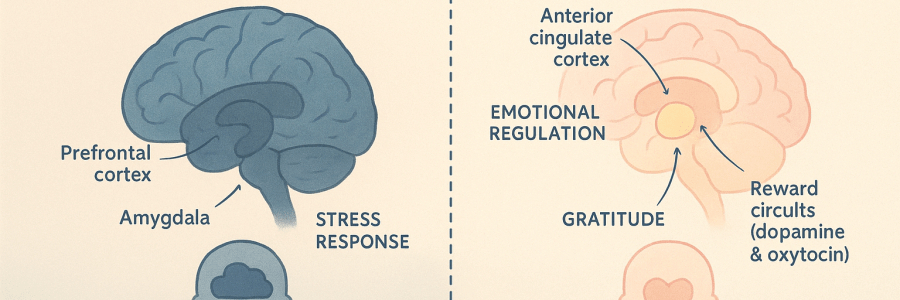
Gratitude for the Good and the Bad: The Neuroscience of Learning Through Contrast

By Linda C. J. Turner — Therapist & Advocate | Neuroscience & Emotional Intelligence Practitioner We often hear that gratitude changes the brain — but what many don’t realise is that it’s not only the “good” we must be grateful for. Sometimes, life’s hardest moments are the ones that reshape us the most. Neuroscience shows that our… Read More Gratitude for the Good and the Bad: The Neuroscience of Learning Through Contrast