When Someone Appears in Your Life and Everything Changes — The Neuroscience of Unexpected Connection
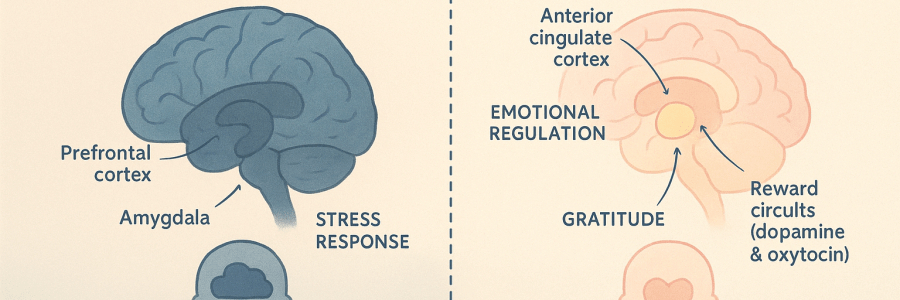
Sometimes a person just walks into your life…No searching.No looking.No dating apps.No forcing anything into place. And suddenly, everything shifts. What feels like magic from the outside actually has a powerful neuroscience explanation. The brain is wired for pattern recognition, safety detection, and emotional synchrony — and when the right person arrives, these systems light up in ways that feel instant,… Read More When Someone Appears in Your Life and Everything Changes — The Neuroscience of Unexpected Connection
Lucie Clayton Charm Academy (London, mid‑1970s)

Lucie Clayton Charm Academy (London, mid‑1970s) Lucie  Clayton Charm Academy in London around 1975 — 🔍 Historical & Institutional Context The Academy was founded in 1928 by Sylvia Lucie Golledge as a modelling‑agency cum finishing school. Wikipedia+2questprofessional.co.uk+2 By the 1950s and 1960s it had become one of Britain’s top modelling agencies, with the finishing‑school element increasingly… Read More Lucie Clayton Charm Academy (London, mid‑1970s)

Where Do We Learn Gratitude, Kindness, and Manners?

Gratitude, kindness, etiquette, and manners are often seen as “soft skills,” but they are foundational to human relationships. These behaviors are not innate — they are learned through a combination of family upbringing, cultural environment, education, and sometimes formal training. Let’s break down how we acquire them. 1. Family: The First Classroom The family is the… Read More Where Do We Learn Gratitude, Kindness, and Manners?

Confusing kindness with obligation

Gratitude is more than polite words — it’s a reflection of how someone perceives relationships, empathy, and reciprocity. When a person cannot acknowledge kindness, it’s not a trivial social faux pas; it’s a signal about their inner framework and how they relate to others. Here’s what’s really happening: Confusing kindness with obligationSome people have been… Read More Confusing kindness with obligation

Reclaiming Yourself: Identity and Self-Trust After Trauma

Abuse doesn’t just harm your body or your feelings.It erodes the very core of who you are — your identity and your trust in yourself. But here’s the truth:You are not lost. You were temporarily silenced, not erased.And your brain has an incredible ability to relearn, rebuild, and reclaim. 1. The Brain Forgets Safety, But It Can Remember Strength Years… Read More Reclaiming Yourself: Identity and Self-Trust After Trauma

**How the Brain Unlearns Trauma Conditioning:

The Healing Phase Explained** After years of abuse, your brain didn’t just “feel” unsafe — it adapted to unsafe.It shaped itself around survival. Healing is not about “getting over it.”Healing is about teaching the brain a new world exists. Let’s break down how that happens, step by step. 1. Safety First: The Nervous System Learns It’s Not Under… Read More **How the Brain Unlearns Trauma Conditioning:

**Why Victims Start to Believe It:

The Neurobiology of Anticipatory Anxiety, Punishment Conditioning, and Survival Brain Wiring** People think victims “choose” to stay.The science shows the opposite: their brain is being rewired for survival, not freedom. Let’s go deeper. 1. The Brain Learns Through Threat Patterns — Not Logic Human beings don’t learn from “facts” first.We learn from repeated emotional and physiological states.… Read More **Why Victims Start to Believe It:

Trauma, the Brain, and the Law: Why Neuro-Evidence Matters in Cases of Long-Term Abuse

For decades, victims of prolonged psychological, emotional, and physical abuse have been told: “Just move on.”But in courtrooms, in forensic psychology, and increasingly in neurolaw, that phrase has no meaning.Because trauma leaves measurable, documentable, scientifically validated signatures in the brain—and those signatures matter legally. 1. What Trauma Does to the Brain — and Why Courts Consider It… Read More Trauma, the Brain, and the Law: Why Neuro-Evidence Matters in Cases of Long-Term Abuse

The Neuroscience of Why “Just Move On” Is Impossible After Abuse

One of the most infuriating parts of healing from long-term abuse isn’t just the trauma itself — it’s the endless stream of clueless people offering “advice” without any understanding of what chronic trauma does to the brain. “Just move on.”“You should be over it by now.”“You’ll meet someone else soon.”“You’ll be remarried in a year!”… Read More The Neuroscience of Why “Just Move On” Is Impossible After Abuse