Secure Attachment: Benefits vs. Vulnerabilities

💚 The Benefits (These Are Very Strong) Secure attachment creates one of the most resilient emotional foundations a person can have. 1. Higher trust and healthy bonding Securely attached people: expect relationships to feel safe approach others with goodwill assume their needs will be met find it easy to get close This makes relationships smoother,… Read More Secure Attachment: Benefits vs. Vulnerabilities
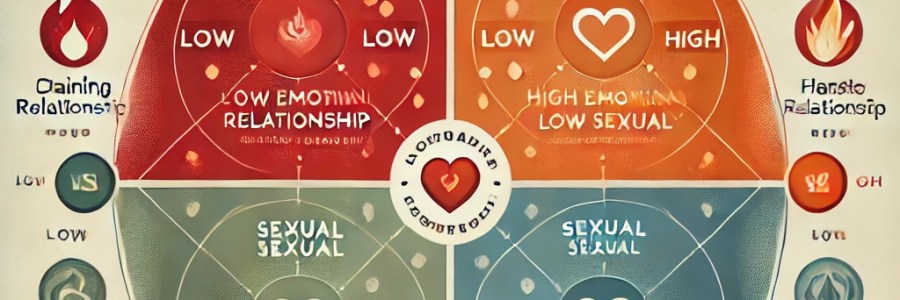
SEXUAL COMPATIBILITY vs EMOTIONAL COMPATIBILITY

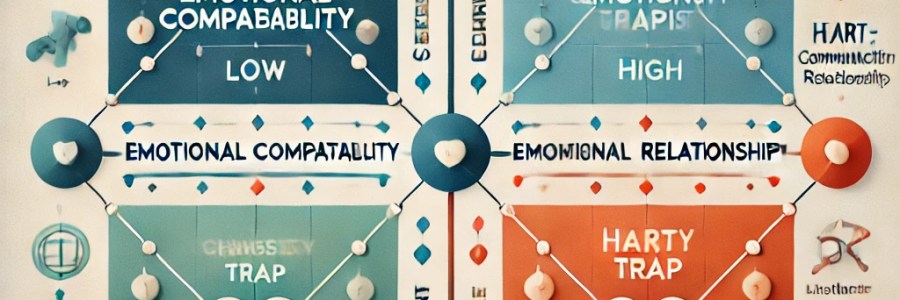
Relationship Matrix AXES Emotional Compatibility: Low → HighSexual Compatibility: Low → High 🟥 QUADRANT 1 — LOW EMOTIONAL / LOW SEXUAL “THE DRAINING RELATIONSHIP” Patterns Found Here The Roommate Relationship Silent Treatment / Cold War Couple The Combat Zone “Should-We-Even-Be-Together?” Pair Characteristics Disconnection • Low desire • Frequent conflict Emotional numbness • No repair cycles Long-Term Outlook: Not… Read More SEXUAL COMPATIBILITY vs EMOTIONAL COMPATIBILITY

Sexual Compatibility vs. Emotional Compatibility Matrix

Axes Horizontal (X-axis): Emotional CompatibilityLow → High Vertical (Y-axis): Sexual CompatibilityLow → High 📊 The 4 Quadrants 🟥 Quadrant 1 — LOW Emotional / LOW Sexual Compatibility “The Draining Relationship” Characteristics Constant misunderstandings Lack of trust or safety Sex feels disconnected, mechanical, or avoided Arguments, coldness, irritation Feeling alone in the relationship Psychology Nervous system remains in defense… Read More Sexual Compatibility vs. Emotional Compatibility Matrix

Great Sex vs. Love — and Can You Live with Bad Sex?

1. Great Sex ≠ Love Category Great Sex Love / Healthy Partnership Duration Intense but temporary Stable, long-term Brain Chemistry Dopamine high, reward circuits Oxytocin, safety, long-term bonding Attachment Often insecure or inconsistent Secure, safe, predictable Communication Not required Absolutely essential Conflict Resolution Often avoided Handled with maturity Long-term Stability Unstable; high highs & lows… Read More Great Sex vs. Love — and Can You Live with Bad Sex?

Neuroscience Behind Reduced Mirror-Neuron Activity (Expanded)

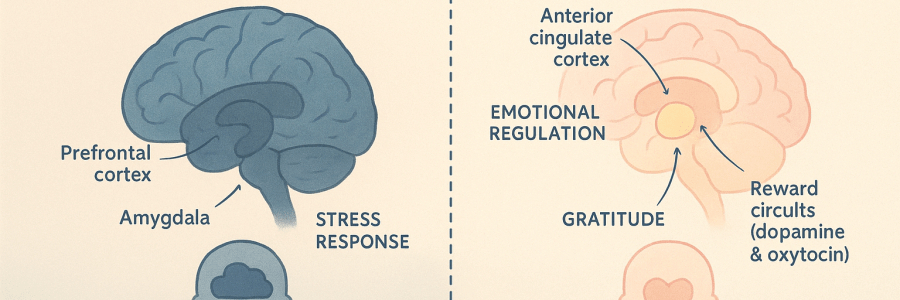
Reduced mirror-neuron activation doesn’t mean someone is “bad” — it means their brain processes emotional signals differently.Below is a fuller breakdown of how this happens and why. 1. Avoidant Attachment Styles People with avoidant attachment learned early that emotional closeness felt unsafe or overwhelming. Brain mechanisms: The amygdala becomes triggered by intimacy rather than by separation. The prefrontal cortex learns… Read More Neuroscience Behind Reduced Mirror-Neuron Activity (Expanded)

Mirror Neuron System & Empathy: Why Some People Don’t “Feel” What You Feel

What Are Mirror Neurons? Mirror neurons are brain cells that activate both when you perform an action and when you observe someone else doing it.They also activate when you see: facial expressions emotional reactions pain joy distress This system helps your brain simulate what another person is experiencing. In simple terms:Mirror neurons are the foundation of natural, automatic empathy. When Mirror… Read More Mirror Neuron System & Empathy: Why Some People Don’t “Feel” What You Feel

Neuroscience Behind People Who Leave You Hanging

1. Avoidant Attachment & Threat Perception People who disappear, delay responses, or keep you waiting often have an avoidant attachment style.To them, closeness feels threatening — their amygdala (fear center) misinterprets emotional intimacy as loss of control or loss of independence. Brain mechanism: Amygdala → activates threat response Nervous system → pushes for distance Prefrontal cortex →… Read More Neuroscience Behind People Who Leave You Hanging

Neuroscience and Psychology of Re-Learning Healthy Relationships After Abuse

1. Trauma Rewires the Brain Amygdala hyperactivation: Chronic abuse primes the brain’s threat system. The amygdala becomes hypersensitive, interpreting neutral or safe cues as dangerous. Prefrontal cortex suppression: Logical reasoning and decision-making circuits are often inhibited during trauma, making it harder to assess safety objectively. Hippocampal disruption: Trauma affects memory and context processing, leading to difficulty distinguishing past… Read More Neuroscience and Psychology of Re-Learning Healthy Relationships After Abuse

Why People Don’t Believe Victims of Hidden Abuse

1. Cognitive Dissonance Psychology: Difficulty reconciling the image of a “good, polite, competent person” with allegations of abuse. Neurology: Prefrontal cortex resists integrating conflicting information → bias toward familiar, socially safe narratives. Social: People prefer simple stories; abuse behind closed doors challenges social assumptions. 2. Stereotypes of Abusers Psychology: Society expects abusers to be visibly angry, aggressive, or “monstrous.”… Read More Why People Don’t Believe Victims of Hidden Abuse