Why Minimising Strangulation is Dangerous
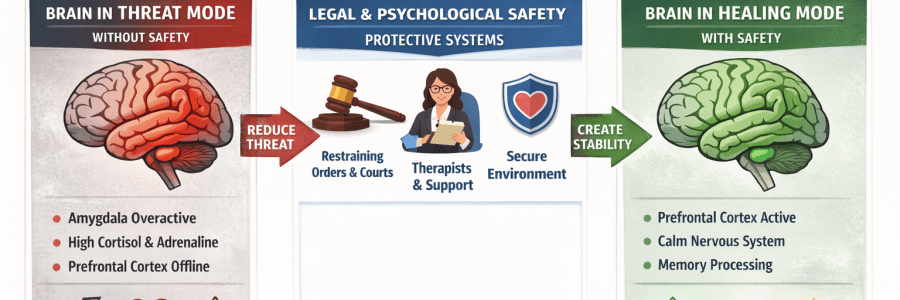
Strangulation is not just “a scary moment”. It is a direct, intentional threat to life, even if the person survives. 1. Life-Threatening Behavior Non-fatal strangulation is a strong predictor of future lethal violence. Research shows survivors of strangulation are at much higher risk of homicide or severe injury later. The lack of visible injury does not mean it’s not serious. Internal damage… Read More Why Minimising Strangulation is Dangerous

Effective Therapeutic Approaches

1. Trauma-Focused Therapy Helps the brain process traumatic memories without reliving them fully. Reduces emotional charge, anxiety, and flashbacks. Especially effective for life-threatening trauma like strangulation. Helps survivors reframe thoughts and beliefs formed during abuse. Builds coping skills for fear, anxiety, and hypervigilance. Strangulation trauma often leaves physical nervous system imprints. Therapies like somatic experiencing, sensorimotor psychotherapy, or trauma-informed yoga help release… Read More Effective Therapeutic Approaches

Statistics & Prevalence

Here’s a clear, evidence-based overview of what research shows about non-fatal strangulation — including how common it is, how it affects survivors physically and psychologically, and what we know about how it impacts the person doing the strangulation (to the extent research addresses that). This is grounded in scientific literature and public health data. 📊 Statistics & Prevalence Non-fatal strangulation (NFS) is recognised… Read More Statistics & Prevalence

Talking About Strangulation in Therapy: Why It’s So Hard — and How EMDR Can Help

Talking about strangulation in therapy is not just “talking about a memory.”For many survivors, describing the sensations, fear, and loss of control can reactivate the trauma itself. This is not resistance.It is how the nervous system remembers danger. Why Describing It Feels Overwhelming Strangulation is a primal threat to survival. When it happened, the brain and body… Read More Talking About Strangulation in Therapy: Why It’s So Hard — and How EMDR Can Help

Strangulation is not about the situation.It is about the person who chooses to use it.

The Short Answer Future partners can absolutely be in danger It is not “just that relationship” Strangulation is a marker of a high-risk abuser, not a one-off loss of control Why Strangulation Is Different Strangulation isn’t an impulsive shove or shouted argument. It is: A deliberate act A control behavior A willingness to bring someone to the edge… Read More Strangulation is not about the situation.It is about the person who chooses to use it.

Pressurised While Ill or Hospitalised — Read This First

If you are ill, medicated, exhausted, or hospitalised and someone is pushing you to sign documents, transfer assets, or grant Power of Attorney, stop immediately. This is not help.This is risk. Why This Is Dangerous Illness reduces capacity — even temporarily. Pain, medication, fear, and fatigue impair judgment. Decisions made in this state are not fully informed, no… Read More Pressurised While Ill or Hospitalised — Read This First

Power of Attorney + Struck-Off Solicitors: A Major Red Flag

If you are being encouraged to grant Power of Attorney to anyone connected to a struck-off solicitor, stop immediately. This is not a technical detail.This is a risk issue. Why This Matters A solicitor is usually struck off for serious breaches — dishonesty, misuse of client funds, fraud, or abuse of trust.That history does not disappear just because they are now acting “informally”… Read More Power of Attorney + Struck-Off Solicitors: A Major Red Flag

If You Feel Pressured or Intimidated by Family — Read This

If family members are pushing you to sell property, move money, or make fast financial decisions during separation, stop and breathe. Pressure is not protection. If advice feels rushed, controlling, or fear-based, it is not about your wellbeing — even if it is framed as “help.” Quiet Red Flags to Notice You are told you are too… Read More If You Feel Pressured or Intimidated by Family — Read This

Watch for Familiar Family Patterns of Financial Control

Before you agree to sell, transfer, divide, or “protect” assets, take a hard look at family history — not just the current situation. Patterns repeat. 🚩 Ask This First: Is there a history in this family of taking control of other people’s: Property or housing Inheritances Businesses or savings Divorce settlements Decision-making “on their behalf” If the… Read More Watch for Familiar Family Patterns of Financial Control

READ THIS BEFORE SELLING ANYTHING

(Property, assets, investments — anything) If you are newly separated or divorcing, do not sell, divide, or sign away assets while in emotional shock. Read the following slowly. 🚫 Stop Immediately If: The separation is days or weeks old You feel pressured, panicked, or emotionally flooded Someone is insisting “this needs to happen now” The loudest voices are not… Read More READ THIS BEFORE SELLING ANYTHING