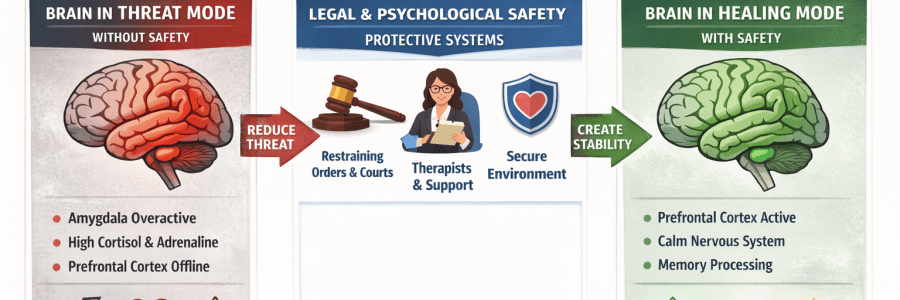
Why Your Standards Have Changed

After trauma or prolonged stress, the brain becomes hyper-focused on safety. When healing happens: The amygdala calms. The prefrontal cortex strengthens discernment. Pattern recognition improves. Red flags are seen earlier. Boundaries feel natural, not scary. You are no longer looking for intensity.You’re looking for stability. That is a regulated nervous system speaking. Does a Man… Read More Why Your Standards Have Changed

 Being able to laugh at yourself is a hallmark of emotional intelligence

Neuroscience and psychology show that being able to laugh at yourself is a hallmark of emotional intelligence, and it has measurable social and cognitive benefits. Here’s a breakdown with the evidence from multiple studies: 1️⃣ Emotional Self-Regulation Neuroscience: The prefrontal cortex helps us regulate emotions and reframe situations. Laughing at ourselves activates this area, signaling emotional control and… Read More  Being able to laugh at yourself is a hallmark of emotional intelligence

Your Brain Loves Authenticity

Neuroscience: When you act in alignment with your true self, your prefrontal cortex and reward pathwayslight up. Dopamine flows, creating a sense of satisfaction and calm. Hiding your true self keeps your brain in a state of constant tension, so letting go feels like a release. 2️⃣ Less Stress, More Resilience Psychology: Conforming or masking triggers chronic stress and anxiety. Being… Read More Your Brain Loves Authenticity

Inner Conflict

The fear of being yourself and worrying about acceptance is deeply rooted in both neuroscience and psychology. Let’s break it down clearly: 1️⃣ The Brain’s Threat Response Amygdala Activation: Your amygdala lights up when you imagine being judged or rejected. The brain interprets social exposure as a threat, similar to physical danger. Neuroscience Insight: Even imagining disapproval triggers stress… Read More Inner Conflict