Living My Best Life — With a Special Person in the Background

After leaving chaos, drama, and the emotional equivalent of a full-time unpaid counselling job, something unexpected happened: I started living my best life. Not the Instagram version with green juices and yoga on cliffs —the REAL version: And then… there he was. Not centre stage.Not demanding the spotlight.Not trying to rewrite my script. Just… quietly… Read More Living My Best Life — With a Special Person in the Background

I Left My Abusive Husband Over a Year Ago — And Honestly, I’ve Never Had This Much Fun in Decades

Leaving an abusive man is a bit like taking off a pair of shoes that never fit:you don’t realise how much they were cutting off your circulation until your toes start dancing again. For years, I lived in a world where joy was rationed, laughter was suspicious, and fun was only allowed if it made… Read More I Left My Abusive Husband Over a Year Ago — And Honestly, I’ve Never Had This Much Fun in Decades

Chronic Denial

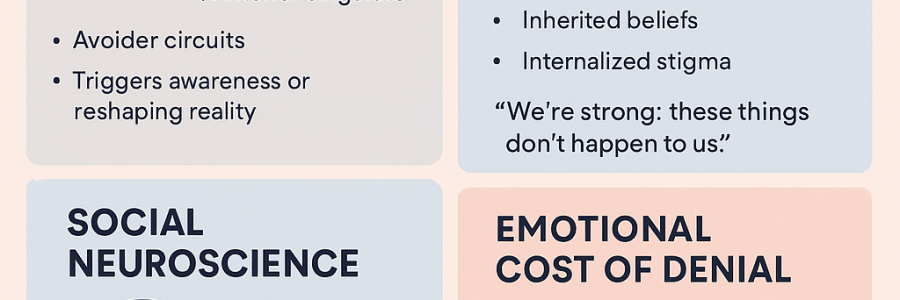
Here is a clear, neuroscience‑grounded explanation of what happens in the brain when someone lives in constant denial, grandiosity, entitlement, and reality‑distortion, especially with beliefs like: This pattern has predictable neural and psychological mechanisms. 🧠 Neuroscience of Denial, Grandiosity & Reality Distortion Chronic denial and inflated self‑beliefs are not random — they arise from specific neural circuits interacting with psychological… Read More Chronic Denial

Catastrophic Thoughts and the Brain

Catastrophic thoughts are repetitive, exaggerated, or fear-driven thoughts about worst-case scenarios. While they don’t cause physical disease, they reorganize neural circuits over time, shaping emotional responses, behavior, and perception. 1. Brain Regions Involved Brain Region Role in Catastrophic Thinking Effects Amygdala Threat detection and fear response Hyperactivation leads to anxiety, hypervigilance, exaggerated fear Hippocampus Memory formation and context… Read More Catastrophic Thoughts and the Brain

Repeated Catastrophic Statements and Brain Rewiring

“The Brain on Catastrophic Self-Talk: How Thoughts Shape Neural Pathways” Three horizontal layers: Thought Layer Repetitive catastrophic statements: Brain Circuit Activation Brain Region Function Visualization Idea Amygdala Fear, hyperarousal Small alarm icon or glowing red node HPA Axis (Hypothalamus → Pituitary → Adrenal) Stress hormone release, cortisol Arrow showing stress signal flowing Prefrontal Cortex (PFC)… Read More Repeated Catastrophic Statements and Brain Rewiring

Psychological entrapment

Negative self‑talk, catastrophising, or repeatedly saying “I’m dying / I’m sick / something terrible will happen” does NOT cause cancer, disability, or physical disease. That is not how biology works. However… What is true — and strongly supported by neuroscience — is that repeatedly telling yourself catastrophic health stories can: So let’s separate science from fear very clearly. ✅ What Repeated Catastrophic Self-Talk Does 1. Rewires your… Read More Psychological entrapment

Your Thoughts, Actions, and Beliefs Shape Your Reality — A Neuroscience View

What you’re pointing toward is neuroplasticity:the brain literally rewires itself based on the thoughts you repeat, the stories you tell, and the actions you take. This creates a kind of self‑fulfilling loop that can either protect you or harm you, depending on what you reinforce. Here’s how the science explains it: 1. The Brain Believes What You Repeatedly… Read More Your Thoughts, Actions, and Beliefs Shape Your Reality — A Neuroscience View

Behavioral Choice Pathways: Neuroscience of Deliberate Actions

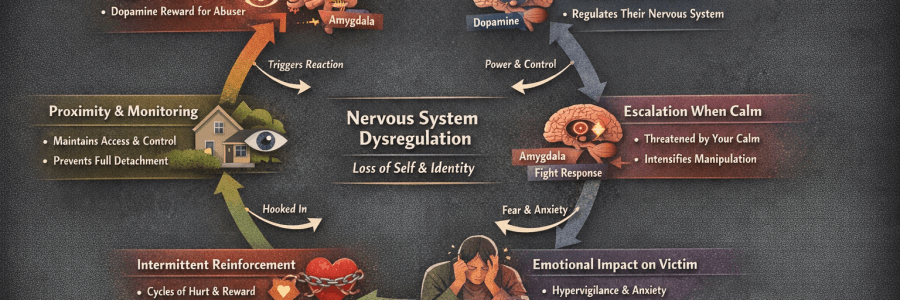
Here’s a neuroscience-informed explanation of behavioral choice pathways, specifically in the context of abusive or manipulative behavior. This framework emphasizes that abuse is a deliberate, neurologically reinforced choice rather than a symptom or accident. 1. Key Brain Circuits Involved Brain Region Function in Behavioral Choice Implication for Abuse Prefrontal Cortex (PFC) Executive function, planning, decision-making, inhibition Enables abuser… Read More Behavioral Choice Pathways: Neuroscience of Deliberate Actions

Medication, Behavior, and Abuse: Choice and Responsibility

Here’s a neuroscience-informed explanation addressing the relationship between medication, behavioral regulation, and abusive behavior, framed in terms of choice and accountability. 1. Abuse is a Choice, Not a Symptom 2. Role of Medications 3. Choosing Not to Take Medication 4. Psychological and Legal Implications Scenario Neuroscience Insight Accountability Abuse while on medication Reward circuits still drive pleasure from… Read More Medication, Behavior, and Abuse: Choice and Responsibility

Abuse: Choice vs Misconception of Mental Illness

Here’s a clear, neuroscience- and psychology-informed explanation distinguishing abuse as a deliberate choiceversus the common misconception that abuse is caused by mental illness, stress, or emotional instability. This is suitable for educational, clinical, or legal contexts. Abuse: Choice vs Misconception of Mental Illness Aspect Abuse as a Deliberate Choice Misconception: Caused by Mental Illness / Stress / Instability… Read More Abuse: Choice vs Misconception of Mental Illness