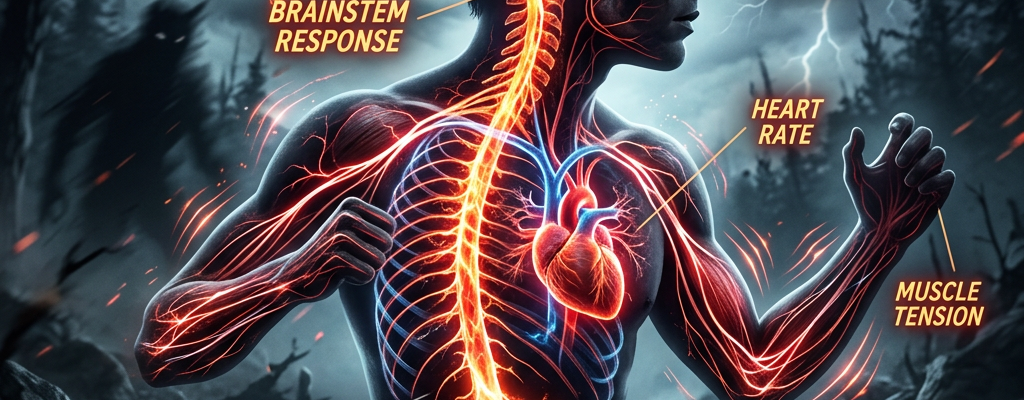
Why you can feel exhausted, anxious and hyper-alert even when life looks fine from the outside
You may be functioning.
Going to work.
Looking after your family.
Paying the bills.
Seeing friends.
Smiling.
And yet inside, you may feel completely exhausted.
Perhaps you are constantly thinking about what could go wrong.
Perhaps you struggle to relax.
Perhaps you find yourself analysing conversations long after they have ended.
Or maybe you simply feel that you can never completely switch off.
For women who have experienced prolonged stress, emotional abuse, coercive control or traumatic relationships, these experiences can sometimes be connected to a nervous system that has become accustomed to being on alert.
Here are five patterns worth recognising.
1. You are constantly scanning for danger
You notice everything.
A change in someone’s facial expression.
A different tone of voice.
A delayed text.
A door closing.
Someone becoming quiet.
You may automatically ask:
“What’s wrong?”
Hypervigilance can involve paying unusually close attention to your surroundings and other people’s behaviour.
It may once have helped you anticipate problems.
But living permanently on alert can be exhausting.
2. You struggle to relax when nothing is wrong
You finally have time to yourself.
Nothing needs doing.
There is no immediate problem.
But instead of feeling peaceful, you feel restless.
You may start cleaning, checking your phone, making lists or thinking about everything that might happen tomorrow.
Sometimes calm can feel unfamiliar when your nervous system has spent a long time expecting disruption.
3. You overthink conversations
You replay what you said.
Did I say the wrong thing?
Was she upset?
Why did he answer like that?
Should I send another message?
Did I offend them?
You may find yourself constantly analysing other people’s reactions.
This can be especially common after relationships where you were frequently criticised, blamed or made responsible for another person’s emotions.
4. You find it difficult to say no
You agree when you don’t want to.
You apologise excessively.
You worry about disappointing people.
You feel responsible for keeping everyone happy.
You may have learned that keeping another person calm was the safest option.
This is sometimes described as a fawn response — a pattern of appeasing or accommodating others in response to perceived threat.
The problem is that survival strategies can continue long after the original situation has ended.
5. You are exhausted but can’t switch off
This combination can be particularly confusing.
Your body is tired.
Your mind is tired.
But your thoughts keep going.
You may struggle with sleep, feel tense or find yourself constantly anticipating the next problem.
Your system may have become accustomed to operating at a high level of alertness.
Survival mode isn’t a character flaw
Perhaps you’ve been told you’re:
“Too sensitive.”
“An overthinker.”
“Difficult.”
“Controlling.”
“Too emotional.”
But there may be another way of understanding what is happening.
Your responses may have developed as adaptations to your experiences.
That doesn’t mean every response is still helpful.
It means they deserve understanding rather than shame.
How do you begin to change the pattern?
The first step is awareness.
Notice what happens in your body.
What triggers you?
Where do you feel tension?
What thoughts appear?
What do you automatically do?
Then begin practising small experiences of safety.
Slow your breathing.
Ground yourself in the present.
Create predictable routines.
Establish boundaries.
Spend time with people who are emotionally safe.
Learn to recognise the difference between a current threat and an old pattern being activated.
Recovery is not about forcing yourself to “calm down.”
It is about gradually developing a greater sense of safety, choice and self-trust.
You don’t have to live permanently on guard.
Understanding your nervous system can be the beginning of changing your relationship with yourself.
Work With Linda CJ Turner
I support women who want to understand the emotional and nervous-system patterns that can develop following trauma, emotional abuse, controlling relationships and prolonged stress.
Through trauma-informed and neuroscience-informed work, we explore your individual experiences and develop practical strategies for greater emotional awareness, regulation and self-trust.


