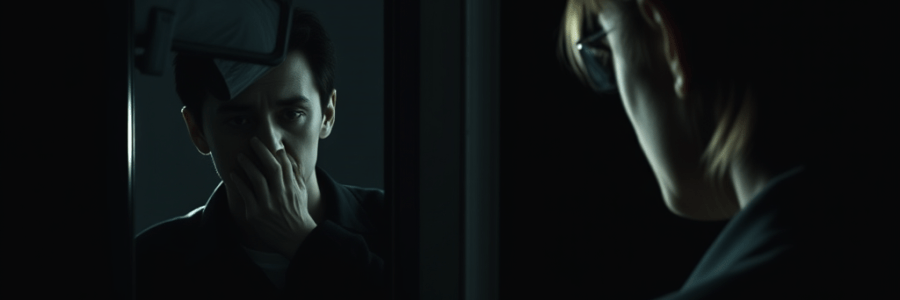
Silence

🧠 Neuroscience and Psychology Behind It When you say, “If you need to disappear to feel powerful, I’ll take that as my cue to walk toward peace,”you’re describing emotional differentiation — a state where your nervous system no longer confuses someone else’s withdrawal with your own worth. The disappearing act activates your brain’s threat circuits (the amygdala and anterior cingulate cortex).… Read More Silence

🧠 Neuroscience Behind the Silent Treatment

When someone gives you the silent treatment, your brain’s amygdala often fires up — it reads social disconnection as danger. Humans are wired for belonging, so silence can trigger the same pain circuits as physical pain. That’s why it feels unbearable — your brain interprets it as rejection or abandonment. Once you learn to regulate that initial emotional… Read More 🧠 Neuroscience Behind the Silent Treatment

🧠 Neuroscience of Rediscovery

Rediscovering yourself after years of being shaped by someone else’s influence. From a neuroscience and psychological perspective, what you’re describing is a genuine process of neural and emotional liberation — your brain is literally rewiring for autonomy, pleasure, and connection. Here’s how that works: 🧠 Neuroscience of Rediscovery When you start making your own choices again, your prefrontal cortex — responsible… Read More 🧠 Neuroscience of Rediscovery

“Playing the victim”

“Playing the victim” as a chronic psychological defense pattern, often seen when someone feels loss of control, guilt, shame, or fear of exposure. Let’s unpack it from both a neuroscientific and psychological perspective. 🧠 Neuroscience: What’s happening in the brain When people feel cornered or their image threatened, the brain’s threat system (amygdala, hypothalamus, and periaqueductal gray) activates. This triggers a cascade of stress… Read More “Playing the victim”

Surveillance & Tracking + Restraining Order Violations

When someone under a restraining order uses hidden cameras, trackers, or other surveillance methods, it typically counts as a violation of the order. Legally, this kind of behavior is often treated as harassment, stalking, or contempt of court, depending on jurisdiction. The legal consequences can include: Separate charges just for the violation of the restraining order. Enhanced sentencing if… Read More Surveillance & Tracking + Restraining Order Violations

When “Concern” Turns into Surveillance: The Neuroscience of Hidden Control

When someone has taped your phone, planted a hidden camera, or placed a tracker on your car, it’s not love — it’s surveillance.These actions are meant to dominate, not protect. From a neuroscience perspective, this kind of violation rewires the brain’s safety systems. The moment we sense that our privacy has been invaded, the amygdala — the brain’s fear… Read More When “Concern” Turns into Surveillance: The Neuroscience of Hidden Control

When Control Becomes Surveillance: The Neuroscience of Psychological Invasion

Ever feel like someone knows too much about your private life — showing up where you are or reacting to things you only said in confidence?It’s not your imagination. In some cases, abusers use covert tools like IMSI Catchers to intercept calls, texts, or even track your movements — all without your knowledge. Beyond being criminal, this… Read More When Control Becomes Surveillance: The Neuroscience of Psychological Invasion

💭 “If Your Daughter Were Dating a Man Like You…”

A Mirror for Emotional Awareness Imagine this:Your daughter walks in and introduces the man she’s dating —and he acts just like you. Would you feel proud?Happy that she’s safe and loved?Or would your stomach tighten with unease, guilt, or anger, knowing what she’s about to experience? That question is one of the deepest tests of emotional maturity and empathy —… Read More 💭 “If Your Daughter Were Dating a Man Like You…”

💬 Communication & Repair in New Relationships

Neuroscience and Psychology of Emotional Safety When a new relationship begins, it’s not just chemistry and attraction at play — your nervous system is watching closely. It’s scanning for safety cues: Can I be myself here? Can I speak honestly without fear? Will I be punished, ignored, or understood when conflict arises? These early patterns of communication and… Read More 💬 Communication & Repair in New Relationships