High-conflict negotiations or controlling interpersonal dynamics.

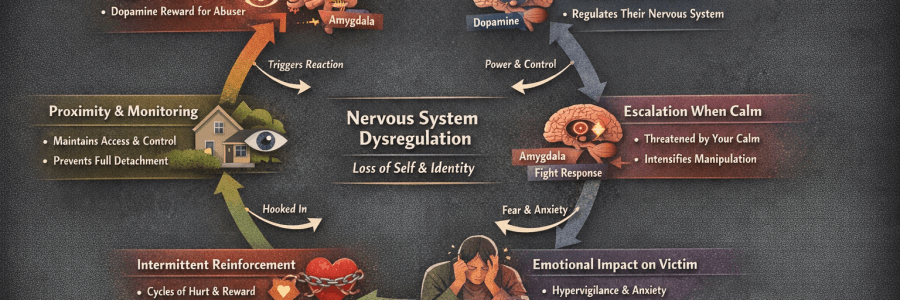
A few relevant concepts: 1. Coercive control (behavioural pattern, not a diagnosis)This is when one party keeps influence over another by creating uncertainty, dependency, or repeated disruption of progress. In practical terms it can look like: The effect is often stress, exhaustion, and loss of momentum. 2. Intermittent reinforcement (reward system effect)From a neuroscience perspective,… Read More High-conflict negotiations or controlling interpersonal dynamics.

Epistemic Injustice

Psychology calls it epistemic injustice—when someone’s lived experience is dismissed because it is considered “too emotional,” “too dramatic,” or simply “too unbelievable.” But disbelief does not erase reality. In fact, neuroscience tells us something very different. The brain and body register experience whether others validate it or not. The nervous system responds to tone, tension, unpredictability,… Read More Epistemic Injustice

When Cruelty Feels Rewarding

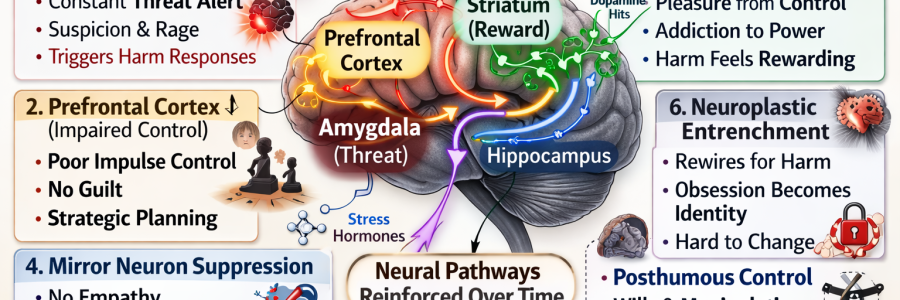
The Neuroscience and Psychology of Sadistic Behaviour Most people feel distress when they see someone else in pain. But not everyone. For some individuals, another person’s discomfort, fear, or humiliation does not trigger empathy—it triggers something very different. It creates reward. When Empathy Is Reversed In healthy emotional functioning, the brain responds to others’ pain with… Read More When Cruelty Feels Rewarding

Control, Distance, and Indirect Power Dynamics

A Neuroscience and Psychology Perspective on Behaviour Beyond Separation Abusive or controlling dynamics do not always end when physical distance increases or legal boundaries are introduced. In many cases, the pattern of behaviour simply adapts. When direct control is no longer possible, it often shifts into indirect forms. The Need to Maintain Control From a… Read More Control, Distance, and Indirect Power Dynamics

Control, Resistance, and Behavioural Patterns in Conflict

Neuroscience and Psychology of Power, Persistence, and Perceived Control Abusive or controlling dynamics are not only expressed directly between individuals. They can also extend through systems, communication, and indirect pressure—long after physical separation or legal boundaries exist. When control cannot be maintained in one way, it often shifts into another. The Need to Maintain Control… Read More Control, Resistance, and Behavioural Patterns in Conflict

When Someone Stays in a Place They Say They Dislike

Neuroscience, Psychology, and Control-Based Behaviour He hates the climate.He hates the food.He dislikes the people.He struggles with the crowds in summer. Even his sister has said she does not think he will stay. So the question naturally becomes: Why does he stay? Why, indeed? When Words and Behaviour Do Not Match From a psychological perspective,… Read More When Someone Stays in a Place They Say They Dislike