Why Victims Should Not Have to Keep Proving the Truth

The Neuroscience and Psychology of Denial It should not be necessary to repeatedly present court orders, DASH risk assessments, psychological reports, medical evidence, witness statements, and legal outcomes just to be believed. When there is documented evidence—when professionals, courts, and specialists have already assessed the situation—the expectation should be understanding and support. Yet too often,… Read More Why Victims Should Not Have to Keep Proving the Truth

What Happens When People Finally See the Truth

A Neuroscience and Psychological Response to Reality When the truth finally comes out—when denial can no longer be maintained—people do not all react the same way. But there are clear psychological and neurological patterns in how the brain responds. 1. Shock and Cognitive Overload The first reaction is often shock. When reality suddenly contradicts long-held… Read More What Happens When People Finally See the Truth

The Truth Always Comes Out

Why People Don’t Believe—Until It’s Too Late History has shown us something uncomfortable. People often don’t believe the truth—until they are forced to. When allegations first emerged about figures like Jimmy Savile, Jeffrey Epstein, Prince Andrew, or Sean “Diddy” Combs, many dismissed them. They were defended.Protected.Excused. And those who spoke out were doubted. But over… Read More The Truth Always Comes Out

Don’t Judge What You Don’t Understand

It is easy for people to point fingers when they do not know the full story. But what often looks like “moving away from family” is sometimes the result of something much deeper—manipulation, coercion, and emotional control. When isolation is not a choice In some situations, people are gradually influenced or pressured into distancing themselves… Read More Don’t Judge What You Don’t Understand

What can be warning signs of abusive or controlling behaviour

If someone consistently shows several of these patterns, it can indicate high-risk behaviour: 🔹 1. Ongoing high-conflict legal battles 👉 Pattern matters more than who “started it” 🔹 2. Blaming ex-partners for everything 👉 This can indicate externalised blame patterns 🔹 3. Repeated breaches of boundaries or orders 👉 This is serious if proven — it… Read More What can be warning signs of abusive or controlling behaviour

A–Z of Psychological Tests & Concepts

A — ANOVA (Analysis of Variance) Statistical test used to compare means across 3+ groups.👉 Used in research to see if differences are real or random. B — Big Five Personality Traits (OCEAN) C — Cognitive Dissonance (Leon Festinger) Mental discomfort when beliefs and actions don’t align.👉 Drives behaviour change or justification. D — DSM-5 (Diagnostic… Read More A–Z of Psychological Tests & Concepts

Rewiring for Freedom: Stepping Beyond the Comfort Zone

For decades, the brain seeks safety, and often we listen. We make the “safe” choice, follow the familiar path, and convince ourselves it is security. Neuroscience reveals why: the amygdala—the brain’s early-warning system—flags uncertainty as threat, while the prefrontal cortex weighs risk versus reward. Yet what feels “safe” is often just habitual; it does not… Read More Rewiring for Freedom: Stepping Beyond the Comfort Zone

The Different Types of Men You Meet in Dating (And How to Recognise Them)

Dating can feel like navigating a maze of personalities. While no one fits perfectly into a box, there are certain types of men that show up time and time again. Recognising them early can save you time, energy, and emotional confusion. 💬 The Flirtatious One Charming in the moment, playful, and full of compliments. He knows how… Read More The Different Types of Men You Meet in Dating (And How to Recognise Them)

🔍 The early warning signs

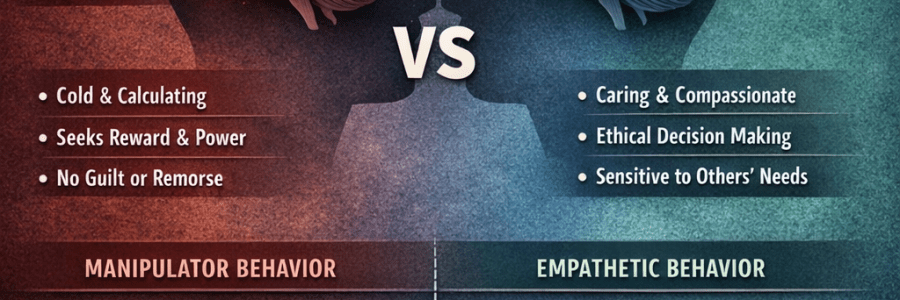
1. The Manipulator Core trait: Control through emotion and psychology What they do: Typical phrases: 👉 Goal: keep you emotionally hooked and off-balance 🎭 2. The Joker / Charmer Core trait: Avoids depth through humour and charm What they do: Looks harmless, but: 👉 Not always malicious—but often emotionally unavailable 💔 3. The User Core trait: Self-serving What they do: Pattern: 👉… Read More 🔍 The early warning signs

Guidelines for a New Relationship

In a new relationship, how often you see each other can make a big difference in building a healthy connection without overwhelming the bond. Neuroscience and psychology give us some insight into pacing. 1. The Science Behind Early Connection 2. Psychological Considerations 3. Guidelines for a New Relationship 4. Red Flags of “Too Much Too Soon” 5. Red Flags of “Too… Read More Guidelines for a New Relationship