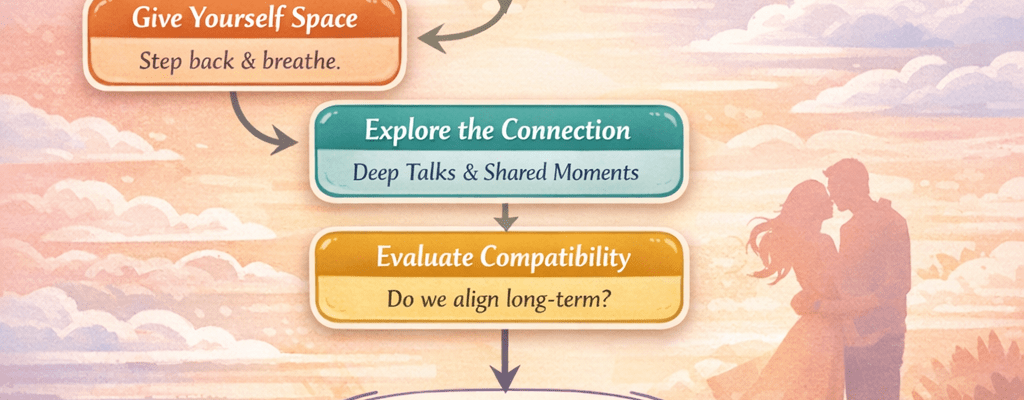
It isn’t your job to fix, rescue, or fundamentally rewire another adult’s personality. Neuroscience and psychology are quite clear on that. Core traits like empathy levels, attachment style patterns, emotional regulation habits, and relational “defaults” are shaped over years of development and repeated reinforcement — not corrected through a partner’s effort alone.
In other words: you can influence, but you can’t re-engineer someone.
Where psychology gets very important here is this distinction:
1. Influence vs responsibility
In healthy relationships, people can grow together through:
- feedback
- modelling behaviour
- shared reflection
- accountability
But that only works when the other person has:
- insight
- willingness to change
- emotional capacity to self-reflect
- consistency in effort
Without those, you’re not in mutual growth — you’re in one-sided emotional labour.
2. The brain doesn’t change under pressure from attachment alone
Neuroscience shows that lasting behavioural change requires:
- awareness of the pattern
- motivation to change it internally
- repetition over time
- reward for new behaviour
If someone only adjusts temporarily to avoid losing a partner, the brain usually reverts back to baseline patterns once pressure is removed. That’s why “trying harder to help them be better” often leads to burnout, not transformation.
3. What is your responsibility
Psychologically, your responsibility is not to correct another adult’s relational functioning — it is to:
- notice patterns early
- assess whether they align with your values
- set boundaries when behaviour is harmful
- decide what you are willing to live with long-term
That’s the shift from caretaking to self-leadership.
4. The key relational truth
A partner can:
- support your growth
- reflect your blind spots
- encourage better behaviour
But they cannot:
- supply empathy someone refuses to develop
- create accountability where none is taken
- replace internal motivation to change
That’s where relationships break down — not from lack of effort from one person, but from lack of mutual psychological responsibility.
So yes — in psychological terms:
You are not responsible for teaching another adult how to be a decent human being.
You are responsible for deciding:
- whether the relationship is emotionally safe
- whether the effort is mutual
- and whether the pattern is something you want to continue living inside
Because love can exist without compatibility in behaviour —
but it cannot replace it.

