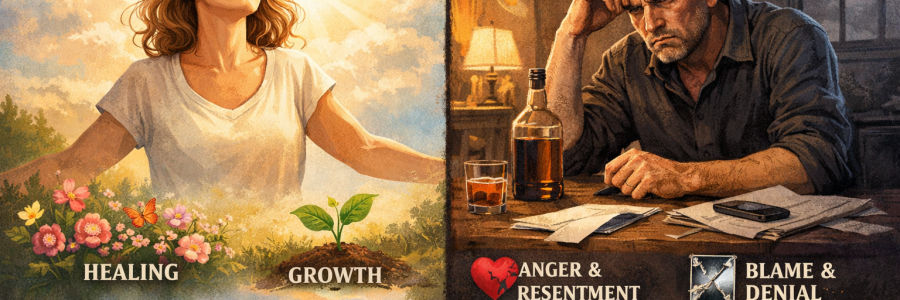
🌿 What life often feels like after removing yourself from cruelty
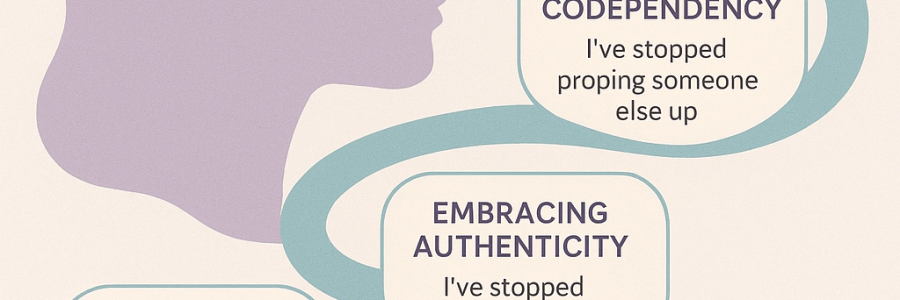
Leaving a cruel or harmful dynamic doesn’t usually feel instantly “free” in a cinematic way. It tends to feel more like a nervous system recalibrating after long-term tension—subtle, uneven, but very real. Here’s what people often notice once they’ve stepped out of cruelty or chronic emotional harm: 🌿 What life often feels like after removing yourself… Read More 🌿 What life often feels like after removing yourself from cruelty
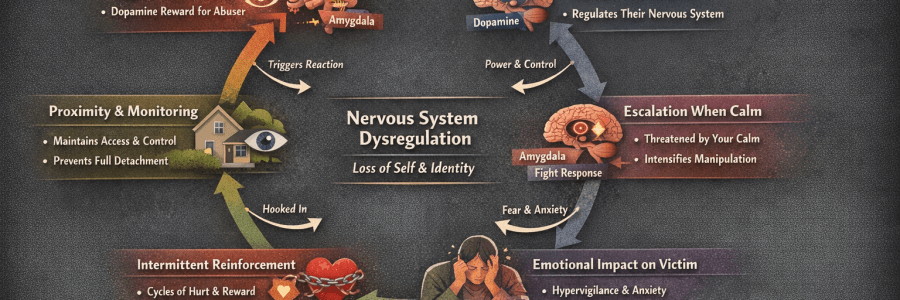
Pay Attention to Patterns: The Psychology Behind Repeated Abusive Behaviour

When people experience harmful or abusive behaviour in relationships, one of the most confusing aspects is repetition. The same dynamics appear again and again.The same excuses.The same cycles. And often, the same outcome. This is why it’s essential to look beyond isolated incidents and focus on patterns over time—because psychology shows us that patterns are rarely… Read More Pay Attention to Patterns: The Psychology Behind Repeated Abusive Behaviour

Checklist: When It’s Time to Leave

1. Safety & Respect You feel unsafe emotionally, physically, or psychologically There is any form of abuse (verbal, emotional, physical, sexual, financial) You’re walking on eggshells to avoid conflict Your boundaries are ignored, mocked, or punished 2. Your Nervous System Knows You feel anxious, drained, or on edge more than calm Your body feels relief when they’re… Read More Checklist: When It’s Time to Leave

Why People Wait Until It’s Too Late in Relationships

And how hesitation quietly destroys connection Most relationships don’t end in one dramatic moment. They end slowly—through hesitation, silence, and decisions that were never made. ⚠️ The pattern People often know something isn’t right. They feel it: something has changed connection is fading distance is growing But instead of acting, they wait. They tell themselves:… Read More Why People Wait Until It’s Too Late in Relationships

Does Meanness Run in Families? Understanding Patterns That Seem to Pass Down Generations

“Meanness is often a deep, enduring pattern. You can’t cure it with more giving, more patience, or more self-sacrifice.” That truth leads to an important question: Does meanness run in families? The answer is not simple — but patterns absolutely can repeat across generations. It’s Not Just Personality — It’s Learned Behaviour Children don’t just… Read More Does Meanness Run in Families? Understanding Patterns That Seem to Pass Down Generations

Abusive or high-conflict personalities.

Low impulse control becomes much more significant — and more harmful — when it shows up in abusive or high-conflict personalities. Here’s how it typically plays out: 1. Fast Emotional Reactions Turn Into Harmful Behaviour In these personalities, emotions (especially anger, frustration, or feeling “disrespected”) rise very quickly — and there’s little pause before acting. So… Read More Abusive or high-conflict personalities.

From Survival to Softness: How Life Feels Completely Different Now — Safe, Loved, and Free

There are moments in life when everything changes so deeply that it almost feels like stepping into a different world. Not just a new situation — but a completely different emotional landscape. What once felt heavy, tense, or uncertain is no longer the centre of everything. And in its place, something quieter begins to grow.… Read More From Survival to Softness: How Life Feels Completely Different Now — Safe, Loved, and Free

Why Confidence Returns After Separation

Confidence doesn’t usually disappear overnight. And it doesn’t come back that way either. Instead, it shifts gradually—often without being fully noticed—until one day it feels like something has quietly returned. Not louder.Not forced.Just… there again. Confidence Was Never Really Gone It’s easy to believe confidence is something you lose. But more often, it’s something that… Read More Why Confidence Returns After Separation