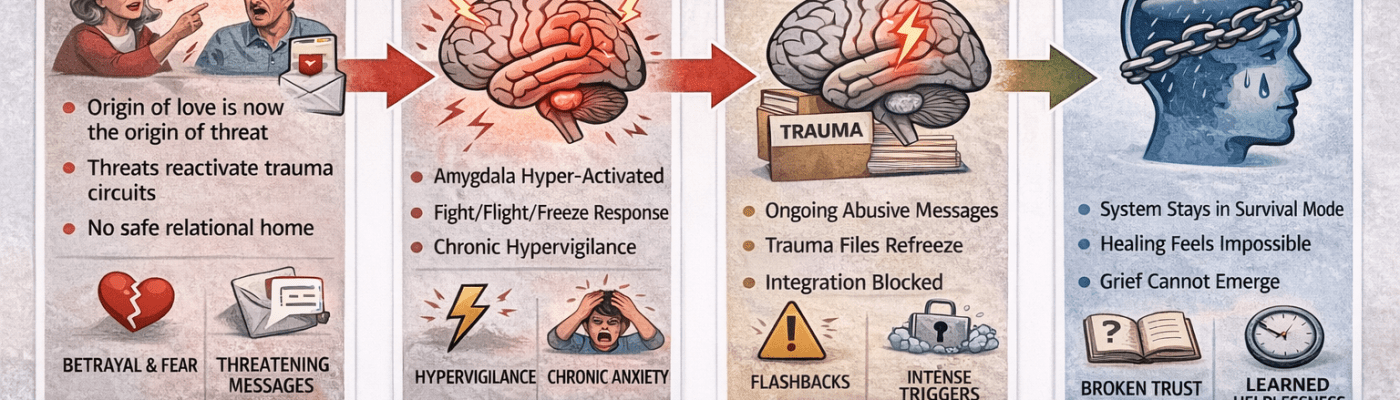
Here are the early warning signs, the ones that tend to appear before anything obvious or extreme. These are rooted in the same nervous system patterns we just talked about.
1. Subtle lack of empathy (easy to miss)
At the beginning they can seem:
- charming
- attentive
- even emotionally intense
But watch closely when something small happens, like you’re upset or uncomfortable.
You might notice:
- they move past your feelings quickly
- they intellectualise instead of feeling (“you’re overthinking”)
- they don’t stay with your emotion
A healthy person leans in.
This type often skims over it.
2. Discomfort with your independence
Early signs can look like:
- wanting constant contact
- subtle irritation if you don’t reply quickly
- making you feel guilty for having your own plans
It can feel like:
“they really like me”
But underneath it’s often:
“I feel unsettled when I don’t have access to you.”
3. Fast intensity (before real foundation)
This is a big one.
- very strong connection very quickly
- big statements early (“I’ve never felt this way”)
- emotional closeness before real trust is built
This isn’t always abusive — but in this pattern it’s often about:
fast attachment → faster control
4. Small boundary pushes
Nothing extreme at first, just:
- teasing you past your comfort
- ignoring a “no” in small ways
- persuading you to change your mind
When you resist, you may see:
- irritation
- withdrawal
- or subtle pressure
This shows how they handle not getting their way.
5. Blame shifting (very early version)
At the start it’s mild:
- “you misunderstood me”
- “that’s not what I meant”
- “you’re a bit sensitive”
Instead of:
“I can see why that upset you.”
This is the early form of:
never taking full responsibility
6. Calmness when you’re unsettled
This is a very telling one.
If something happens and you’re:
- confused
- upset
- trying to resolve it
…and they are:
- emotionally flat
- detached
- unbothered
That mismatch matters.
A healthy person feels some urgency to reconnect.
This pattern often shows emotional disconnection instead.
7. You start adjusting yourself early
One of the clearest signs is actually in you:
- you think more carefully before speaking
- you avoid certain topics
- you try to keep things “smooth”
- you feel slightly on edge, even when things are “good”
Your nervous system is picking up something before your mind fully does.
8. Apologies that don’t feel real
They may say sorry, but:
- it feels quick
- there’s no real change
- it somehow turns back onto you
Example:
“I’m sorry, but you made me react like that.”
The pattern underneath all of this
Early on, it’s not obvious aggression.
It’s this:
They feel better when they have emotional control of the situation.
And you slowly start to feel:
- less free
- more careful
- slightly responsible for their state
The simplest early test
You can quietly ask yourself:
“When something feels off, do they move towards understanding me… or away from it?”
That answer tells you a lot.

