Staying Wasn’t Love—It Was Survival
Discover the difference between love and survival. This article explores emotional abuse, healing after divorce, and how to rebuild self-worth and inner beauty.… Read More Staying Wasn’t Love—It Was Survival
Mental health refers to a person’s emotional, psychological, and social well-being, encompassing the ability to handle stress, relate to others, make decisions, and navigate the challenges of life. It influences how individuals think, feel, and act, contributing to the overall balance and quality of their lives. Mental health is essential at every stage of life, from childhood and adolescence through adulthood.
Discover the difference between love and survival. This article explores emotional abuse, healing after divorce, and how to rebuild self-worth and inner beauty.… Read More Staying Wasn’t Love—It Was Survival
Redefining beauty, strength, and self-worth after divorce In a world that constantly measures beauty by appearance, we often forget where true beauty actually lives. To be beautiful on the inside is to embrace our humanity with grace. It is not about perfection, nor about always getting things right. It is about allowing ourselves to feel… Read More Staying Was Survival—Leaving Was Transformation
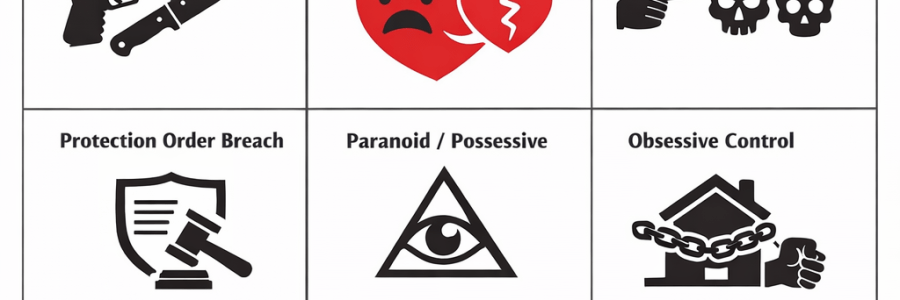
When psychologists or risk assessors use tools like the HCR-20 or PCL-R, they are not guessing — they are looking for specific patterns that predict escalation or persistence. 🚩 High-Risk Red Flags These are the behaviours that raise serious concern because they are linked to ongoing or escalating harm: 1. Persistence Over Time 👉 Indicates: deeply ingrained behaviour, not situational 2.… Read More High-Risk vs Manageable Behaviour: What Professionals Look For
When psychologists assess someone with patterns like: they’re not just looking at incidents — they’re looking at patterns across time, thinking style, and likelihood of change. 1. Using the HCR-20 in This Context A professional would map behaviour like this: Historical (H) They would look for: 👉 This builds a picture of whether the behaviour is situational or lifelong.… Read More How These Assessments Apply in Real Situations
Here’s a clear, simple explanation of each of these tools — what they are, how they’re used, and what they actually assess: 1. HCR-20 (Historical, Clinical, Risk Management-20) This is a professional risk assessment tool used mainly by psychologists, psychiatrists, and forensic specialists to evaluate the likelihood of future violent behaviour. What it looks at: It is divided into… Read More The full psychological picture:
“Meanness is often a deep, enduring pattern. You can’t cure it with more giving, more patience, or more self-sacrifice.” That truth leads to an important question: Does meanness run in families? The answer is not simple — but patterns absolutely can repeat across generations. It’s Not Just Personality — It’s Learned Behaviour Children don’t just… Read More Does Meanness Run in Families? Understanding Patterns That Seem to Pass Down Generations
At first glance, it can seem confusing — even contradictory — when someone aligns themselves with people they clearly don’t like, simply because there is something to gain. But neuroscience helps explain this behaviour. 1. Reward Overrides Authenticity The brain is wired to seek reward. When there is a perceived benefit — money, status, access,… Read More Why People Align With Others They Don’t Even Like — The Neuroscience Behind It
Most people understand fairness. They understand balance — giving, taking, contributing, respecting others. But there are some individuals who operate very differently. They show up when something is free.They are present when someone else is paying.They benefit where they can — regardless of relationships, values, or integrity. And often, they will align themselves with people… Read More When People Take Advantage: The Psychology of Entitlement and Lack of Integrity
Low impulse control becomes much more significant — and more harmful — when it shows up in abusive or high-conflict personalities. Here’s how it typically plays out: 1. Fast Emotional Reactions Turn Into Harmful Behaviour In these personalities, emotions (especially anger, frustration, or feeling “disrespected”) rise very quickly — and there’s little pause before acting. So… Read More Abusive or high-conflict personalities.
Low impulse control means having difficulty stopping yourself from acting on urges, emotions, or thoughts in the moment — even when you know the action might have negative consequences. It’s not about intelligence or knowing right from wrong. It’s about the gap between feeling something and being able to pause before acting on it. What it looks like in… Read More Low impulse control