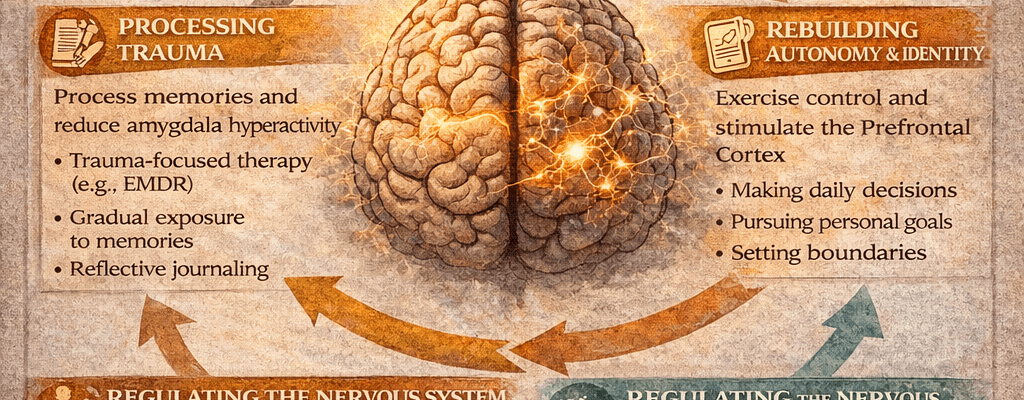
Human behaviour is shaped by a complex interaction between our brain, our life experiences, our environment, and our relationships. In both psychology and neuroscience, we understand that many of our emotional and behavioural patterns are governed by core systems in the brain—systems responsible for emotional processing, reward sensitivity, impulse control, social processing, and stress regulation.
When these systems are functioning well, they help us navigate life, relationships, and challenges with resilience and balance. However, when one or more of these systems becomes distorted, dysregulated, or impaired—through trauma, chronic stress, developmental experiences, or neurological differences—the effects can be profound.
These changes can alter the way a person thinks, feels, reacts, and connects with others.
Common behaviours that may result from dysregulation
These behaviours do not automatically mean someone is a “bad person” or have a personality disorder. Often they reflect unresolved trauma, learned survival strategies, maladaptive coping mechanisms, or underlying mental health difficulties.
Examples may include:
Emotional overreaction or emotional shutdown
Some individuals may experience emotions far more intensely than others—anger, fear, sadness, or shame can feel overwhelming. Others may disconnect entirely, appearing numb, detached, or emotionally unavailable.
Hypervigilance and constant anxiety
A person may seem constantly “on edge,” scanning for danger or expecting conflict, even when no threat exists. This is common when the brain’s threat system has become overactive.
Impulsivity and poor decision-making
Difficulty pausing before reacting can lead to emotional outbursts, risky behaviour, overspending, addiction, or saying things that later cause regret.
Difficulty trusting others
Some individuals struggle to believe others have good intentions. This can result in suspicion, defensiveness, withdrawal, or repeated relationship conflict.
Unhealthy relationship patterns
Repeatedly entering toxic relationships, difficulty setting boundaries, people-pleasing, or fear of abandonment may all reflect underlying attachment wounds.
Problems with empathy or social understanding
Some people misread facial expressions, tone, or intent. This can lead to misunderstandings, social conflict, or difficulties maintaining healthy relationships.
Stress intolerance
Small triggers may feel enormous. Everyday stress can lead to overwhelm, shutdown, panic, or exhaustion.
What causes these patterns?
There are many possible causes, including:
- Childhood trauma or adverse experiences
- Emotional neglect
- Long-term stress or burnout
- Abuse or coercive control
- Neurodevelopmental differences
- Anxiety, depression, or mood disorders
- Substance misuse
- Unresolved grief or loss
- Learned family patterns
The important thing to understand is this: the brain adapts to survive.
Many difficult behaviours began as survival responses.
What once protected someone may later begin to harm them.
The good news: the brain can change
Thanks to neuroplasticity—the brain’s ability to rewire and adapt—change is possible.
With the right support, people can learn to:
- regulate emotions more effectively
- calm the nervous system
- improve impulse control
- build healthier relationships
- understand triggers and behavioural patterns
- develop healthier coping strategies
- restore confidence and emotional safety
Healing is not about blame—it is about awareness, understanding, and change.
How we can help
Our work focuses on helping individuals understand the connection between their experiences, their brain, and their behaviour.
We can support you to:
Identify the root causes
Understand where these patterns came from and why they developed.
Increase self-awareness
Learn to recognise triggers, emotional responses, and recurring relational patterns.
Develop emotional regulation skills
Build practical tools to manage overwhelm, anxiety, anger, and distress.
Improve relationships and boundaries
Strengthen communication, trust, and healthy interpersonal dynamics.
Support nervous system healing
Help your body and brain learn safety again.
Create lasting change
Move from surviving to truly living.
You are not your symptoms.
You are not your trauma.
You are not your past.
With the right support, understanding can become healing—and healing can become lasting change.
If any of these behaviours resonate with you, or someone you care about, please do not hesitate to get in touch for a confidential conversation. Help is available.


