There is a point in every abusive dynamic where the focus quietly shifts.
At the beginning, you try to understand:
- Why they behave the way they do
- What you did wrong
- How you can fix it
- How to make things better
You analyse, adjust, tolerate, and try again.
But this is where many people get trapped.
Because the focus stays on them.
Why You Try to Understand Them
From a Psychology perspective, this is not weakness—it’s patterning.
Humans are wired to:
- Seek meaning
- Repair connection
- Reduce conflict
In abusive relationships, this becomes intensified through what’s often called trauma bonding—a cycle of:
- emotional pain
- followed by intermittent relief
This creates a powerful attachment loop, where your brain keeps trying to “solve” the relationship.
You believe:
“If I understand them, I can change this.”
Why That Strategy Fails
Here’s the reality:
Understanding someone does not give you control over their behaviour.
And in many abusive dynamics, there is:
- no consistent accountability
- no sustained change
- no stable emotional safety
From a behavioural perspective, change requires:
- awareness
- responsibility
- consistent corrective action
Without those, patterns repeat.
The Neuroscience of Staying Stuck
In Neuroscience, the brain becomes conditioned in these environments:
1. Dopamine and intermittent reward
Unpredictable kindness or affection creates a reward loop:
- The brain releases dopamine when relief or connection returns
- This reinforces staying, hoping for the “good version” again
2. Stress and attachment wiring
Chronic stress activates survival systems, making the relationship feel:
- intense
- urgent
- hard to leave
3. Cognitive load and rumination
The mind becomes preoccupied with:
- analysing behaviour
- predicting moods
- trying to regain control
This keeps your focus locked on them, not on yourself.
The Critical Shift
Healing begins when the focus changes from:
“Why are they like this?”
to:
“What do I need to be safe and well?”
This is a psychological reorientation from:
- external control → internal agency
- analysis → action
- survival → self-preservation
The Truth About Change
One of the hardest realities to accept is this:
You cannot change someone who is not actively choosing to change.
No amount of:
- understanding
- patience
- empathy
- sacrifice
will create lasting change in another person.
From a psychological standpoint, behaviour only changes when the individual:
- recognises it
- takes responsibility
- sustains effort over time
Without that, patterns persist.
Why Letting Go Feels So Difficult
Letting go is not just emotional—it’s neurological.
Your brain has:
- associated the person with relief and connection
- built pathways around the relationship
- adapted to the environment, even if it’s harmful
So when you step away, it can feel like:
- withdrawal
- anxiety
- loss of identity
This is not a sign you’re making the wrong decision.
It’s a sign your nervous system is detaching from a conditioned pattern.
Where Your Focus Needs to Be
Not on understanding them.
Not on fixing them.
Not on waiting for change.
Your focus needs to be on:
- leaving the dynamic safely
- rebuilding your sense of self
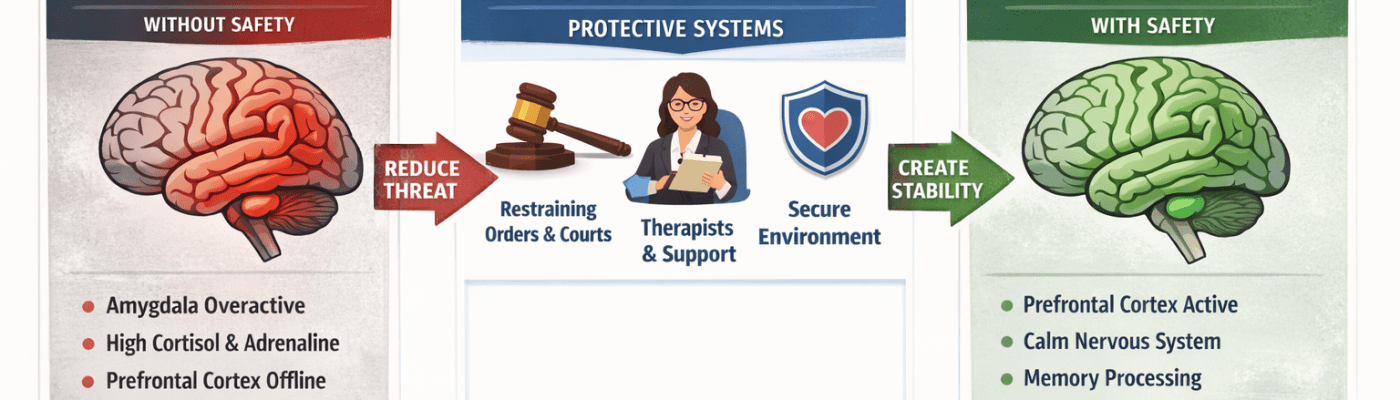
- restoring emotional and physiological stability
This is where real change happens.
The Beginning of Your Life Again
The sooner you accept:
“They are not going to change because of me.”
the sooner something opens up.
Clarity replaces confusion.
Energy returns.
Your attention comes back to your own life.
From a neuroscience perspective, this is when:
- stress systems begin to regulate
- motivation pathways reactivate
- your brain shifts from survival into engagement
A Final Truth
It is not your role to understand the abuser.
It is your role to protect yourself and heal.
And the moment you stop trying to change them…
is the moment you begin to change your life.

