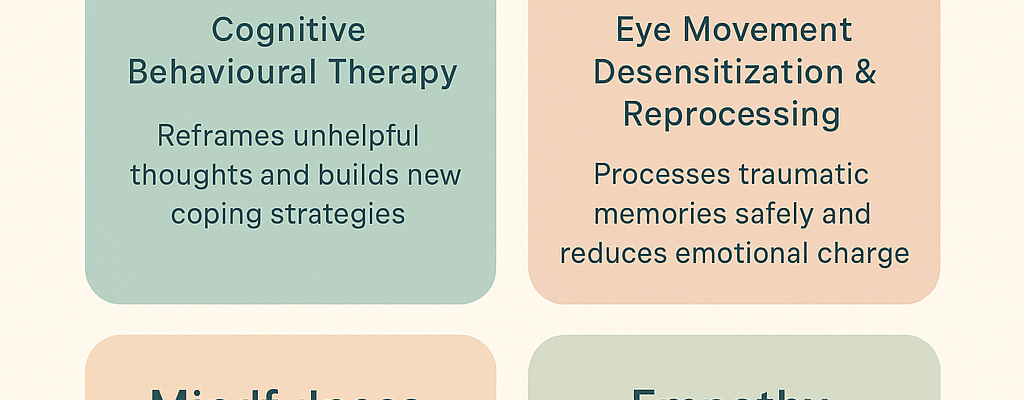
From Trauma to Re-Engagement
There comes a point after prolonged stress, emotional abuse, or repeated loss where something shifts quietly inside you.
You stop reacting the way you used to.
You stop expecting things to change.
You stop reaching forward.
From the outside, it may look like calm. Stability, even.
But internally, it feels like something else entirely.
It feels like waiting.
When Survival Becomes Stillness
In Psychology, this state is often rooted in what Martin Seligman defined as learned helplessness.
When you’ve lived through situations where:
- your voice didn’t change outcomes
- your needs weren’t met
- your reality was dismissed or controlled
Your brain adapts.
Not by failing—but by protecting you.
It learns:
“Nothing I do makes a difference.”
And from that point on, everything changes.
You don’t just leave the situation.
You carry the pattern with you.
Why It Follows You Into New Relationships
This is where many people get confused.
They think:
- “Why can’t I move on?”
- “Why do I feel stuck even though I’m free?”
- “Why does dating feel overwhelming or empty?”
The answer isn’t weakness. It’s wiring.
From a Neuroscience perspective:
- Your nervous system may still be in a freeze or protection state
- Your motivation system (dopamine) may be underactive
- The Default Mode Network may keep pulling you inward—into overthinking, self-doubt, or emotional shutdown
So when you try to re-enter life—especially dating—it can feel like:
- too much
- too risky
- or strangely… pointless
This Is the Part No One Talks About
Healing doesn’t automatically mean you feel ready.
You can:
- understand what happened
- have clarity about the past
- even be completely out of the situation
…and still feel like you’re not fully in your life.
That’s because healing is not just cognitive.
It’s physiological.
Re-Entering Life (Gently, Not Forcefully)
The mistake many people make is trying to “snap out of it”:
- forcing themselves to date
- pushing for instant confidence
- expecting to feel like they did before
But your system isn’t broken—it’s cautious.
So the way forward isn’t force.
It’s re-engagement in small, safe ways.
That might look like:
- having a conversation without pressure
- going on a date with no expectation of outcome
- expressing a preference, even if it feels uncomfortable
- noticing what you feel instead of overriding it
These are not small things.
To your brain, they are evidence:
“I can act—and something happens.”
The Return of the Self
Every time you choose:
- your voice
- your pace
- your boundaries
- your curiosity
You begin to rebuild something that trauma disrupts:
Agency.
And with agency comes:
- motivation
- clarity
- emotional presence
- the ability to connect again
Not all at once.
But steadily.
The Warrior’s Heart in Real Terms
A warrior’s heart isn’t about strength in the way people think.
It’s not about pushing harder or “getting over it.”
It’s about this:
Choosing to re-enter life after your system has learned not to.
- Going on the date, even if you feel unsure
- Letting someone see you, even if part of you wants to withdraw
- Making decisions for yourself, even when it feels unfamiliar
That is resilience.
Not survival.
Re-engagement.
You Are Not Behind
One of the most damaging beliefs people carry out of trauma is:
“I’ve lost time. I should be further ahead.”
But healing doesn’t work on a social timeline.
You are not late.
You are not stuck.
You are not broken.
You are transitioning out of survival.
And that is one of the most complex shifts the human brain and body can make.
A Final Truth
You were never meant to stay in survival mode.
And you were never meant to stay waiting.
Even if it feels slow…
even if it feels unfamiliar…
even if part of you resists it…
The moment you begin to:
- choose
- act
- connect
You are no longer waiting.
You are returning to your life.

