Why Confidence Returns After Separation

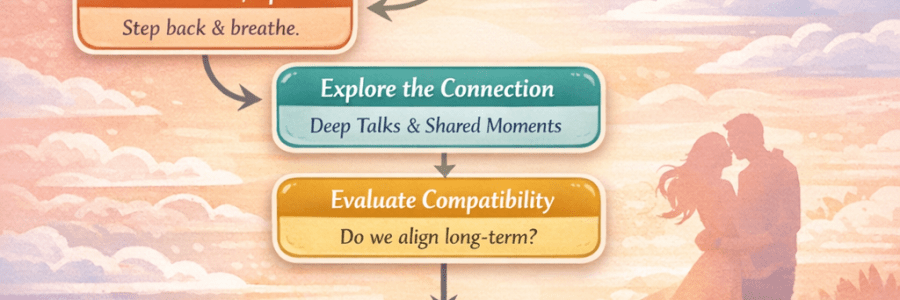
Confidence doesn’t usually disappear overnight. And it doesn’t come back that way either. Instead, it shifts gradually—often without being fully noticed—until one day it feels like something has quietly returned. Not louder.Not forced.Just… there again. Confidence Was Never Really Gone It’s easy to believe confidence is something you lose. But more often, it’s something that… Read More Why Confidence Returns After Separation

Stop Trying to Understand the Abuser: The Science of Letting Go

There is a point in every abusive dynamic where the focus quietly shifts. At the beginning, you try to understand: You analyse, adjust, tolerate, and try again. But this is where many people get trapped. Because the focus stays on them. Why You Try to Understand Them From a Psychology perspective, this is not weakness—it’s patterning. Humans are… Read More Stop Trying to Understand the Abuser: The Science of Letting Go

When People Become Their Own Obstacle: The Psychology of Self-Sabotage

At a certain point, behaviour stops being confusing and starts being revealing. There are situations where someone pushes relentlessly for an outcome over a long period of time — creating pressure, urgency, and expectation — only to block or undermine that same outcome the moment it finally arrives. From the outside, it looks irrational. But… Read More When People Become Their Own Obstacle: The Psychology of Self-Sabotage

High-conflict negotiations or controlling interpersonal dynamics.

A few relevant concepts: 1. Coercive control (behavioural pattern, not a diagnosis)This is when one party keeps influence over another by creating uncertainty, dependency, or repeated disruption of progress. In practical terms it can look like: The effect is often stress, exhaustion, and loss of momentum. 2. Intermittent reinforcement (reward system effect)From a neuroscience perspective,… Read More High-conflict negotiations or controlling interpersonal dynamics.

The Victim–Martyr Pattern in Real Life

When Illness, Crisis, and Suffering Become a Cycle I have heard it all over the years. From life-threatening skin cancer…To headaches described as brain tumours…To claims of dying from prostate cancer—despite being repeatedly told by doctors it had been treated and cleared. Stomach disorders.A cabinet full of medication.Constant hospital visits.Trips every other day to medical… Read More The Victim–Martyr Pattern in Real Life

Stepping Into the Unknown: The Brain, the Mind, and the Power of Uncharted Paths

The unknown has always triggered a paradox in the human brain: fear and fascination, risk and reward, hesitation and curiosity. From a neurological perspective, stepping into uncertainty activates the amygdala—the brain’s alert system—heightening awareness of potential threats. Simultaneously, the prefrontal cortex works to evaluate, strategize, and plan, while the dopamine-rich reward circuitry—the striatum and nucleus… Read More Stepping Into the Unknown: The Brain, the Mind, and the Power of Uncharted Paths

“Aggressive” is a social control label, not a diagnosis.

What makes the accusation stick isn’t logic — it’s implicit shame + social threat memory. So we work somatically + cognitively, not by arguing with it. I’ll give you a clinical de-charging sequence you can actually use, plus a short script you can return to when the accusation echoes. Step 1: Separate signal from noise (this is crucial) When someone says “you’re aggressive,”… Read More “Aggressive” is a social control label, not a diagnosis.