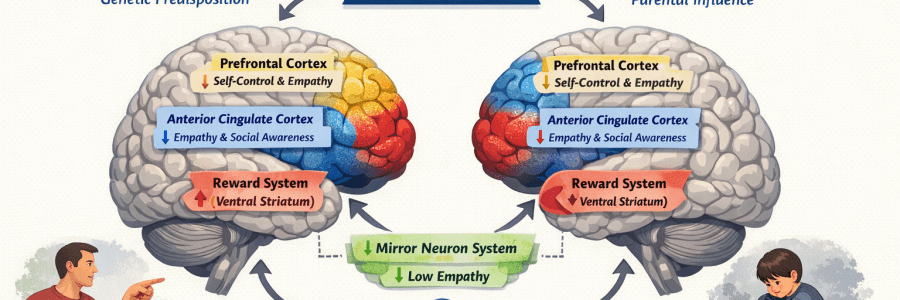
Ambiguous Deprivation: The Neuroscience of Living Without What You Needed

(Why the absence of love, safety, and freedom leaves deep neurological wounds) What Is Ambiguous Deprivation? Psychologists use the term ambiguous deprivation to describe the psychological and neurological pain caused by what was missing, not what was done. It is the quiet ache of unmet emotional needs: Affection that was never given Safety that was never modeled Freedom that was… Read More Ambiguous Deprivation: The Neuroscience of Living Without What You Needed
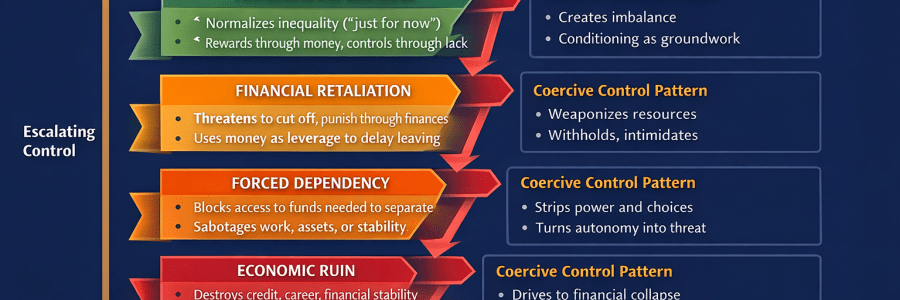
Coercive Control Escalation Chart

(How abuse develops step-by-step) 1️⃣ Idealisation & Grooming Goal: Create emotional dependenceLooks like: Intense attention, charm, flattery, love-bombing Fast emotional bonding “You’re my soulmate”, “I’ve never felt this way” Rushing intimacy & commitment Hidden function: Builds trust + emotional attachment before control begins 2️⃣ Subtle Control & Boundary Testing Goal: Test how much control they can exertLooks like:… Read More Coercive Control Escalation Chart

The Psychological Stages of Long-Term Deception

(How Manipulative Relationships Actually Unfold) This pattern is remarkably consistent across narcissistic, antisocial, psychopathic, and chronic deceiver profiles. Understanding these stages helps survivors: Make sense of what happened Release self-blame Recognise danger early in future connections 🟢 STAGE 1 — TARGETING & ASSESSMENT “Who is useful to me?” Before emotional involvement begins, the deceiver unconsciously (or consciously)… Read More The Psychological Stages of Long-Term Deception

Psychological Profile of Chronic Deceivers

(The Hidden Personality Behind Long-Term Lies) ⚠️ What Is a Chronic Deceiver? A chronic deceiver is someone who lies as a lifestyle, not occasionally. They don’t lie to escape consequences.They lie to control, manipulate, dominate, and construct identity. This is not normal human dishonesty.This is pathological deception. 🧩 Core Psychological Traits 1. Identity Construction Disorder They do not experience identity as stable.… Read More Psychological Profile of Chronic Deceivers

Online Dating & New Relationship Red Flags

What to Look For (Early Detection Guide) 1. Relationship History Be cautious if someone: Avoids discussing past relationships entirely Describes every ex as “crazy,” abusive, or toxic Has many short, intense relationships Claims all breakups were due to betrayal or victimisation 👉 Pattern matters more than isolated events. 2. Timeline Inconsistencies Watch for: Changing stories about where they lived,… Read More Online Dating & New Relationship Red Flags

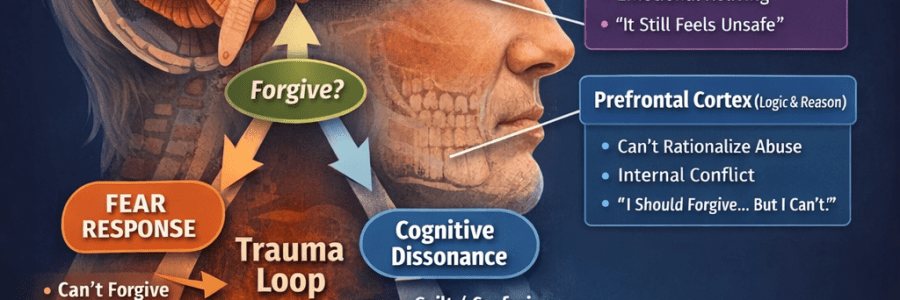
Forgiving an abuser while abuse is ongoing or unaccounted for is neurologically and psychologically impossible.

Forgiveness after abuse is not the same as forgiving a minor wrongdoing, and neuroscience and psychology explain why it’s often extremely difficult—sometimes impossible—without safety, repair, or accountability. Let’s break it down carefully. 🧠 Neuroscience & Psychology Behind Forgiving an Abuser 1️⃣ Trauma Hijacks the Brain Amygdala (fear center): Abuse sensitizes the amygdala. When the abuser is remembered, your brain reacts… Read More Forgiving an abuser while abuse is ongoing or unaccounted for is neurologically and psychologically impossible.

How to Check Someone’s Background Safely & Legally

(Plus the neuroscience behind why this matters) 🧠 Why Your Brain Wants to Check (Neuroscience) After trauma, your nervous system becomes hyper‑attuned to risk — this isn’t paranoia, it’s biological self‑protection. When you’ve experienced abuse: The amygdala (danger detector) stays more alert The hippocampus stores threat memory The prefrontal cortex becomes focused on prediction & safety This drives a natural urge to:✔ verify✔ cross-check✔… Read More How to Check Someone’s Background Safely & Legally

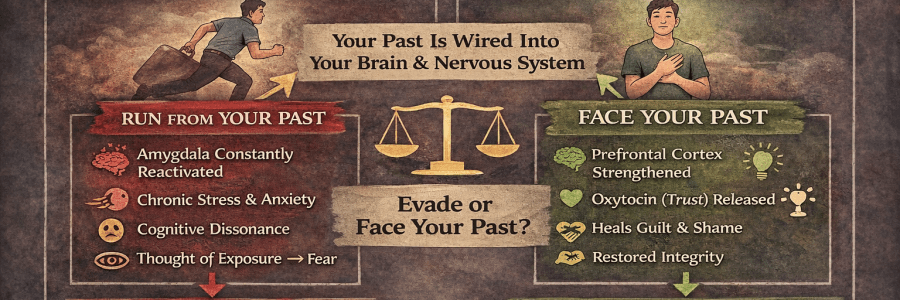
Running vs Facing your past

“You can run, but you can’t hide.” Your brain and nervous system encode every action, choice, and emotional response. Avoiding or reinventing yourself may give short-term relief, but the amygdala and stress circuits stay activated, creating anxiety, hypervigilance, and cognitive dissonance. Facing the past, making amends, and living in truth strengthens the prefrontal cortex, releases oxytocin, regulates your nervous system, and rebuilds… Read More Running vs Facing your past

You can run but you cant hide

From a neuroscience and psychology perspective, your past behaviors, patterns, and emotional responses are encoded in the brain and the nervous system — they can’t simply be hidden or erased. Here’s why: 1. The Brain Remembers Patterns Hippocampus: Stores episodic memories — your past actions, relationships, and consequences. Amygdala: Encodes emotional salience — fear, shame, guilt, anger. Even… Read More You can run but you cant hide