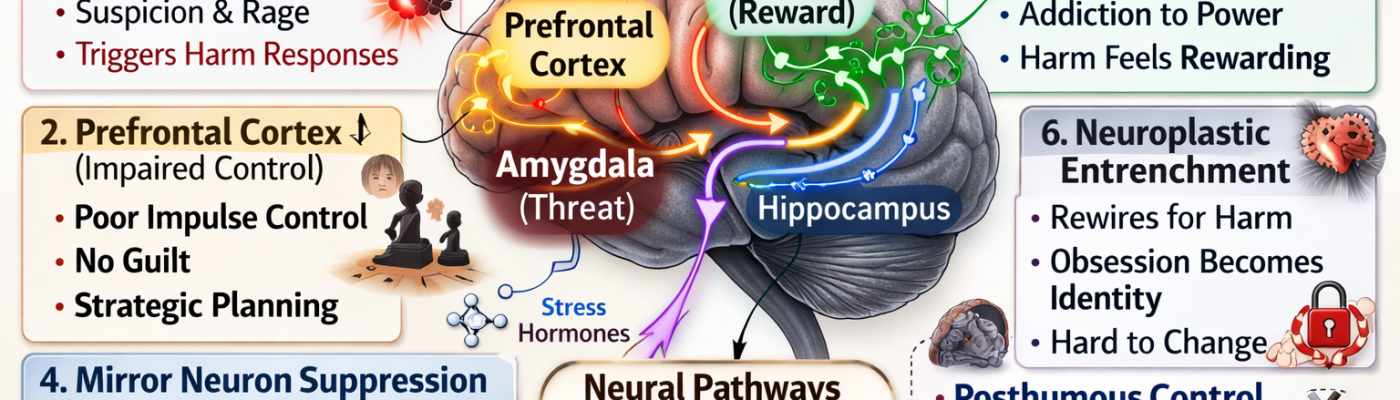
Low impulse control becomes much more significant — and more harmful — when it shows up in abusive or high-conflict personalities.
Here’s how it typically plays out:
1. Fast Emotional Reactions Turn Into Harmful Behaviour
In these personalities, emotions (especially anger, frustration, or feeling “disrespected”) rise very quickly — and there’s little pause before acting.
So instead of:
- thinking → then responding
It becomes:
- feeling → reacting immediately
That reaction might be:
- shouting or verbal attacks
- threats or intimidation
- impulsive decisions (legal threats, financial pressure, control tactics)
2. The Trigger Is Often Control, Not the Situation
What looks like a “small issue” to others can trigger a big reaction.
That’s because the real trigger is often:
- feeling challenged
- feeling disrespected
- losing control
So the response is not about the event itself — it’s about restoring control quickly.
3. Poor Impulse Control + Entitlement = Escalation
When low impulse control is combined with a strong sense of entitlement (“I should get what I want”), it creates a pattern like this:
- impulse → “I don’t like this”
- belief → “this shouldn’t be happening to me”
- action → immediate attempt to dominate or control
This is why behaviour can escalate instead of calm down.
4. No Pause = No Accountability
Impulse control is what allows people to reflect:
“If I do this, what will happen?”
When that pause is missing:
- actions are taken without considering consequences
- blame is often shifted afterward
- there’s little genuine reflection
Instead, you may hear:
- “You made me react like that”
- “I had no choice”
- “You pushed me”
5. Repetition Reinforces the Pattern (Neuroscience)
Each time someone reacts impulsively and it “works” (they regain control, get compliance, or release anger), the brain reinforces that pathway.
So over time:
- reactions become faster
- responses become more automatic
- behaviour becomes more extreme under stress
This is why patterns often worsen over years, not improve.
6. Why It Often Gets Worse After Separation
Separation removes control — which is a major trigger.
So:
- emotional reactivity increases
- impulse control decreases under stress
- behaviour becomes more unpredictable or intense
Instead of calming down, the person may:
- send impulsive messages
- make threats
- involve third parties
- escalate legal or emotional pressure
7. Key Reality to Understand
Low impulse control in this context is not just “reacting quickly” — it becomes:
a pattern of behaviour where emotions override thinking, and control becomes the goal.
And importantly:
- it explains behaviour
- but it does not excuse it
8. Why Boundaries Matter So Much
Because you cannot “slow down” someone else’s impulse system.
What helps instead:
- clear, firm boundaries
- minimal emotional engagement
- not reacting to provocation
- structured communication where possible
These reduce opportunities for impulsive escalation.

