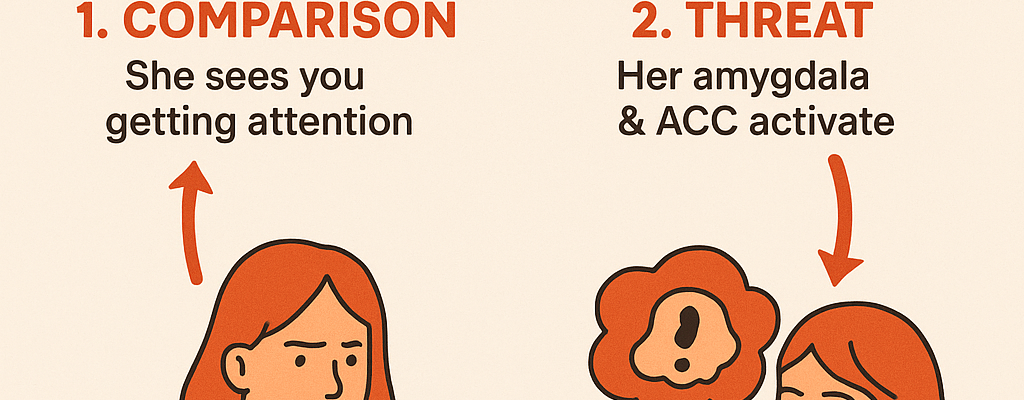
The Psychology & Neuroscience Behind This Behavior
When someone creates false narratives, distortions, or invented stories to damage or end a relationship, this behavior is rarely about truth. It is about control, fear, insecurity, and psychological survival strategies.
This pattern is deeply rooted in attachment wounds, emotional immaturity, and threat-based brain responses.
The Core Psychological Drivers
1. Fear of Abandonment
Many people who sabotage relationships do so because intimacy triggers deep fear.
As closeness increases, their nervous system interprets connection as danger.
So the mind creates:
Conflict → distance → emotional safety
They unconsciously believe:
“If I end it first, I won’t be abandoned.”
This is a protective survival response, not a conscious strategy.
2. Insecure Attachment Patterns
Especially disorganized or avoidant attachment styles may show this behavior.
These patterns are formed in early life when caregivers were:
- Inconsistent
- Emotionally unsafe
- Unpredictable
- Rejecting
As adults, closeness activates:
- Panic
- Emotional overwhelm
- Loss of control
So the brain creates reasons to escape.
3. Control & Power Needs
Some individuals use story-creation to:
- Regain control
- Manipulate outcomes
- Protect their self-image
- Avoid accountability
By rewriting reality, they:
- Justify harmful actions
- Avoid responsibility
- Maintain psychological dominance
This is common in narcissistic, controlling, or emotionally immature personalities.
4. Shame & Ego Defense
When shame is intolerable, the brain defends itself by projecting blame outward.
Instead of:
“I’m scared.”
“I feel insecure.”
“I’m overwhelmed.”
The mind creates:
“They are the problem.”
“They did something wrong.”
This protects the ego from emotional exposure.
The Neuroscience of Story Invention
When emotional threat is perceived, the amygdala (fear center) becomes highly active.
This reduces activity in the prefrontal cortex, which controls:
- Logic
- Reflection
- Perspective
- Empathy
As a result:
- Emotional reasoning replaces factual reasoning
- Feelings become treated as facts
- The brain creates narratives to justify emotional reactions
In simple terms:
The brain invents stories to restore a sense of safety and control.
Common Psychological Profiles Associated With This Behavior
This behavior is most commonly seen in individuals with:
- Insecure or disorganized attachment
- Fearful-avoidant relationship patterns
- Narcissistic traits
- Borderline traits
- High emotional immaturity
- Chronic shame
- Poor emotional regulation
⚠️ This does not always mean personality disorder — but it does indicate deep emotional dysregulation.
Behavioral Red Flags of Story-Based Sabotage
- Sudden accusations
- Shifting narratives
- Changing explanations
- Victim positioning
- Inconsistencies
- Blame reversal
- Emotional gaslighting
- Distorted memory recall
These are psychological defense mechanisms, not truth-based communication.
Why This Is Emotionally Harmful
Being on the receiving end of this behavior causes:
- Confusion
- Self-doubt
- Emotional destabilization
- Trauma bonding
- Anxiety
- Erosion of self-trust
This is psychologically damaging, even when the stories seem subtle.
The Deep Truth
People who invent stories to break relationships are not seeking truth.
They are seeking:
- Emotional safety
- Control
- Escape from vulnerability
- Relief from inner distress
Unfortunately, they use destruction instead of communication.
Healing Perspective
This behavior is not caused by:
- Love
- Passion
- Emotional depth
It is caused by:
- Fear
- Insecurity
- Emotional immaturity
- Nervous system dysregulation
A Powerful Insight
Healthy people communicate discomfort.
Unhealed people create conflict.
Final Reflection
When someone invents stories to end or sabotage a relationship, they are revealing their internal emotional chaos — not your worth.
This is not about you.
It is about:
their relationship with fear, intimacy, and emotional safety.
 Linda C J Turner | Trauma Therapist & Emotional Healing Specialist