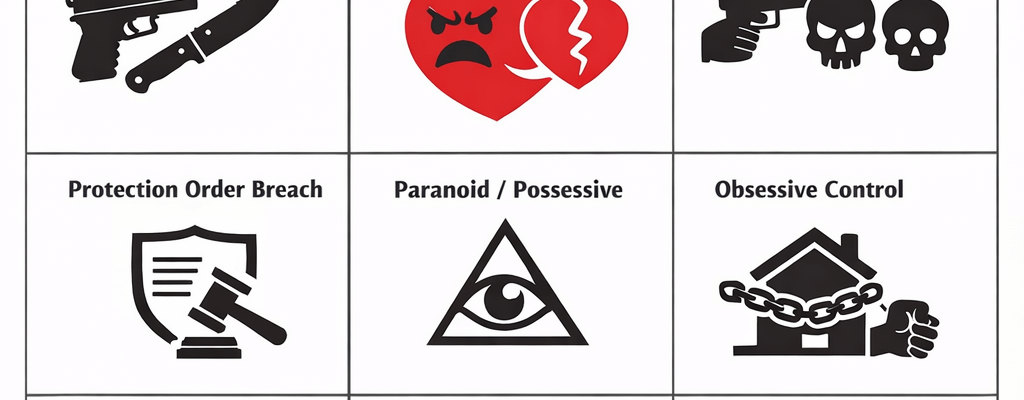
Here’s a clear, simple explanation of each of these tools — what they are, how they’re used, and what they actually assess:
1. HCR-20
(Historical, Clinical, Risk Management-20)
This is a professional risk assessment tool used mainly by psychologists, psychiatrists, and forensic specialists to evaluate the likelihood of future violent behaviour.
What it looks at:
It is divided into 3 areas:
H – Historical (past factors)
These are things that don’t change:
- Past violence
- Early behaviour problems
- Relationship instability
- Substance abuse history
- Previous criminal behaviour
👉 The idea: past behaviour is one of the strongest predictors of future behaviour.
C – Clinical (current state)
What the person is like right now:
- Emotional instability
- Impulsivity
- Anger levels
- Lack of insight
- Mental health symptoms
👉 This looks at how the person is currently functioning psychologically.
R – Risk Management (future situation)
What might increase risk going forward:
- Stress or life instability
- Lack of support
- Access to victims
- Non-compliance with rules or treatment
👉 This assesses how risky their environment and behaviour may be in the future.
Key point:
It does NOT give a simple “score = dangerous.”
It helps professionals make a structured, informed judgement about risk.
2. PCL-R
(Psychopathy Checklist – Revised)
This is one of the most well-known tools used to assess psychopathic traits.
It is used mainly in forensic (criminal) settings.
What it measures:
It looks at personality traits and behaviours such as:
- Lack of empathy
- Superficial charm
- Manipulation
- Pathological lying
- Lack of remorse
- Impulsivity
- Irresponsibility
- Need for control
How it works:
- A trained professional scores 20 traits
- Each trait is rated (0–2)
- The total score indicates the level of psychopathic traits
Important:
- It does NOT mean someone is a “psychopath” automatically
- It measures degree of traits, not a simple label
- It must be done by trained professionals — it’s not a casual test
Key insight:
Higher scores are linked to:
- Increased risk of manipulation
- Higher likelihood of repeated harmful behaviour
- Lower empathy and accountability
3. Structured Interviews (Clinical Assessment)
These are not one fixed test — they are guided conversations used by professionals to understand behaviour, thinking, and emotional patterns.
What they explore:
Conflict and behaviour
- “How do you handle disagreements?”
- “What happens when you feel disrespected?”
Emotional regulation
- “What makes you angry?”
- “How do you calm yourself down?”
Empathy and responsibility
- “How do you think your actions affect others?”
- “Do you feel remorse after conflict?”
Patterns over time
- “Has this happened before?”
- “How do your relationships usually end?”
Why they matter:
They reveal things that tests alone cannot:
- Attitude
- Justification
- Insight (or lack of it)
- Patterns of thinking
The Big Picture
All three tools are used together to build a full psychological picture:
- HCR-20 → risk of future harmful behaviour
- PCL-R → personality traits linked to manipulation and lack of empathy
- Interviews → real-world thinking, attitudes, and patterns
Important reality:
These tools don’t just look at what someone has done —
they look at:
- how they think
- how they justify behaviour
- whether they take responsibility
Final Thought
What these assessments consistently show is this:
Risk is not just about past actions — it’s about patterns, mindset, and the likelihood of change.
And the most important factor across all of them?
👉 Insight and accountability
Without those, behaviour tends to repeat — regardless of age, time, or circumstance.

