Stop Trying to Understand the Abuser: The Science of Letting Go

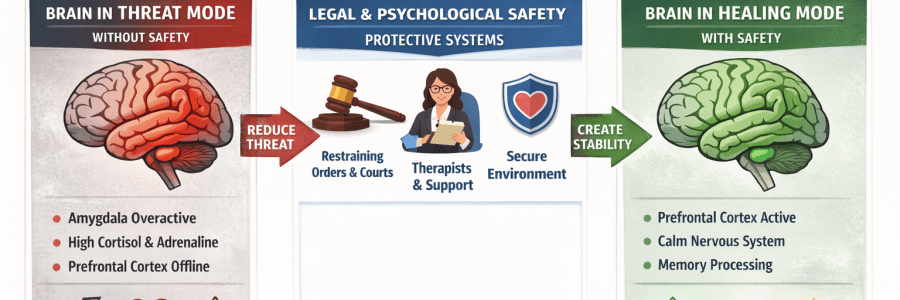
There is a point in every abusive dynamic where the focus quietly shifts. At the beginning, you try to understand: You analyse, adjust, tolerate, and try again. But this is where many people get trapped. Because the focus stays on them. Why You Try to Understand Them From a Psychology perspective, this is not weakness—it’s patterning. Humans are… Read More Stop Trying to Understand the Abuser: The Science of Letting Go

On Staying the Course: When Delay Stops Being a Distraction

There comes a point in any long, high-friction process where something quietly shifts. Not in the situation itself — but in perspective. What once felt urgent, reactive, and emotionally charged begins to look more structured. Less personal. More mechanical. A sequence rather than a story. The Cost of Constant Delay In extended negotiation or legal… Read More On Staying the Course: When Delay Stops Being a Distraction

When Cruelty Feels Rewarding

The Neuroscience and Psychology of Sadistic Behaviour Most people feel distress when they see someone else in pain. But not everyone. For some individuals, another person’s discomfort, fear, or humiliation does not trigger empathy—it triggers something very different. It creates reward. When Empathy Is Reversed In healthy emotional functioning, the brain responds to others’ pain with… Read More When Cruelty Feels Rewarding

Control, Distance, and Indirect Power Dynamics

A Neuroscience and Psychology Perspective on Behaviour Beyond Separation Abusive or controlling dynamics do not always end when physical distance increases or legal boundaries are introduced. In many cases, the pattern of behaviour simply adapts. When direct control is no longer possible, it often shifts into indirect forms. The Need to Maintain Control From a… Read More Control, Distance, and Indirect Power Dynamics

Control, Resistance, and Behavioural Patterns in Conflict

Neuroscience and Psychology of Power, Persistence, and Perceived Control Abusive or controlling dynamics are not only expressed directly between individuals. They can also extend through systems, communication, and indirect pressure—long after physical separation or legal boundaries exist. When control cannot be maintained in one way, it often shifts into another. The Need to Maintain Control… Read More Control, Resistance, and Behavioural Patterns in Conflict

What Happens When People Finally See the Truth

A Neuroscience and Psychological Response to Reality When the truth finally comes out—when denial can no longer be maintained—people do not all react the same way. But there are clear psychological and neurological patterns in how the brain responds. 1. Shock and Cognitive Overload The first reaction is often shock. When reality suddenly contradicts long-held… Read More What Happens When People Finally See the Truth

🔮 The Neuroscience Topics Everyone Is Talking About

Welcome to your compelling, science‑meets‑soul guide to the neuroscience breakthroughs, trends, and ideas shaping our understanding of the brain today. This isn’t academic jargon. This is why your brain works the way it does… and how you can actually use that knowledge to live better, think smarter, and feel more powerful. 🧠 1. Decision Neuroscience How your brain chooses —… Read More 🔮 The Neuroscience Topics Everyone Is Talking About

Why Socialising Can Help You Live Longer — The Neuroscience & Health Link

Humans evolved as social creatures — and modern science now shows that our brains, bodies, and immune systems are deeply wired to benefit from connection. It’s not just “nice to have.” It’s biologically meaningful.  🧠 1. Social Connection Reduces Biological Stress When you interact with others in positive ways — friends, family, community — your brain releases chemicals… Read More Why Socialising Can Help You Live Longer — The Neuroscience & Health Link

Rewiring for Freedom: Stepping Beyond the Comfort Zone

For decades, the brain seeks safety, and often we listen. We make the “safe” choice, follow the familiar path, and convince ourselves it is security. Neuroscience reveals why: the amygdala—the brain’s early-warning system—flags uncertainty as threat, while the prefrontal cortex weighs risk versus reward. Yet what feels “safe” is often just habitual; it does not… Read More Rewiring for Freedom: Stepping Beyond the Comfort Zone