When Manipulators Go Into Meltdown: Understanding the Neuroscience and Psychology

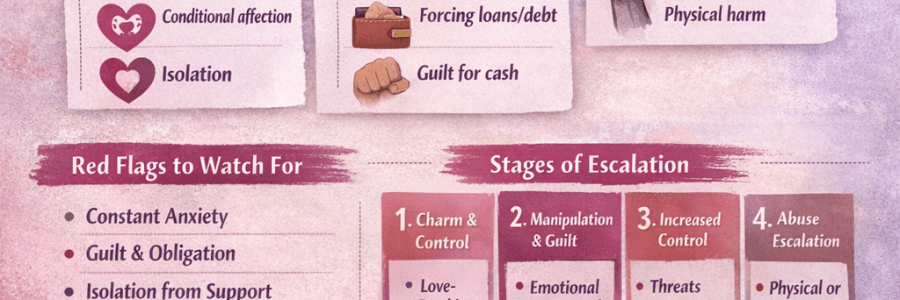
Watching someone escalate their tactics can sometimes feel almost surreal. They seem to spiral, their behavior becomes erratic, and it’s tempting to think: they must be going into a meltdown. Neuroscience and psychology explain why this happens. 1️⃣ The Brain Under Stress When manipulative individuals encounter resistance or fail to control a situation, their nervous… Read More When Manipulators Go Into Meltdown: Understanding the Neuroscience and Psychology

The Extreme Measures People Take to Control and Force You Out of Your Own Home

Few experiences are as destabilizing as feeling threatened in your own home. Whether it’s through legal maneuvers, financial pressure, or psychological tactics, some people will go to extreme lengths to assert control — even over property that is legally shared or personally yours. Understanding why this happens requires both a psychological and neuroscientific perspective. 1️⃣… Read More The Extreme Measures People Take to Control and Force You Out of Your Own Home

Inner Conflict

The fear of being yourself and worrying about acceptance is deeply rooted in both neuroscience and psychology. Let’s break it down clearly: 1️⃣ The Brain’s Threat Response 2️⃣ Social Connection as Survival 3️⃣ Cognitive Dissonance & Inner Conflict 4️⃣ Self-Esteem & Early Conditioning 5️⃣ Anxiety & Anticipation ✨ Bottom Line Fear of being yourself isn’t just… Read More Inner Conflict

You can run but you cant hide

From a neuroscience and psychology perspective, your past behaviors, patterns, and emotional responses are encoded in the brain and the nervous system — they can’t simply be hidden or erased. Here’s why: 1. The Brain Remembers Patterns So no matter how far you run, the brain retains neural pathways associated with past behaviors. 2. Nervous System & Trauma Encoding 3.… Read More You can run but you cant hide

Understanding Neuroscience & Neuroplasticity

1. What is Neuroscience? Neuroscience is the scientific study of the brain and nervous system — how neurons communicate, how brain regions control behavior, and how cognition, emotion, and perception emerge. It combines biology, psychology, chemistry, and even computational science to understand how the brain functions in health and disease. Key focus areas include: 2. What is Neuroplasticity? Neuroplasticity… Read More Understanding Neuroscience & Neuroplasticity

Neuroscience of a Lifelong Obsession with Harm

1. Hyperactive Threat Circuits 2. Prefrontal Cortex Dysfunction 3. Reinforced Reward Pathways 4. Mirror Neuron Suppression 5. Neuroplastic Entrenchment 6. Stress and Cortisol Loop 7. Death and Posthumous Influence 💡 Summary Insight:A person who obsesses over harming others develops a brain wired for control, vigilance, and manipulation. Empathy circuits weaken, reward pathways reinforce harm, and stress systems… Read More Neuroscience of a Lifelong Obsession with Harm

Brain Structure & Neurobiology

Prefrontal Cortex (PFC) Anterior Cingulate Cortex (ACC) Amygdala Reward System (Ventral Striatum / Nucleus Accumbens) 2️⃣ Psychology & Personality Factors Attachment & Early Environment Learned Behavior & Modeling Personality Traits 3️⃣ Epigenetics ✅ Key Takeaways In short: it’s a mix of biology, environment, early life experiences, and personality traits. The brain literally learns these patterns through repeated exposure and reinforcement.

 Social Learning & Mirror Neurons

The neuroscience of learned greed, manipulation, and dishonesty—basically, how teaching someone to take advantage of others can create a cycle where those behaviors get reflected back to you. Let’s break this down carefully: 1. Social Learning & Mirror Neurons 2. Reward System & Dopamine 3. Prefrontal Cortex & Moral Control 4. Empathy & Social Awareness 5. Karma-Like Reciprocity in the Brain… Read More  Social Learning & Mirror Neurons

Genetic and Heritable Factors

he neuroscience behind why a “Me, Me, Me” personality—self-centeredness or narcissistic traits—can appear to “run in the family.” Let’s break it down carefully: 1. Genetic and Heritable Factors 2. Brain Networks & Neurobiology 3. Environmental & Epigenetic Influences 4. The Neuroscience of “Running in the Family” ✅ Key Takeaway A “Me, Me, Me” pattern in families is usually: