Erasure

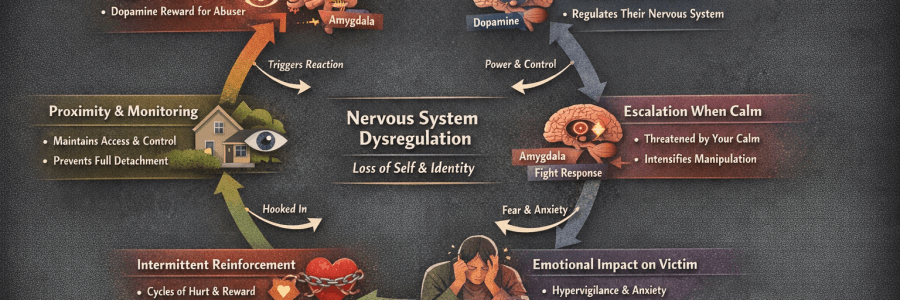
“Just because you try to erase the truth doesn’t mean it didn’t happen.”Below is a psychological and neuroscientific explanation of what that erasure attempt does to the victim’s brain and emotional world — and why the truth always leaves traces in the body, memory, and nervous system. 🧠 The Neuroscience of Erased Truth “Erasure” doesn’t delete the memory —… Read More Erasure

Erasing the Witnesses: The Neuroscience of Isolation in Abusive Relationships

By a survivor reclaiming her voice Seven people once knew the truth.My sister Anna, my best friend of thirty-four years Julia, my long-time friends Elena from Spain, Claire and Nina from France, my brother’s wife Catherine—my friend since we were thirteen—and my late brother Michael.And then, of course, the professionals: the doctor, the psychologist, and the gendarmes in France. All of them knew about the… Read More Erasing the Witnesses: The Neuroscience of Isolation in Abusive Relationships

Seven people know the truth.

Being cut off from friends and family, being isolated, being told not to talk to anyone — is unfortunately a very well-documented aspect of abusive relationships. The trauma, psychological dynamics, and neuroscience behind these dynamics are real and have been studied. 1. What abusers often do: isolation, control, cutting off witnesses Here are research-backed tactics… Read More Seven people know the truth.

🧠 1. Neuroscience: Low Dopamine & Emotional Fatigue

When someone feels “tired” all the time — not just physically, but existentially — it often reflects dopamine depletion or chronic stress response. So when he says “I’m old, tired, and sick,” his brain might literally be signaling burnout or emotional depletion, not just age. 🧩 2. Psychological Interpretation: Emotional Withdrawal or Learned Helplessness If this phrase is repeated frequently, it… Read More 🧠 1. Neuroscience: Low Dopamine & Emotional Fatigue

Finding the Right Man: A Neuroscientific and Psychological Perspective

When it comes to love, it’s easy to get caught in the glitter of grand gestures, social approval, or fleeting attraction. But the man who truly matters is rarely the one who dazzles in public — he’s the one who builds safety, trust, and connection in the quiet, everyday moments. Modern psychology and neuroscience help… Read More Finding the Right Man: A Neuroscientific and Psychological Perspective

The Psychology of Fake Success: Why Some People Pretend to Have It All

Some people wear success like a costume —designer smiles, borrowed confidence, rehearsed charm.They don’t chase joy; they chase perception.Because if they can make you believe they’re winning,maybe they can silence the voice that says they’re not enough. Psychology calls it impression management —a performance built on fear of rejection and a hunger for validation.They seek applause, not connection.They… Read More The Psychology of Fake Success: Why Some People Pretend to Have It All

The Psychology of Pretending: When Wealth and Success Are Just a Mask

Some people wear luxury like armor. They flash cars, holidays, and designer labels not to express joy, but to hide emptiness.Behind the image of success, there’s often insecurity — a deep need to be seen, admired, or envied. It’s not confidence. It’s camouflage. The Psychology Behind the Performance Psychologists call this “self-enhancement” — exaggerating one’s image to… Read More The Psychology of Pretending: When Wealth and Success Are Just a Mask

For the Women Who Believed Him: A Psychological Reflection

For all the widowed and divorced women who believed the man who said he wanted to go travelling, who claimed he didn’t have anger issues, and who swore he just had a “phobia of commitment” — this is for you. You believed in potential. You believed in kindness. You believed in healing and in second… Read More For the Women Who Believed Him: A Psychological Reflection