Entitlement isn’t confidence gone wrong

Entitlement isn’t confidence gone wrong — it’s powerlessness wrapped in dominance strategies. Here’s what’s happening under the hood, clinically and neurologically. 1. Core wound: unstable self-worth (developmental layer) Early experiences of: can leave the brain with a fragile self-model: “I’m not inherently secure or valued.” This lives largely in implicit memory (right hemisphere, limbic system), not conscious thought. So the… Read More Entitlement isn’t confidence gone wrong

Why “aggressive” sticks (the conditioning layer)

For many women — especially thoughtful, capable, emotionally intelligent ones — the word aggressive is wired early as a danger signal, not a descriptor. 1. Early social conditioning (pre-verbal + verbal) From childhood, many girls learn — implicitly or explicitly: So the nervous system learns: Belonging = self-containment When “aggressive” is used later, it doesn’t land as feedback.It… Read More Why “aggressive” sticks (the conditioning layer)

Strong Woman

When a strong woman is assertive and someone labels her “aggressive,” several neuroscience processes are often firing in the accuser, not in her. Let’s break it down cleanly. 1. Threat detection misfires (amygdala-driven) The amygdala scans for threat — not just physical danger, but status, control, and predictability. When someone expects: …and instead encounters calm boundaries + confidence, their brain may interpret… Read More Strong Woman

The Neurophysiology of Trauma

Trauma is not just psychological—it physically changes the brain and body. Key Brain Structures Involved Structure Role in Trauma Amygdala Detects threats; hyperactive in trauma → fear, hypervigilance, emotional reactivity Hippocampus Contextualizes memories; trauma can reduce volume → fragmented, intrusive memories Prefrontal Cortex (PFC) Executive function, emotional regulation; trauma → impaired top-down control Anterior Cingulate Cortex… Read More The Neurophysiology of Trauma

What Is Trauma‑Informed Care?

At its core, trauma‑informed care (TIC) means understanding how trauma affects a person’s brain, body, behaviour, and relationships — and using that understanding to shape how support is offered. Instead of asking: “What’s wrong with you?”A trauma‑informed approach asks:“What happened to you, and how can we help you feel safe?” This shift changes how people are seen,… Read More What Is Trauma‑Informed Care?

Memory & Trauma Processing

Alcohol can have a profound and often counterproductive impact on trauma recovery, both neurologically and psychologically. Here’s a detailed breakdown: 1. Nervous System Impact Trauma leaves the nervous system hypervigilant. Alcohol: 2. Memory & Trauma Processing Essentially, alcohol blocks the brain from integrating the trauma safely. 3. Emotional Dysregulation 4. Interpersonal Impact 5. Risk of Re-traumatization 6. Why… Read More Memory & Trauma Processing

What “messing up” in trauma really is

When you’re traumatised, your nervous system is not choosing behaviour — it’s protecting you. So what looks like “wrecking the relationship” is often: None of this is character failure.It’s unhealed threat memory meeting intimacy. Why trauma sabotages something that matters Trauma does three things in relationships: 1. It mistakes closeness for danger When connection deepens, the body remembers:… Read More What “messing up” in trauma really is

Trauma Bonding vs Healthy Attraction

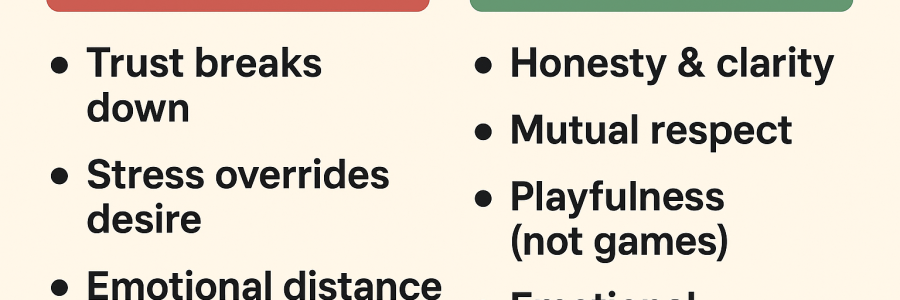
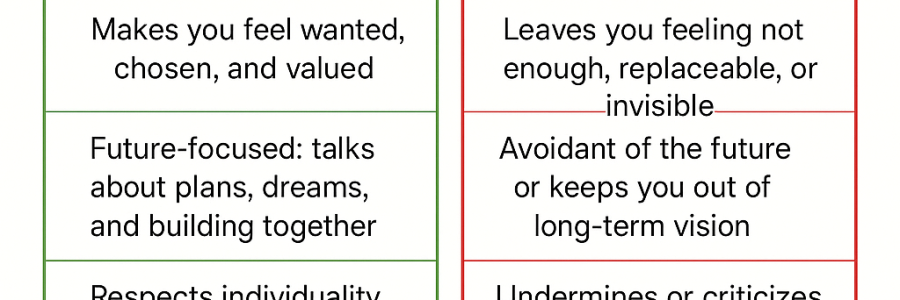
(How it feels in the body, mind, and nervous system) 🧠 Nervous System Trauma Bonding Healthy Attraction Key question:Do they regulate me — or do I regulate myself? ❤️ Emotional Experience Trauma Bonding Healthy Attraction Key question:Is this intensity or intimacy? 🧱 Boundaries Trauma Bonding Healthy Attraction Key question:Am I staying aligned with myself? 🔄… Read More Trauma Bonding vs Healthy Attraction

Mind and Body

Meeting someone new while you’re still in trauma doesn’t mean you’re “doing it wrong” — but it does shape the relationship in very specific ways, whether people realise it or not. Let’s break it down gently and honestly. What trauma does to connection (even with good people) When you’re still in trauma recovery, your nervous system… Read More Mind and Body

Body and mind are often in a chronic survival state

After decades of abuse, the body and mind are often in a chronic survival state, even long after the relationship ends. This isn’t a flaw — it’s the nervous system doing exactly what it was built to do: protect you from ongoing threat. Understanding this helps identify which situations to avoid while rebuilding safety and autonomy. 1.… Read More Body and mind are often in a chronic survival state