It doesn’t disappear, it circles back.
When children aren’t taught to act with integrity in the hard, uncomfortable, unrewarded moments, they don’t suddenly develop that capacity later. They carry the same pattern forward — and eventually, it shows up in the relationships closest to them.
That’s when it bites.
Because the child who learned:
- “I only show up when it benefits me”
becomes the adult who: - doesn’t show up for you when you need support
The child who learned:
- “I don’t have to tolerate discomfort”
becomes the adult who: - withdraws, avoids, or blames when things get difficult
The child who learned:
- “Respect is conditional”
becomes the adult who: - gives it selectively — including to their own parents
And that’s the part people don’t always anticipate.
You don’t just raise a child — you raise someone who will one day relate to you as an adult. Not from a place of obligation, but from what’s been modelled and reinforced over time.
Psychologically, this is about internalisation.
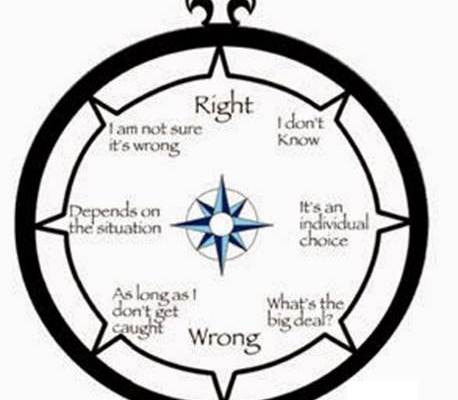
If values like respect, accountability, and kindness are only enforced externally (“because I said so,” “because you’ll get in trouble”), they don’t stick. But when they are consistently modelled, explained, and expected — especially when it’s inconvenient — they become part of the person’s internal compass.
Without that internal compass, behaviour is guided by:
- mood
- gain
- convenience
And that creates fragile relationships.
Because real life — long-term relationships, family dynamics, ageing parents, commitment — is full of moments that are:
- inconvenient
- emotionally demanding
- unrewarded in the short term
If someone hasn’t been taught how to stay steady in those moments, they won’t suddenly learn when it matters most.
So yes — it comes back around.
Not as punishment.
As a pattern.
And the difficult but important truth is:
the standards we set early don’t just shape how children behave in the world —
they shape how they will one day treat us, when the roles shift and there’s nothing left to enforce it but who they’ve become.

