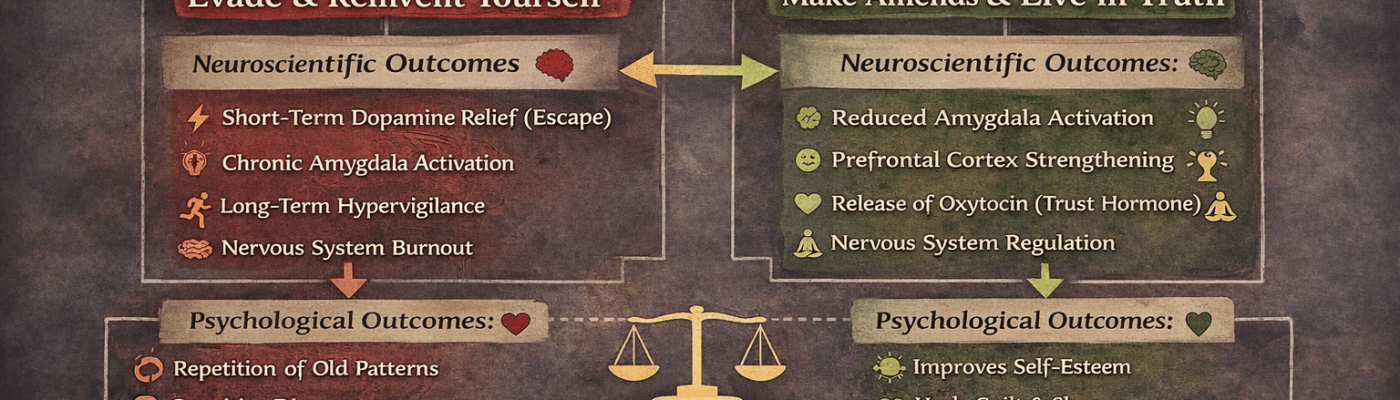
When abuse continues after separation, it is often misunderstood as emotional “refusal to move on.” In reality, psychology and neuroscience show that entrenched behavioural patterns do not automatically soften when a relationship ends — and in some cases, external distance can intensify control-based responses.
At the same time, in many jurisdictions, behaviours such as harassment, stalking, intimidation, financial manipulation, or third-party involvement can carry serious civil and criminal consequences.
Understanding both the legal framework and the brain mechanisms behind abusive behaviour is essential for recognising risk and responding effectively.
1. Criminal Liability: When Behaviour Crosses Legal Boundaries
Post-separation conduct can become criminal when it involves repeated or intentional harm.
Harassment and Stalking
Harassment and stalking are criminal offences in many legal systems. They may include:
- Repeated unwanted contact
- Surveillance or following
- Threatening messages or behaviour
- Persistent intimidation causing fear or distress
If a third party is involved in carrying out these behaviours, they may also be legally responsible.
Conspiracy and Coordinated Harm
When more than one person is involved, liability can extend further:
- Conspiracy to commit violence may apply if harm is planned or coordinated
- Hiring, instructing, or coercing others to intimidate or harm can increase legal exposure
- Even attempted arrangements for serious harm are criminal offences regardless of outcome
Financial Crime and Concealment
Post-separation abuse can also involve financial control or concealment:
- Hiding assets
- Fraudulent transfers
- Money laundering
- Tax evasion schemes involving third parties
Those assisting may also face prosecution for fraud or conspiracy-related offences.
2. Civil Liability: Emotional Harm and Privacy Violations
Even where criminal thresholds are not met, civil law may apply.
Potential claims include:
- Intentional infliction of emotional distress through messages, emails and whats app messages.
- Invasion of privacy
- Breach of restraining or protection orders
Courts may also impose:
- Financial damages
- Injunctions or restraining orders
- Penalties for ongoing violations
Civil law recognises that emotional harm can be legally significant, even without physical violence.
3. Asset Recovery and Financial Enforcement
In high-conflict separations, legal systems may also focus on economic accountability.
This can include:
- Subpoenas of financial records from third parties
- Tracing hidden or transferred assets
- Investigations into fraudulent concealment
- Reporting to tax authorities
Third parties who assist in concealment or fraud may also be drawn into proceedings.
4. Why Abuse Often Continues After Separation (Neuroscience Perspective)
Legal frameworks address what is happening. Neuroscience helps explain why it continues.
The Brain Does Not Reset After Separation
Long-term behavioural patterns are encoded in neural pathways. Research shows:
- Repeated behaviour strengthens neural circuits
- The brain defaults to familiar coping strategies under stress
- Separation does not erase learned control-based responses
If control, intimidation, or coercion were used for decades, those patterns become deeply automated.
5. Emotional Regulation and Ageing
A common assumption is that people naturally become less abusive with age. Neuroscience does not fully support this.
Instead:
- Emotional regulation does not automatically improve without intervention
- Stress can reduce impulse control over time
- Long-standing behavioural patterns become more rigid
- Cognitive flexibility often decreases in entrenched personality structures
In short: age alone does not resolve behavioural patterns rooted in control or entitlement.
6. Loss of Control as a Psychological Trigger
Separation can activate a strong neurological response in some individuals.
This involves:
- Amygdala activation (threat detection system)
- Heightened stress and emotional reactivity
- Attempts to reassert control through indirect means
From a behavioural perspective, separation may be experienced not as loss, but as loss of control, which can intensify maladaptive responses.
7. Why Insight and Accountability Matter
The key factor in behavioural change is not time — it is insight.
Sustained change typically requires:
- Recognition of harm caused
- Emotional responsibility
- Willingness to reflect and change identity-based beliefs
- Long-term therapeutic intervention
Without these, the brain continues to rely on familiar strategies, even if they are destructive.
8. Why Abuse Can Persist Despite Consequences
A crucial psychological reality is that:
The brain prioritises familiar survival strategies over long-term outcomes when insight is absent.
This means that even when legal consequences exist, behaviour may continue because:
- It is habitual
- It is identity-linked
- It is emotionally reinforcing
- It is perceived as control restoration
This is why legal intervention and psychological intervention often need to work together.
9. What Helps Break the Cycle
Effective response typically requires both legal and psychological boundaries:
Legal protection
- Restraining or protection orders
- Enforcement of harassment laws
- Financial investigations where needed
Psychological protection
- Reduced emotional engagement
- Firm boundaries without negotiation
- External support systems
- Trauma-informed recovery for those affected
Final Thought
Abuse does not always end when a relationship ends, because separation changes structure — not necessarily psychology.
Neuroscience shows that entrenched behavioural patterns do not disappear without insight and sustained change. Law recognises that continued harmful behaviour can carry serious consequences.
Understanding both is essential:
- The law defines accountability
- Psychology explains persistence
And together, they help explain why post-separation abuse can continue — and how it can be addressed safely and effectively.

