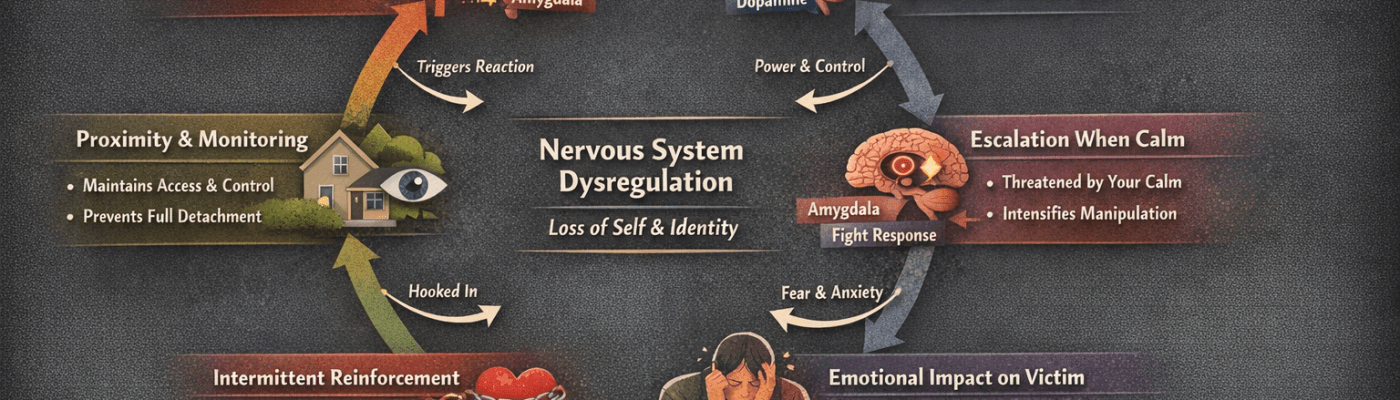
Leaving a long-term abusive relationship is not just a physical transition—it is a deep emotional and neurological one. Many people find themselves asking: When is the right time to date again?
There is no fixed timeline. Healing is not measured in weeks or months. Instead, the answer lies in your internal state, not external pressure.
From both a psychological and Neuroscience perspective, safety in dating again depends on whether your mind and body have moved out of survival mode—and into a place of stability, clarity, and self-trust.
Understanding What Abuse Does to the Brain and Body
Long-term abuse—especially emotional or psychological—affects the nervous system profoundly.
It often keeps the body in a chronic state of stress, activating the Autonomic Nervous System in survival responses such as:
- fight (anger, defensiveness)
- flight (anxiety, avoidance)
- freeze (shut down, numbness)
Even after the relationship ends, the body can continue to respond as if the threat is still present.
This is why many people feel:
- hyper-alert or anxious
- emotionally overwhelmed or easily triggered
- drawn to familiar (but unhealthy) dynamics
- unsure of their own judgement
Dating too soon in this state can unintentionally recreate similar patterns.
Why Time Alone Is Often Necessary
After an abusive relationship, time alone is not loneliness—it is recalibration.
It allows you to:
- rebuild your sense of identity
- reconnect with your own needs and values
- regulate your nervous system
- restore trust in your own perceptions
Without this phase, it is easy to seek safety in another person before creating it within yourself.
Signs You Are Not Ready Yet
It may not be the right time to date if:
- you feel anxious or unsettled most of the time
- you are seeking someone to “rescue” or reassure you
- you ignore red flags or feel drawn to intensity over stability
- you struggle to set or maintain boundaries
- you feel uncomfortable being alone
These are not failures—they are signs that healing is still in progress.
Signs You Are Becoming Ready
Safety in dating is less about time and more about how you feel within yourself.
You may be ready when:
- you feel mostly calm and emotionally regulated
- you trust your instincts and judgement
- you can recognise unhealthy behaviour early
- you are able to walk away from inconsistency
- you no longer feel a need to rush or prove anything
- you feel comfortable and content on your own
At this stage, dating becomes a choice—not a need.
A Different Experience of Dating
When you begin dating from a healed or healing place, the experience changes.
You are less drawn to:
- intensity and unpredictability
- emotional highs and lows
- people who create confusion
And more drawn to:
- consistency
- emotional availability
- calm, respectful connection
Your nervous system begins to recognise safety instead of reacting to familiarity.
Taking It Slowly and Safely
Even when you feel ready, it is important to approach dating gently.
- take your time getting to know someone
- observe actions, not just words
- prioritise how you feel in their presence (calm vs anxious)
- maintain your routines, boundaries, and independence
Healthy relationships are built slowly—and should feel steady, not overwhelming.
Conclusion: Readiness Is a Feeling, Not a Date
There is no “correct” amount of time to wait after an abusive relationship. What matters is whether you feel safe, grounded, and connected to yourself.
Because real readiness is not about how much time has passed—
it is about whether your mind and body no longer feel like they are surviving.
Final Thought
You will know you are ready when you no longer need someone to make you feel safe—
Only someone who respects the safety you have already created within yourself.

