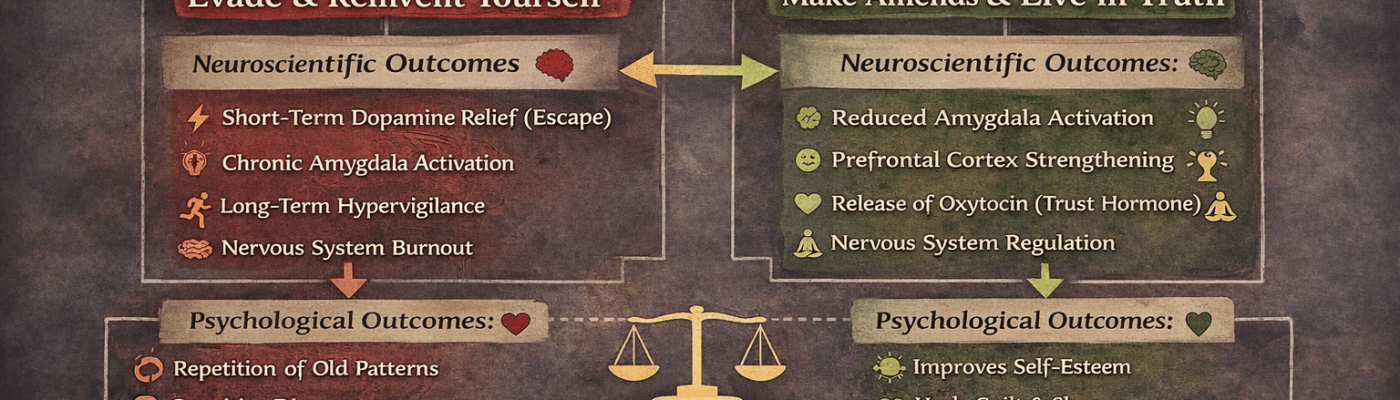
Hiding parts of your past from friends, partners, and family can “work” for a while—but it usually creates a kind of psychological debt. Eventually, if the truth comes out unintentionally, that debt often arrives all at once.
What often happens psychologically:
Before exposure: the burden of concealment
People hide their past for many reasons:
- shame
- fear of rejection
- wanting a fresh start
- protecting an image
- avoiding consequences
But maintaining a hidden story takes effort:
- remembering what you told whom
- managing anxiety about discovery
- avoiding certain topics/people/places
That can become exhausting.
When the truth is exposed accidentally
The reaction is often bigger than the original issue because others feel:
- deceived, not just uninformed
- confused (“What else don’t I know?”)
- betrayed by omission
The core injury is often loss of trust.
For the person exposed
Common responses:
- panic
- defensiveness
- minimizing (“it wasn’t relevant”)
- anger at how it came out
- relief (“I don’t have to hide anymore”)
Sometimes all at once.
For relationships
The central question becomes:
Was the secret the problem—or was the deception the problem?
For many partners/family members, it’s the second one.
Trust can sometimes recover—but usually only with:
- full honesty
- accountability
- no more drip-feeding of information
- willingness to answer hard questions
If you’re the one discovering the truth
It can help to ask:
- What exactly was hidden?
- Why was it hidden?
- Is there remorse—or just regret about being found out?
- Does their explanation match their behaviour?
Those answers matter more than polished apologies.
If you’re the one who hid it
Repair usually starts with:
- owning it plainly (“I hid this.”)
- no excuses
- understanding the impact
- accepting that trust may take time—or may not return
Honesty after exposure is not the same as honesty before exposure—but it’s still the only path forward.
Sometimes the truth destroys a false version of a relationship.
Sometimes that’s painful—but it also makes a more real life possible.

