Recovering from long-term abuse is a deeply challenging process because the brain and nervous system have adapted to constant stress, threat, and control. Neuroscience and psychology highlight several key needs for survivors to heal effectively. These needs target retraining the nervous system, rebuilding self-esteem, and restoring emotional safety.
Here’s a comprehensive overview:
1. Safety and Stabilization
Neuroscience: Chronic abuse keeps the brain in hyper-vigilant mode (amygdala overactive, cortisol elevated). The nervous system associates even neutral stimuli with threat.
What the survivor needs:
- A physically safe environment
- Predictable routines and boundaries
- Consistent people who respect limits
Goal: Reduce constant stress signals in the brain and allow the prefrontal cortex (decision-making, rational thought) to regain function.
2. Validation and Emotional Support
Psychology: Abuse often erodes self-worth and perception of reality. Victims may doubt their feelings or blame themselves.
What the survivor needs:
- Empathetic, non-judgmental listening
- Affirmation that their experience was real
- Social support to rebuild trust
Neuroscience: Validation activates oxytocin pathways, which help restore trust and emotional bonding capacity.
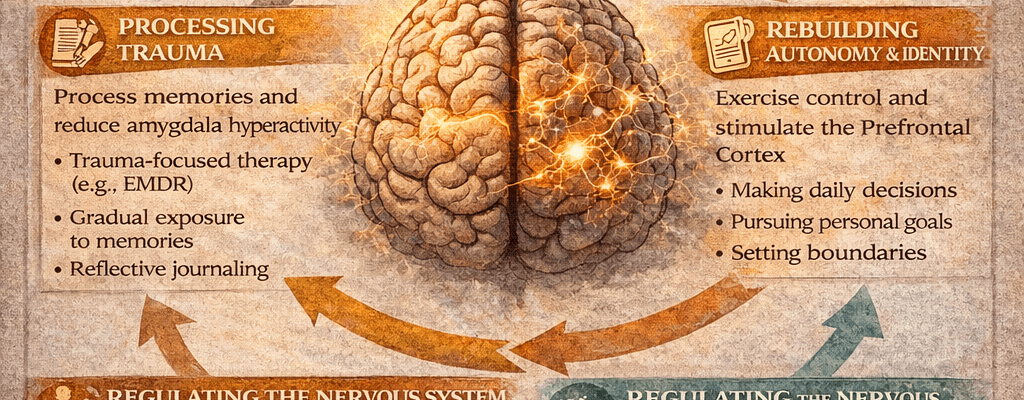
3. Trauma Processing
Psychology: Long-term abuse creates trauma bonds and unresolved emotional trauma. Survivors often carry guilt, shame, and fear.
What helps:
- Trauma-focused therapy (e.g., EMDR, somatic experiencing, CBT)
- Journaling or reflective practices
- Gradual exposure to memories in a safe context
Neuroscience: Processing trauma helps repattern neural pathways and reduce amygdala hyperactivity, allowing calmer emotional responses.
4. Rebuilding Autonomy and Identity
Psychology: Abusive relationships often strip away independence and personal agency. Survivors may feel lost or disconnected from their true self.
What helps:
- Making decisions about daily life
- Pursuing personal goals or passions
- Setting boundaries in relationships
Neuroscience: Exercising control and choice stimulates the prefrontal cortex, helping restore executive function and confidence.
5. Regulating the Nervous System
Neuroscience: Chronic abuse dysregulates the autonomic nervous system (fight/flight/freeze). Survivors may experience hyperarousal, panic, or emotional numbness.
What helps:
- Mindfulness, meditation, yoga, or breathwork
- Grounding techniques
- Somatic therapies that reconnect body and mind
Goal: Train the brain to recognize safety vs threat, lowering baseline cortisol and stabilizing emotional responses.
6. Social Connection and Healthy Relationships
Psychology: Isolation is common in abusive environments. Reconnecting safely with others is critical for healing.
What helps:
- Support groups or therapy groups
- Positive friendships and mentorship
- Relationships with consistent, trustworthy people
Neuroscience: Healthy connections stimulate reward circuits and oxytocin, counteracting trauma bonding from past abuse.
7. Time and Patience
Healing from long-term abuse is non-linear. The brain takes time to:
- Rewire trauma pathways
- Reduce hypervigilance
- Rebuild trust in self and others
Psychology & Neuroscience: Recovery is gradual; even small consistent improvements reinforce positive neural plasticity.
Key Insight
From both neuroscience and psychology:
Survivors don’t just recover from external harm—they must retrain their brains and nervous system to recognize safety, self-worth, and trust.
Healing isn’t just emotional—it’s biological: reversing years of stress, trauma, and conditioned responses.
 Linda C J Turner | Trauma Therapist & Emotional Healing Specialist