🧠 Recovery timeline (what usually shifts and when)

Here’s a realistic recovery timeline after leaving coercive control / trauma bonding, based on what we know from psychology, attachment science, and nervous system recovery. Everyone varies, but the pattern is surprisingly consistent. ⏳ First days to 2 weeks: “shock + withdrawal” This is the most unstable phase. What you might notice: Brain state: What’s really happening: Your… Read More 🧠 Recovery timeline (what usually shifts and when)

🧠 What’s happening in the brain during withdrawal

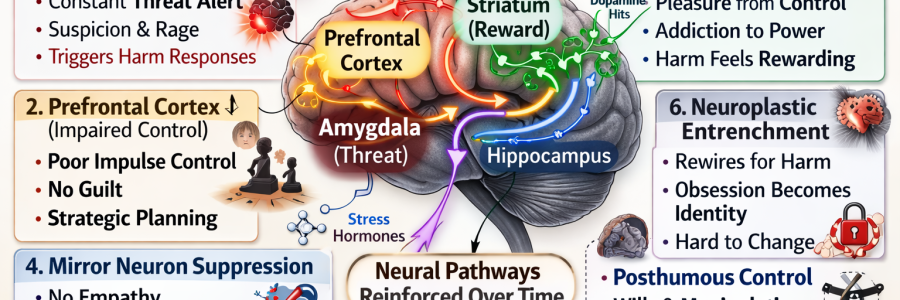
The withdrawal phase after leaving coercive control can feel surprisingly intense because the brain isn’t just “missing a person” — it’s recalibrating a whole threat–reward–attachment system that has been running for a long time. It often feels worse before it feels better because the nervous system is adjusting to the absence of a pattern it had learned to expect.… Read More 🧠 What’s happening in the brain during withdrawal

🧠 Why trauma bonding is so sticky (neuroscience + psychology)

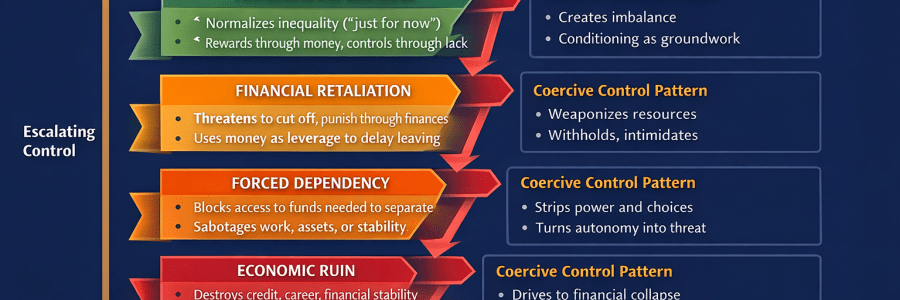
Trauma bonding and coercive control are hard to break because they don’t just sit in “thoughts” or “choices” — they get wired into reward systems, threat systems, and attachment systems in the brain at the same time. That combination creates a powerful loop that feels emotionally convincing even when it’s harmful. 1. Intermittent reinforcement = strongest… Read More 🧠 Why trauma bonding is so sticky (neuroscience + psychology)

What’s happening in your brain during therapy

1. The threat system starts to settle At the beginning of therapy—especially if someone is anxious or traumatised—the brain often has a more active: As you speak in a safe, structured environment, something important happens: the brain starts to detect “this is not danger” This reduces hypervigilance over time. 2. The thinking brain comes back… Read More What’s happening in your brain during therapy

Why people have therapy (neuroscience + psychology)

1. Emotional overload (the nervous system is stuck “on”) From a neuroscience view, chronic stress keeps the amygdala overactive (threat detection system), while the prefrontal cortex (reasoning, regulation) becomes less effective. People come to therapy because: Therapy helps retrain the brain to feel safety again. 2. Trauma and memory processing Trauma isn’t just a memory—it’s a stuck survival response. The… Read More Why people have therapy (neuroscience + psychology)

A divorce party

A divorce party—especially after leaving an abusive relationship—is not really about celebrating a marriage ending. It’s about celebrating you returning to yourself. For many people, divorce marks grief and loss.For others, particularly survivors of coercive control or abuse, it marks something very different: freedom. It can be the first day in years that your nervous system begins… Read More A divorce party

“Normal enough to survive.”

`The human brain is remarkably good at adapting—even to unhealthy environments. That’s one of its greatest strengths, and sometimes one of its greatest traps. Normalization through adaptation. Habituation When something happens repeatedly—criticism, control, emotional coldness, instability—the brain starts to treat it as:“normal enough to survive.” Not because it is healthy.Because it is familiar. 1. The… Read More “Normal enough to survive.”

People often repeat familiar relational patterns—even destructive ones.

A well-recognized pattern in abuse psychology: for some people, the issue is not the specific partner—it’s the function the relationship serves for them. In other words:they are not primarily seeking mutual intimacy;they may be seeking regulation, control, validation, or power. Sometimes this is informally called “supply.” Narcissistic Supply That term is often used in popular psychology, but the underlying… Read More People often repeat familiar relational patterns—even destructive ones.