Criminal Liability, Behavioural Control, and the Neuroscience of Post-Separation Abuse

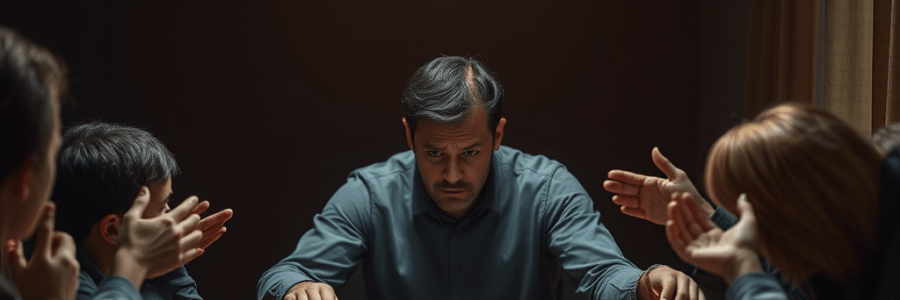
When abuse continues after separation, it is often misunderstood as emotional “refusal to move on.” In reality, psychology and neuroscience show that entrenched behavioural patterns do not automatically soften when a relationship ends — and in some cases, external distance can intensify control-based responses. At the same time, in many jurisdictions, behaviours such as harassment,… Read More Criminal Liability, Behavioural Control, and the Neuroscience of Post-Separation Abuse

Why Abuse Doesn’t Stop After Separation: What Neuroscience and Psychology Really Tell Us

A common belief is that separation from an abusive partner should naturally lead to a reduction in abusive behaviour. In reality, many people experience the opposite: control, intimidation, manipulation, or emotional aggression continues — and sometimes intensifies. Neuroscience and psychology help explain why this happens. 1. The Brain Does Not Automatically “Improve” With Age There… Read More Why Abuse Doesn’t Stop After Separation: What Neuroscience and Psychology Really Tell Us

When an Adult Child Says “My Father Ruined My Childhood”: Understanding Pain, Anger, and What Families Can Do Next

Hearing an adult child say that a parent “ruined their childhood through abusive behaviour” is one of the most emotionally charged moments a family can face. It is not a casual statement. It usually carries years — sometimes decades — of stored pain, unresolved memory, and emotional injury that has never been fully processed. For… Read More When an Adult Child Says “My Father Ruined My Childhood”: Understanding Pain, Anger, and What Families Can Do Next

When Childhood Hurt Turns Into Lifelong Anger: Revenge, Family Trauma, and How Healing Can Begin

When children grow up in abusive homes — witnessing violence, emotional cruelty, control, or fear — it leaves deep emotional imprints. These experiences do not simply disappear with age. They shape how a person sees themselves, others, and the world. For some, this pain transforms into sadness or withdrawal. But for others, it becomes something… Read More When Childhood Hurt Turns Into Lifelong Anger: Revenge, Family Trauma, and How Healing Can Begin

When Revenge Becomes a Lifelong Pattern: Understanding Decades of Retaliation in Families and How to Break the Cycle

In some families, conflict does not resolve — it accumulates. What begins as hurt or misunderstanding can, over time, evolve into something far more entrenched: a mindset built around revenge, punishment, and regaining control. Instead of healing, the emotional injury is repeatedly revisited, reinforced, and passed through generations. When this happens over decades, it stops… Read More When Revenge Becomes a Lifelong Pattern: Understanding Decades of Retaliation in Families and How to Break the Cycle

From Surviving to Living: Proof That Change After Abuse Is Possible

There are times in life when things feel so heavy, so overwhelming, or so controlled that it can seem impossible to imagine anything different. But change is possible. Not in a quick or easy way — and not without struggle — but it is possible. And sometimes, the most powerful truth is this: you can rebuild… Read More From Surviving to Living: Proof That Change After Abuse Is Possible

From Survival to Softness: How Life Feels Completely Different Now — Safe, Loved, and Free

There are moments in life when everything changes so deeply that it almost feels like stepping into a different world. Not just a new situation — but a completely different emotional landscape. What once felt heavy, tense, or uncertain is no longer the centre of everything. And in its place, something quieter begins to grow.… Read More From Survival to Softness: How Life Feels Completely Different Now — Safe, Loved, and Free

When Control Becomes a Way of Life: Why Some Behaviour Rarely Changes — and What It Does to Relationships

Some patterns of behaviour are not temporary habits. They are deeply embedded ways of relating to others, often formed over decades and reinforced within families where control, intimidation, or emotional pressure were seen as “normal.” In these environments, power is not expressed through cooperation or understanding, but through threats, ultimatums, guilt, or dominance. Over time,… Read More When Control Becomes a Way of Life: Why Some Behaviour Rarely Changes — and What It Does to Relationships

You must withdraw the complaint and court proceedings.

That statement is less about the legal process and more about control and pressure. On the surface, it sounds like a straightforward instruction. But when you look underneath it, it’s really saying: “Stop taking action that I can’t control.” “Remove the consequences I’m now facing.” “Return things to a position where I have more power.”… Read More You must withdraw the complaint and court proceedings.