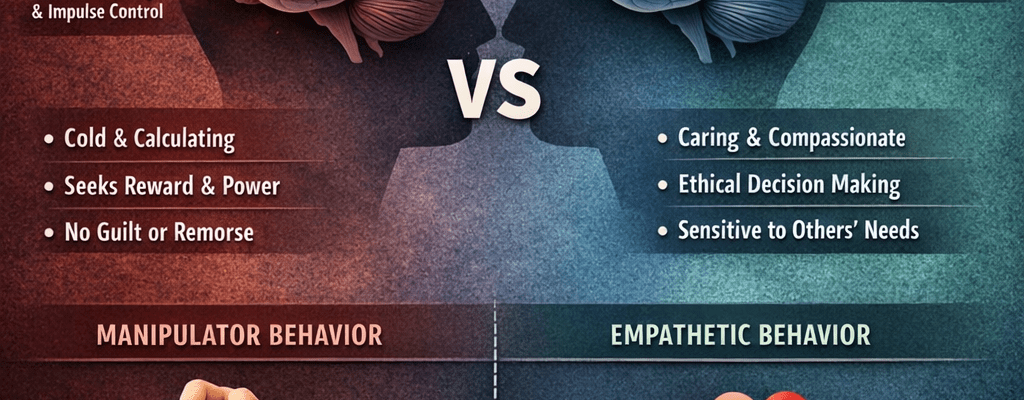
| Healthy / “Decent” Patterns | Harmful / Dysfunctional Patterns |
|---|---|
| Respects boundaries | Ignores, pushes, or tests boundaries |
| Shows empathy and consideration | Lacks empathy or dismisses others’ feelings |
| Takes accountability | Blames others, avoids responsibility |
| Communicates honestly | Manipulates, withholds truth, or distorts reality |
| Acts fairly in relationships | Is transactional, exploitative, or one-sided |
| Cares without conditions | Shows care only when there is benefit |
| Regulates emotions | Uses anger, withdrawal, or pressure to control others |
| Values mutual respect | Expects entitlement or special treatment |
| Repairs harm when it occurs | Denies, minimises, or repeats harmful behaviour |
| Consistent behaviour over time | Inconsistent, unpredictable, or self-serving patterns |
What do psychologists call the “harmful side”?
Instead of calling a person “the opposite of decent,” psychology uses descriptive terms for patterns, such as:
- Emotionally immature behaviour
- Entitled behaviour patterns
- Manipulative relational style
- Low empathy traits
- Antisocial or narcissistic traits (in clinical extremes, not casually used)
- Transactional relationship orientation
- Avoidant or dismissive attachment patterns
Important: these are descriptions of behaviour, not labels for “who someone is.”
Key psychological insight
A “decent human being” in psychological terms is not someone perfect — it’s someone who:
- can reflect on their impact
- adjusts behaviour when they cause harm
- and maintains respect even under stress
Whereas harmful patterns are defined less by one-off actions and more by:
- repetition
- lack of accountability
- absence of empathy over time
The most important takeaway
Psychology avoids “good vs bad person” framing because:
- people can show both patterns in different contexts
- behaviour can change
- environment and history matter
But it does clearly recognise this distinction:
Healthy relationships are built on mutual respect, accountability, and empathy.
Dysfunctional ones are marked by control, entitlement, and lack of emotional reciprocity.

