Recovery often begins long before a person leaves a difficult relationship. It begins with a change in perspective.
Many survivors describe a moment when years of confusion suddenly start to make sense. It may happen after a conversation with a trusted friend, reading an article, speaking with a counsellor, or simply noticing that the same painful patterns keep repeating.
Psychologists sometimes refer to this as a cognitive shift or reframing. Instead of viewing upsetting incidents as isolated events, the person begins to recognise a consistent pattern of behaviour.
For many, this moment is both liberating and overwhelming.
Suddenly, comments that once seemed insignificant, repeated promises that were never kept, recurring arguments, controlling behaviours, or cycles of kindness followed by hurt begin to fit together like pieces of a puzzle.
Many people say:
“It was as though someone finally turned the light on.”
or
“For the first time, everything made sense.”
This realisation can bring relief because it provides an explanation for years of confusion. At the same time, it can also bring grief as a person mourns the relationship they hoped they had, rather than the one they actually experienced.
It is common to look back and think:
“How did I not see it?”
From a psychological perspective, this question reflects hindsight rather than failure. The brain had been trying to make sense of conflicting information while preserving important relationships and deeply held beliefs. Once the pattern becomes clear, those earlier explanations often lose their power.
The Next Step: Seeking Support
Recognising the pattern is a significant milestone, but recovery rarely happens in isolation.
Many people have spent months or years doubting their own judgement, minimising their feelings, or questioning their memories. Rebuilding confidence often begins by talking to someone who listens without judgement and helps make sense of those experiences.
Support may come from trusted family members, close friends, support groups, advocates, or qualified mental health professionals. The goal is not to tell someone what they should think or do, but to help them regain confidence in their own perceptions, values and decisions.
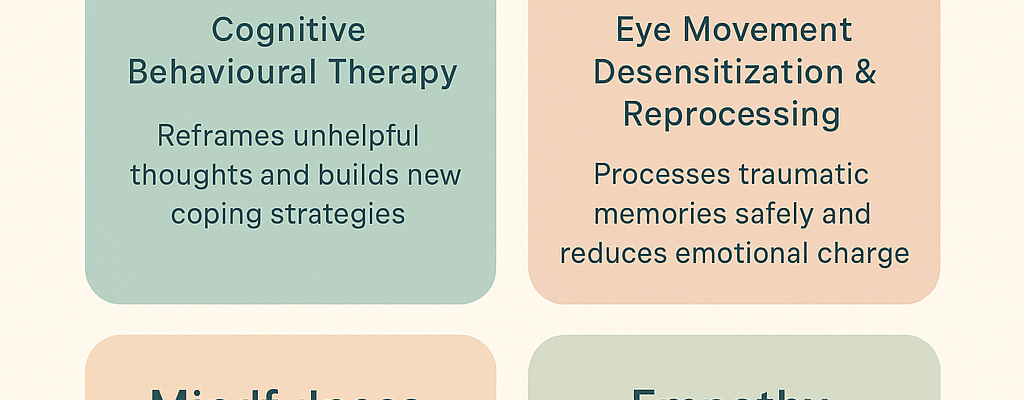
Evidence-based therapies such as Cognitive Behavioural Therapy (CBT), trauma-focused therapies, and other approaches can help people:
- understand how patterns of thinking developed,
- reduce self-blame and shame,
- process difficult experiences,
- recognise unhealthy relationship dynamics,
- rebuild self-esteem and confidence,
- develop healthy boundaries,
- strengthen emotional regulation,
- and regain a sense of safety and independence.
Recovery is not about forgetting what happened. It is about understanding it in a way that no longer controls your life.
How We Can Help
Healing is not a race, and there is no “right” timeline. Every person’s journey is different.
Our role is to provide a safe, compassionate and non-judgemental space where you can begin to make sense of your experiences.
We understand that many people arrive feeling confused, questioning themselves, or wondering whether they are overreacting. These feelings are common after prolonged periods of stress or unhealthy relationship dynamics.
Together, we can help you:
- understand the psychological impact of what you have experienced,
- recognise patterns that may previously have felt confusing,
- rebuild trust in your own judgement,
- develop practical coping strategies,
- strengthen confidence and resilience,
- establish healthy boundaries,
- and move towards a future that is no longer defined by fear, uncertainty or self-doubt.
Recovery is not about changing who you are. It is about rediscovering the person you were before fear, confusion or chronic stress began to overshadow your life.
Perhaps the greatest sign of healing is not that you stop thinking about the past altogether. It is that the past no longer dictates your future. Instead of asking, “Why did this happen to me?” many people eventually find themselves asking, “What kind of life do I want to build now?”
That shift—from surviving to living—is often where true recovery begins.


