Packing up a home after thirty-two years is an emotional experience.
You expect to find old photographs, forgotten receipts, and the odd missing sock. What you don’t expect is to find a trail of handwritten letters and cards from the person who made you feel so small for so long.
As I empty cupboards and drawers, they keep appearing.
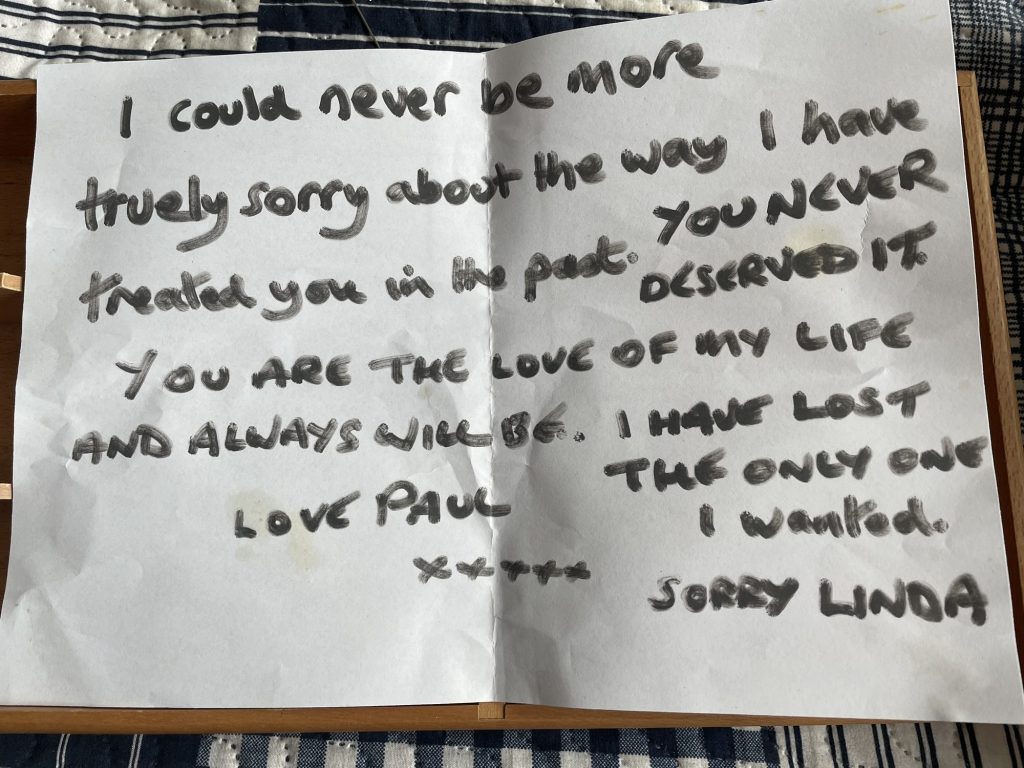
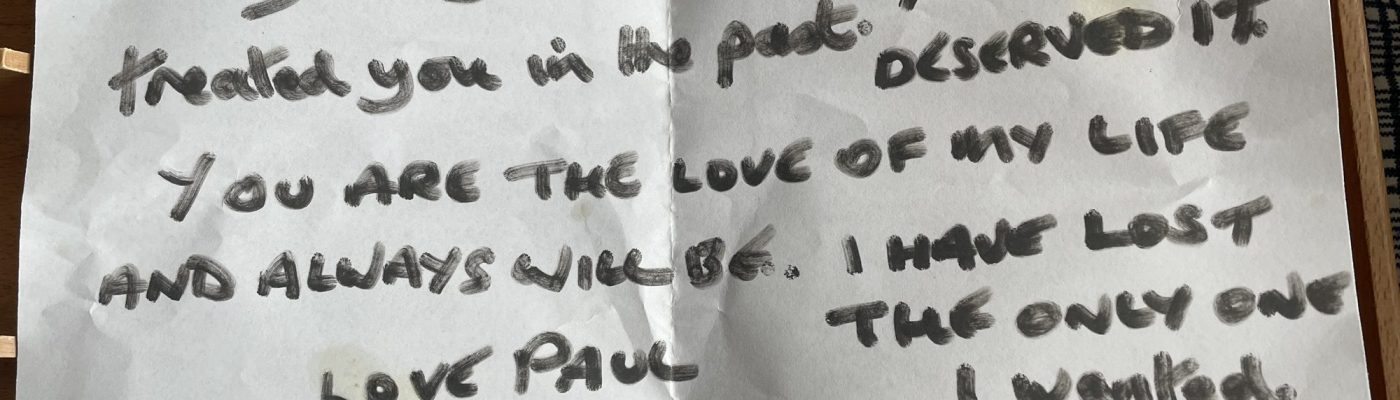
Letters apologising for hurtful behaviour.
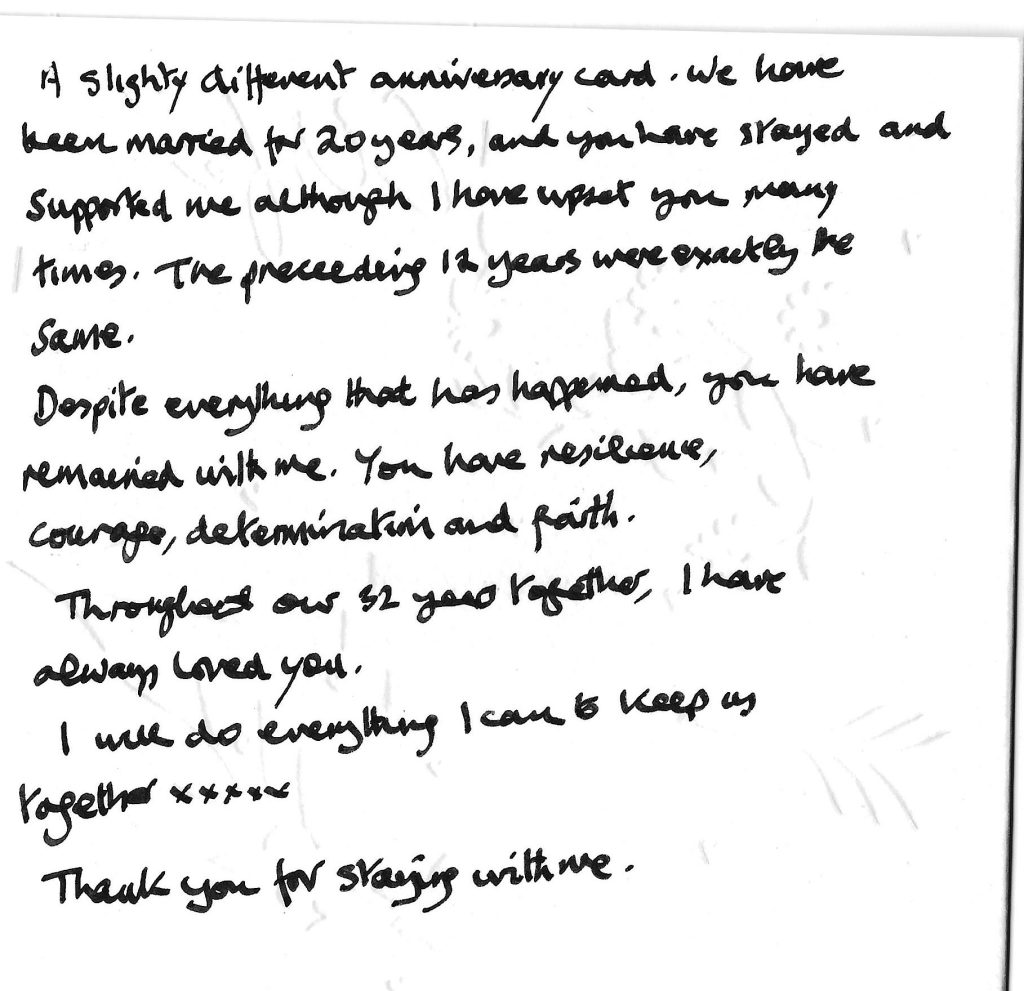
Cards promising things would change.
Messages acknowledging how badly I had been treated.
Words that, at the time, I desperately wanted to believe.
The remarkable thing is that they were all written by him.
For years I questioned my own memory. Was I exaggerating? Was I too sensitive? Did things really happen the way I remembered them?
Yet here, in black and white, are repeated acknowledgements of behaviour that caused pain, distress and unhappiness over three decades.
There is no need for denial when the evidence is sitting in your own kitchen drawer.
Eighteen months after leaving, every forgotten envelope and every unopened folder tells the same story.
At first I read them.
Then I skimmed them.
Now they go straight into the recycling bin without even opening them.
Not because they don’t matter, but because I no longer need them.
Healing reaches a point where you stop searching for proof. You stop collecting evidence. You stop trying to convince yourself that what happened really happened.
You already know.
There is also something strangely ironic about discovering yet another apology hidden in a cupboard while packing boxes for a new life.
How many apologies can one person write without changing the behaviour that made them necessary?
Psychologists often say that sustained change is demonstrated through consistent actions, not repeated promises. Genuine accountability is reflected in behaviour over time, not simply in words written on paper.
Looking around the house, I realised that I wasn’t sorting through memories anymore.
I was clearing out an archive of broken promises.
Each letter represented another cycle of hurt followed by regret, another hope that things would be different, another attempt to repair damage that would soon be repeated.
So now they go into the bin.
Not out of anger.
Not out of bitterness.
But because they have served their purpose.
They remind me that I didn’t imagine what happened, that my instincts were right, and that leaving was not an impulsive decision but the conclusion of thirty-two years of lived experience.
Sometimes healing isn’t about finding new answers.
It’s about finally realising that you no longer need the old evidence.
The paper can be recycled.
The lessons stay with you.
And the future no longer has to look anything like the past.