Entering a new relationship always involves trust, openness, and learning about another person’s emotional wellbeing.
And one important lesson many people learn over time is this:
the issue is often not the diagnosis itself — it is whether someone is taking responsibility for managing their health safely and consistently.
Many people live full, loving, stable lives while managing conditions such as:
- Bipolar Disorder
- Schizophrenia
- depression
- anxiety disorders
- or other mental health conditions
especially when they:
- work closely with medical professionals
- take medication consistently when prescribed
- attend therapy or psychiatric support
- and communicate honestly with those close to them
Where relationships can become extremely difficult is when there is:
- repeated refusal of treatment
- abrupt stopping and starting of medication without medical supervision
- denial of serious behavioural changes
- self-diagnosis without professional support
- or unwillingness to take responsibility for the impact behaviour has on others
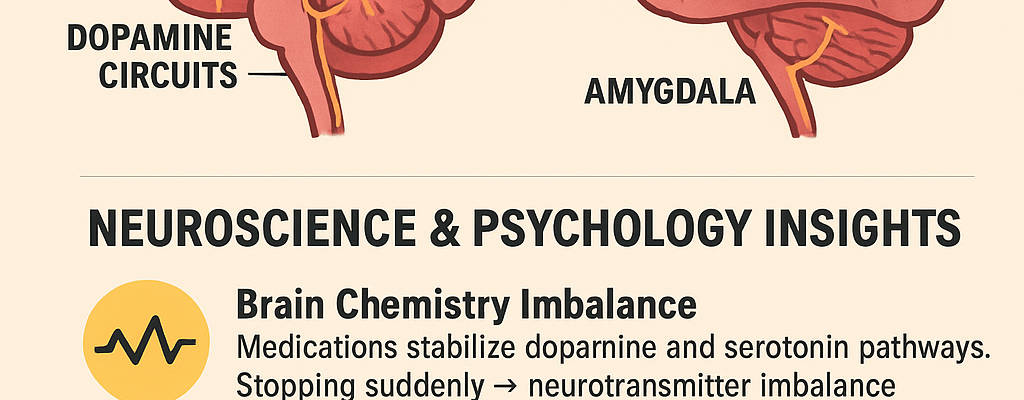
From a neuroscience and psychiatric perspective, suddenly stopping certain psychiatric medications without medical guidance can sometimes worsen symptoms, destabilise mood, increase impulsivity, or create significant emotional and behavioural difficulties.
That is why medication management should always be handled carefully with a qualified doctor or psychiatrist.
And in relationships, honesty matters.
Not because people owe others every private detail immediately, but because long-term relationships depend on:
- trust
- safety
- emotional accountability
- and responsible self-awareness
If someone’s mental health significantly affects:
- behaviour
- emotional regulation
- stability
- communication
- or relationship dynamics
then openness and appropriate professional support become very important.
At the same time, it is equally important not to stigmatise mental illness itself.
A diagnosis does not define someone’s character.
Medication does not make someone dangerous.
And many people with psychiatric conditions are deeply loving, responsible, insightful partners.
The healthier question in any relationship is not:
“Does this person have a diagnosis?”
But rather:
“Do they manage their wellbeing responsibly, communicate honestly, and take accountability for their behaviour?”
Because stability, insight, consistency, and willingness to seek help are what truly matter in healthy relationships.

