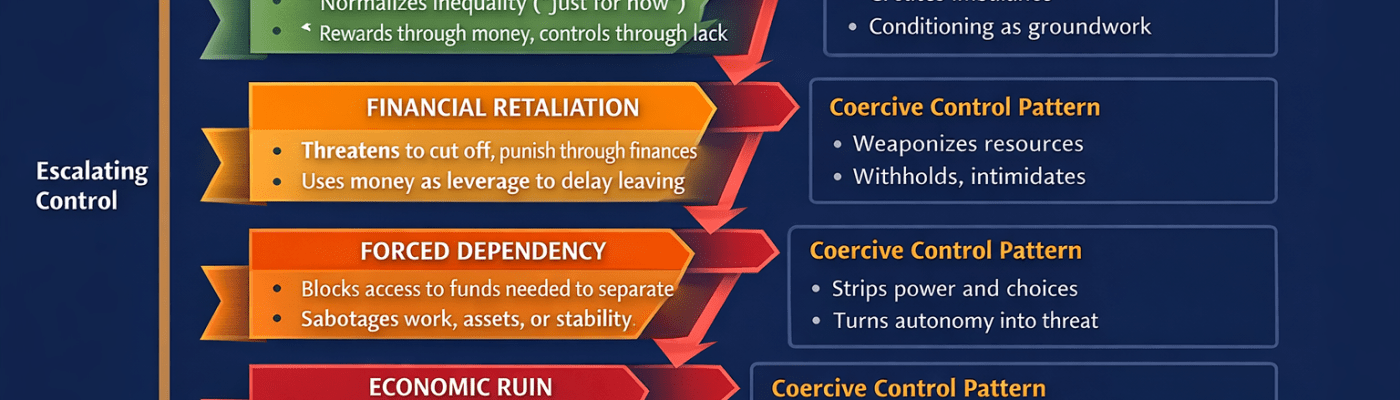
(How abuse develops step-by-step)
1️⃣ Idealisation & Grooming
Goal: Create emotional dependence
Looks like:
- Intense attention, charm, flattery, love-bombing
- Fast emotional bonding
- “You’re my soulmate”, “I’ve never felt this way”
- Rushing intimacy & commitment
Hidden function: Builds trust + emotional attachment before control begins
2️⃣ Subtle Control & Boundary Testing
Goal: Test how much control they can exert
Looks like:
- Jealousy disguised as love
- Monitoring messages, time, movements
- Criticism disguised as “help”
- Guilt-tripping, sulking, emotional withdrawal
Red flag: You start changing behaviour to keep peace
3️⃣ Isolation & Dependency Building
Goal: Cut off external support
Looks like:
- Disrupting friendships & family relationships
- Creating conflict with your support system
- Financial control
- Making you dependent for housing, money, transport
Red flag: Your world becomes smaller
4️⃣ Psychological Domination
Goal: Break self-esteem and autonomy
Looks like:
- Gaslighting
- Blame shifting
- Chronic criticism
- Silent treatment
- Emotional punishment
Effect: Confusion, anxiety, walking on eggshells
5️⃣ Intimidation & Threats
Goal: Install fear
Looks like:
- Threatening tone
- Rage episodes
- Destroying objects
- Punching walls
- Threats of harm, suicide, exposure, abandonment
Key shift: Fear becomes central to decision-making
6️⃣ Physical & Sexual Violence
Goal: Total dominance
Looks like:
- Restraining
- Hitting, pushing, choking
- Sexual coercion
- Threatening lethal harm
⚠ Highest danger zone: Risk of severe injury or death
7️⃣ Apology, Promises & Honeymoon Phase
Goal: Reset the cycle
Looks like:
- Tears, remorse, gifts
- Promises of therapy & change
- Blaming stress, alcohol, childhood
Reality: Without long-term specialised intervention, the cycle repeats — usually escalating
🔁 The Escalation Loop
Each cycle:
- Becomes faster
- Becomes more intense
- Has shorter calm phases
- Carries higher risk
🚨 Lethality Risk Indicators
(These signal extreme danger)
- Strangulation
- Threats to kill
- Obsessive control
- Stalking after separation
- Access to weapons
- Escalating jealousy
- Forced isolation
- Ownership language: “If I can’t have you, no one will.”
🧠 Why Coercive Control Is So Damaging
Because it:
- Rewires fear pathways
- Suppresses decision-making
- Creates trauma bonding
- Traps victims neurologically, emotionally, socially, financially
This is psychological captivity, not relationship conflict.
 Linda C J Turner | Trauma Therapist & Emotional Healing Specialist