Objective:
Ensure that judicial decisions reflect the true risk to survivors, integrate trauma-informed evidence, and prevent escalation or homicide.
1️⃣ Intake & Case Assessment
Data Sources:
- Police reports
- VioGén risk assessment (Spain)
- Medical & forensic reports
- Social services records
- Victim statements
- Prior restraining orders
Judicial Tasks:
- Verify incident chronology
- Identify repeat or escalating behaviour
- Flag high-risk indicators
2️⃣ Risk Categorisation
| Risk Level | Indicators | Recommended Judicial Action |
|---|---|---|
| Low | Single minor incident, no weapons, no previous history | Standard protective orders, monitoring |
| Medium | Repeated threats, mild physical aggression, controlling behaviour | Restraining orders, probation, multi-agency monitoring |
| High | Strangulation, severe threats, prior violence, separation risk | Immediate protective orders, emergency relocation, potential detention |
| Extreme | Weapons, lethal threats, stalking, prior high-risk classification | Urgent restraining orders, GPS tagging, pretrial detention, rapid police response |
3️⃣ Evidence Evaluation
Key Components:
- Physical evidence: Injuries, medical documentation
- Psychological evidence: Trauma assessments, PTSD indicators
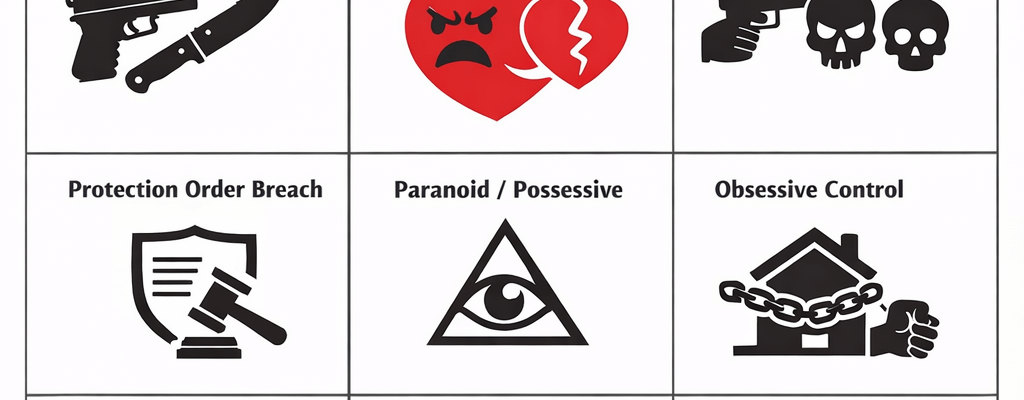
- Behavioral evidence: Threat escalation patterns, coercive control, obsessive/ritualistic behaviours
- Environmental evidence: Weapon access, isolation tactics, financial control
Neuroscience Insight:
- Judges should recognise that trauma alters memory, perception, and testimony
- Corroborate psychological evaluations with risk scoring tools (VioGén, DASH, ODARA)
4️⃣ Protective Measures & Orders
Options Include:
- Restraining orders (temporary or long-term)
- Exclusion zones (distance from survivor)
- Electronic monitoring / GPS tagging
- Emergency relocation / safe housing
- Custody suspension / child protection measures
- Financial safeguards (access to funds, freezing accounts)
5️⃣ Risk Monitoring & Review
- Review risk at regular intervals or when new incidents occur
- Update orders based on VioGén risk reassessment or equivalent
- Ensure inter-agency communication (police, social services, mental health)
6️⃣ Sentencing Considerations
- Cumulative harm (physical, psychological, financial, emotional)
- Intent vs pattern (coercive control vs isolated incident)
- Predictive lethality markers (strangulation, weapons, stalking)
- Impact on children and family units
- Rehabilitation vs punishment balance
7️⃣ Multi-Agency Coordination
- Police, social services, legal advocates, and mental health professionals must share data and risk indicators
- Ensure that the court decision aligns with ongoing safety planning
8️⃣ Documentation & Accountability
- Decisions should explicitly cite risk factors and evidence
- Record high-risk markers and rationale for protective measures
- Maintain audit trail for inter-agency review
9️⃣ Survivor Engagement
- Victim consulted in risk assessment (trauma-informed interviews)
- Victim informed of rights, protection orders, and reporting channels
- Ensure survivor has continuous legal representation
10️⃣ Key Principles for Judges
- Prioritise safety over procedure — risk to life outweighs minor procedural errors.
- Recognise cumulative trauma — pattern matters more than isolated events.
- Integrate expert risk assessment — VioGén scores, forensic psychologists, and social services input are mandatory.
- Anticipate escalation during separation — implement enhanced measures if victim attempts to leave.
- Mandate inter-agency enforcement — orders are only effective if actively monitored.
This framework is designed to reduce domestic homicide risk, improve survivor safety, and ensure accountability for offenders, while remaining trauma-informed and legally robust.
 Linda C J Turner | Trauma Therapist & Emotional Healing Specialist